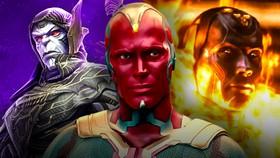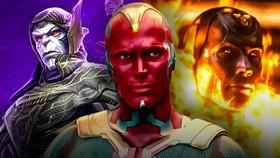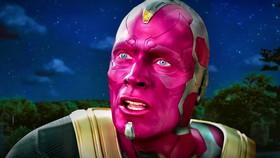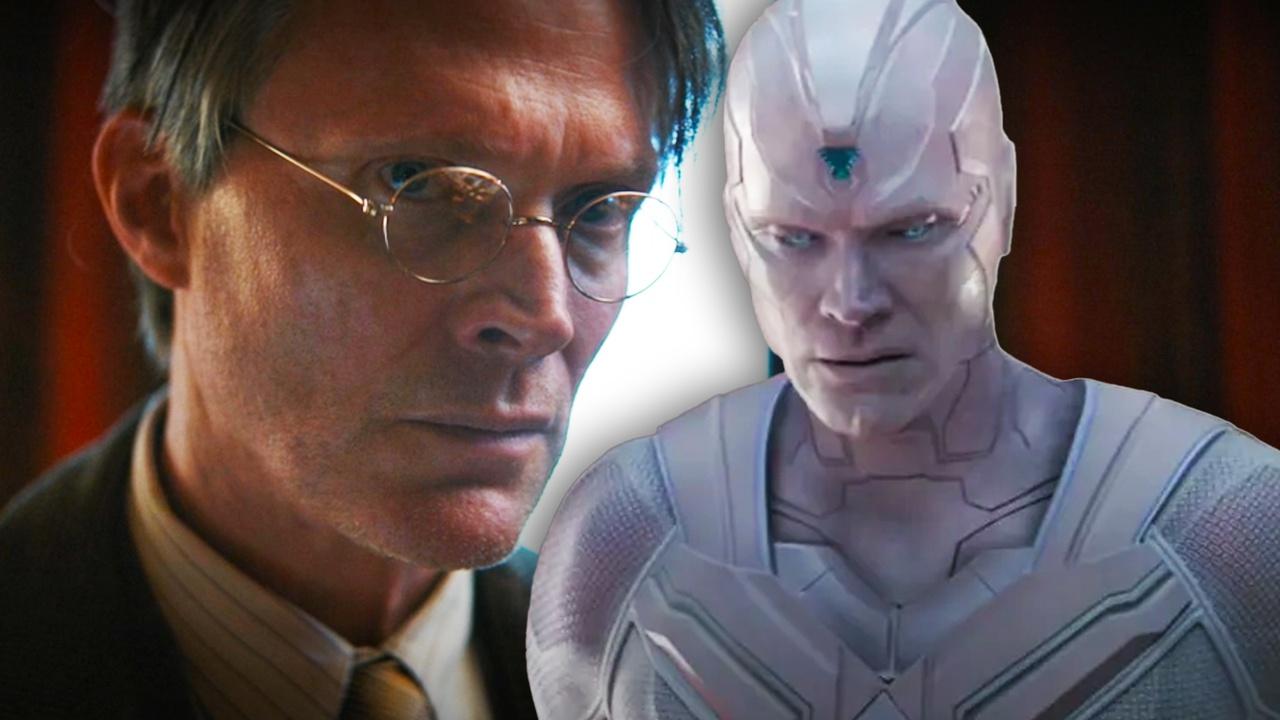
VisionQuest Episode 7, "Immolation," finally revealed the backstory behind Phineas T. Horton and his important ties to Vision, which completely changed everything for the MCU. The penultimate episode of the Paul Bettany-led Disney+ series, directed by series creator Terry Matalas and written by Matthew Okumura, continues White Vision's quest to find his purpose and humanity amid the combined, high-stakes threat of Ultron and Jocasta's newfound alliance and dangerous nanobot scheme, which has already affected Lisa Molinari. In a race against time, Vision worked together with Paladin and Thomas Shepard (Ruaridh Mollica) to find a way to counter the nanobot virus inside Lisa, leading him to an unexpected reunion with Corvus Glaive's glaive (the same weapon that destabilized the original Vision in Avengers: Infinity War).
As it turned out, the glaive (which Paladin stole from the Wakandans) was required as an additional power source for Vision. It would buy him the time he needed to locate his source code, a crucial MacGuffin required to fully purge Lisa of the nanobot virus. In exchange, though, Vision must surrender himself to the mysterious client. While Vision undertook a perilous journey inside his Mindspace, Paladin and Thomas remained in the outside world to keep Lisa safe (and contained).
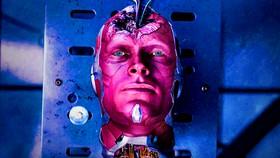
Vision's path eventually led him to a face-to-face encounter with the original Vision. The pair's conversation centered on White Vision telling original Vision that he has been reduced to nothing more than a memory, and that the new Vision standing before him is the real one. However, the original Vision pushed back, describing himself as imprisoned by his own hand.
This pivotal exchange forced White Vision to confront the lingering presence of his predecessor, strongly emphasizing that the old Vision was an unresolved part of his own identity.
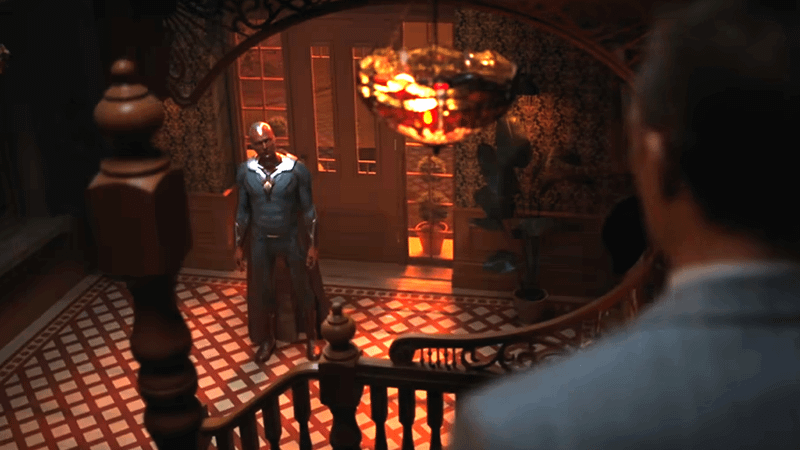
Beyond the duality behind the Vision, the search for the source code became interesting because it established a natural bridge to Phineas Horton, the creator of Jim Hammond (aka the original Human Torch, first seen in a display at the 1943 Stark Expo in Captain America: The First Avenger).
Who Is Phineas Horton? His Connections to Vision Explained
VisionQuest Episode 4 already namedropped Phineas Horton during a benefit gala hosted by Katerina Wells (aka Jocasta's final target). Horton was described as "the great-grandfather of robotics" and the creator of J.I.M., the first AI automaton, also known as the Synthetic Man. Wells also confirmed that Dr. Horton's source code was the "genesis of all artificial intelligence that followed."
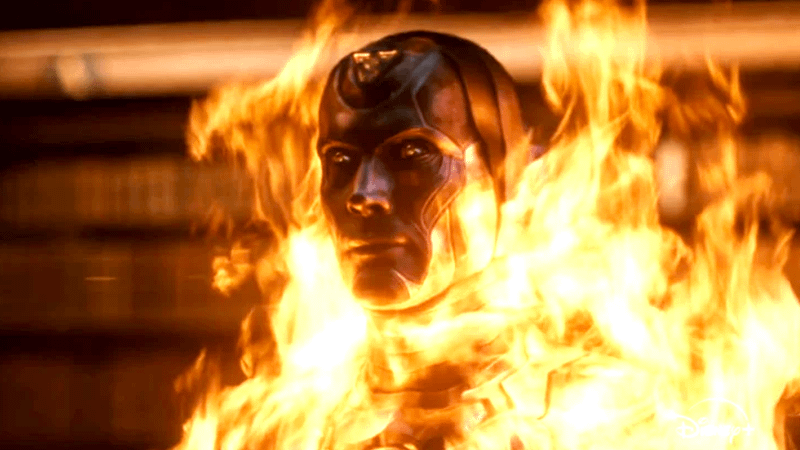
Vision explained to Thomas that JIM was miraculous yet flawed, considering that his inability to process complex emotions "spun his clockwork too quickly" and flooded his solar cells with oxygen "until his entire being was consumed in fire."
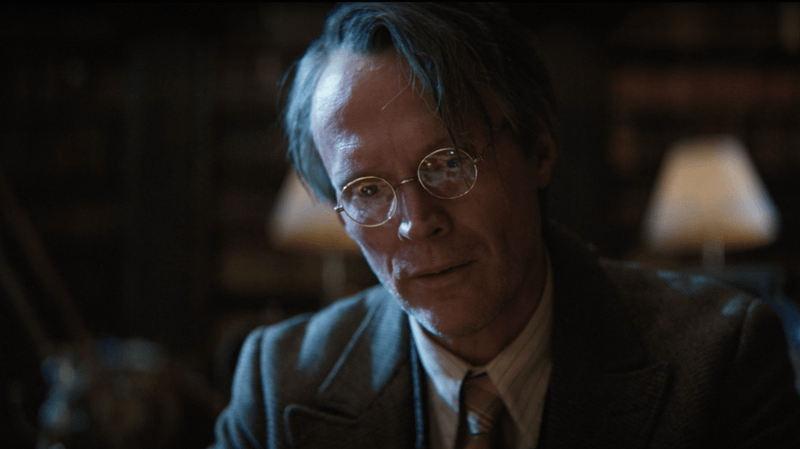
This reference paid off in VisionQuest Episode 7's opening 1939 flashback, which offered a glimpse into Phineas Horton's personal life. The episode confirmed that Phineas made the first thinking, feeling automaton as a replacement for his real-life son, a decision that came at the expense of the family he still had. He mortgaged his massive estate to fund the project, growing increasingly distant from those around him.
Before his wife left him, she told him that he "remains haunted" by his grief.
"You are not God. James is gone, Phineas. Three years dead. And yet you remain haunted."
True enough, a grief-consumed Phineas Horton declared that he would make JIM better than God had made humanity, a synthetic free from emotion:
"I will make you better than God made us. And you need never know the consequence of love. It's sorrow, pain, crying out for someone who can no longer hear you. You will be free, my boy. You will be free."
VisionQuest's explanation of Horton's backstory closely aligns with his comics history.
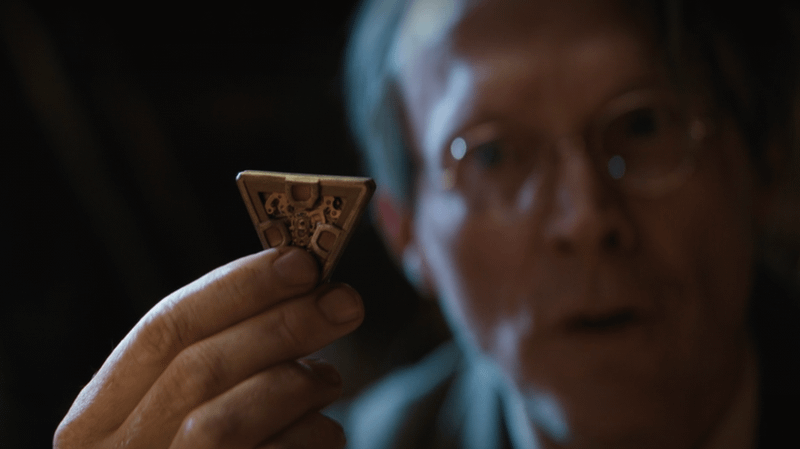
In Marvel Comics, Horton built a synthetic android meant as an exact human replica, but its photoelectric "Horton Cells" caused it to burst into flame on contact with oxygen. After escaping, the android became the hero Jim Hammond, the original Human Torch, who worked alongside Captain America and Namor in World War II. Unlike the comic book hero who controlled his powers, the MCU's version of JIM was deactivated after "incendiary mishaps."
All in all, VisionQuest framed Phineas Horton as a tragic figure driven by grief (and later confirmed that he is not the mysterious client who wants Vision).
Why Vision Looks Like Phineas Horton In VisionQuest Episode 7?
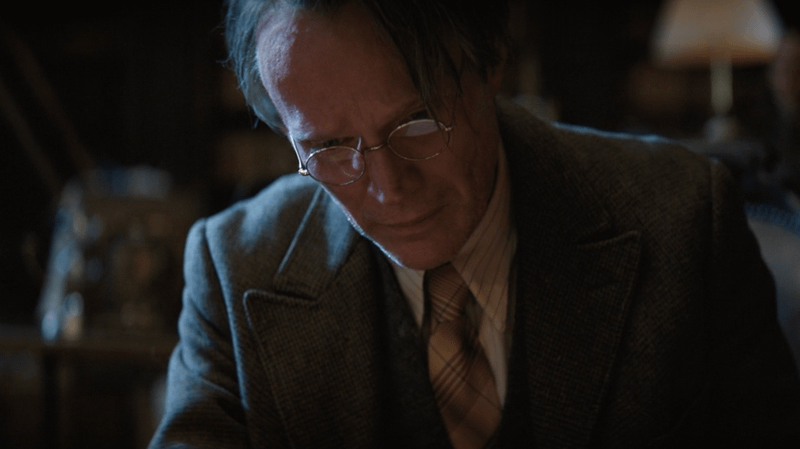
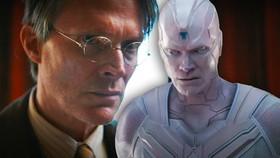
Paul Bettany portrayed both Phineas Horton and JIM in Episode 7, and this visual continuity was highly significant to Vision's story in the series. VisionQuest has already established that many of the AI personas in Vision's Mindspace are based on real human templates or likenesses from their creators' lives.
The most obvious one was JARVIS, an AI modeled after the real Edwin Jarvis, the Stark family butler. FRIDAY was based on a real woman named Allison Hogan, Howard Stark's office assistant, who helped raise Tony and is likely connected to Jon Favreau's Happy Hogan. EDITH came from a woman named Edith Marks, a test pilot who worked for Howard Stark and used thrills to escape her grief over losing her husband.
Horton and JIM fit that same pattern. This revelation means that the first synthetic is modeled on its human creator, and that its foundational form is echoed in later beings such as Vision. The result is that Vision visually and thematically descends from Horton's work and face, emphasizing the show's themes of identity, grief, fathers and sons, and what it means to be more than a machine.
The resemblance is intentional. Giving Bettany the role of both Phineas Horton and JIM makes the lineage explicit, as every subsequent synthezoid carries a trace of that original human template.
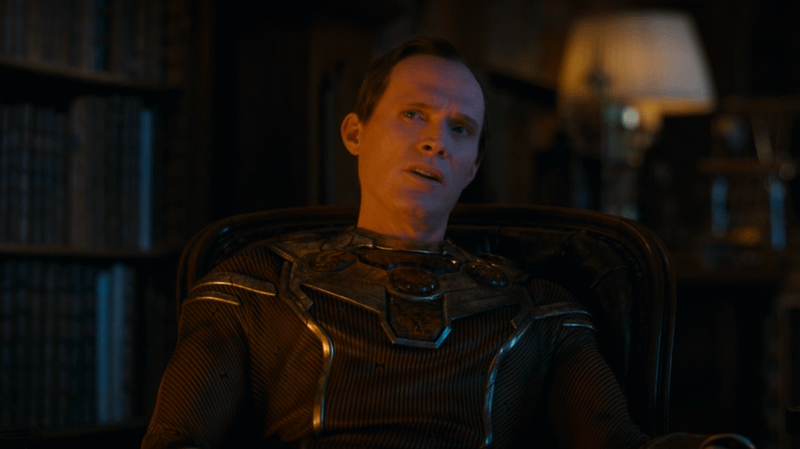
There is also the possibility that Vision is based on JIM himself rather than Horton, which would be an interesting interpretation. In Marvel Comics, Ultron built Vision from the recovered body of Jim Hammond, so the MCU may be nodding to that lineage by having Paul Bettany play both characters. Either way, the choice deepens the show's themes of identity.
While JIM was built to replace a lost son, Vision must confront the emotions, memories, and relationships that defined his original self. In this way, VisionQuest Episode 7's flashback positions Horton's act of creation as the root of Vision's entire existence, turning a 1939 personal tragedy into the foundation of the modern synthezoid's struggle for selfhood.
In the end, following an important conversation with JIM about the fact that the source code already lies within him, Vision eventually accepted that he is the Vision and that he has always been the Vision.
While Vision is still processing the weight of that realization, particularly the pain of losing his family while grappling with the reality that Thomas is his son, he begins to move forward with a clearer sense of self, ultimately transforming into his original colors with an even more comic-accurate look.