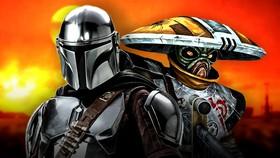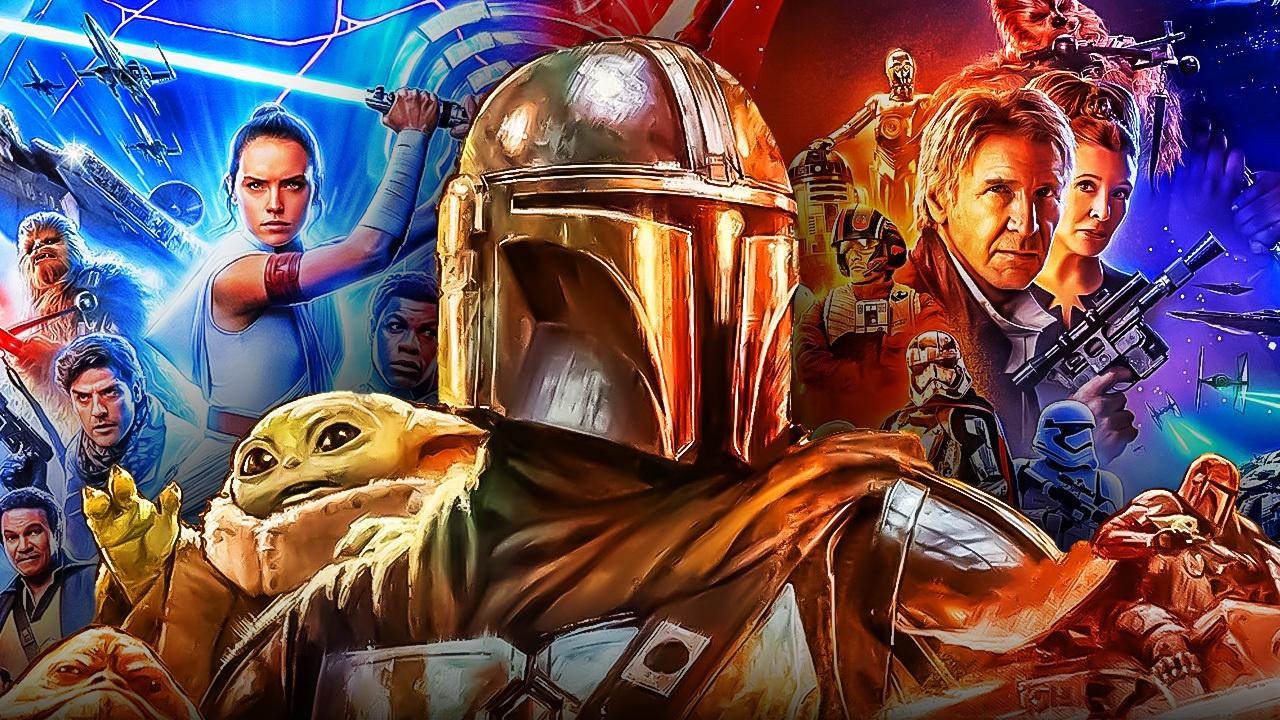
Lucasfilm's next big Star Wars movie, The Mandalorian & Grogu, will be a sequel to one lesser-known 2008 flick, at least for one notable character. Star Wars is finally ending its seven-year theatrical absence with The Mandalorian & Grogu, effectively replacing Season 4 of the Disney+ series and possibly launching a brand-new trilogy in the galaxy far, far away. That tale is, of course, rooted in Disney+'s MandoVerse, which has been known to pull characters from all three Skywalker Saga trilogies and even The Clone Wars and Rebels animated series.
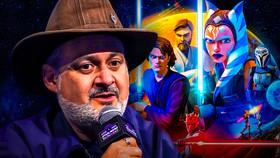
The Clone Wars is most famously the name of the seven-season animated series that takes place between Attack of the Clones and Revenge of the Sith. But some may be aware that the CGI animated epic shares a title with a 2008 movie that tees up the series, introducing the character of Ahsoka Tano.
Released in theaters in August 2008, The Clone Wars marked the Star Wars directorial debut for George Lucas' own Padawan, Dave Filoni. The decision was made to launch the Cartoon Network series on the big screen after Lucas viewed the early episodes, weaving the first four together for a theatrical release.
Ahsoka wasn't the only MandoVerse character to debut in the often-forgotten 2008 epic, as it also debuted Jabba the Hutt's son, Rotta. The story took Anakin Skywalker and Ahsoka Tano on a mission to rescue a kidnapped Rotta.
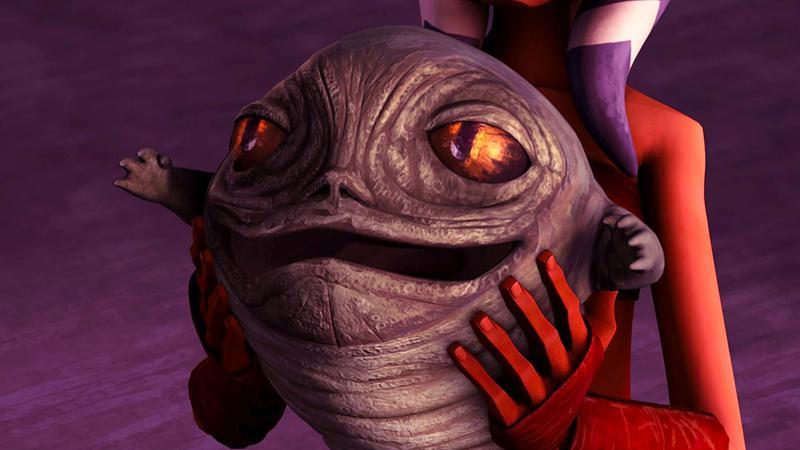
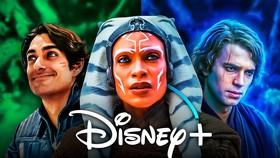
Unfortunately, as Ahsoka is wrapping up in another galaxy on Peridea, Thrawn is escaping to the familiar galaxy far, far away. As she will be stuck there until her Disney+ series returns for Season 2, she probably won't be reuniting with her former rescue anytime soon, unless it happened in another MandoVerse entry.
Count Dooku orchestrated the abduction to sabotage negotiations between the Republic and the Hutts. While Asajj Ventress carried out the kidnapping, it was aided by Rotta's great-uncle Ziro in a power grab within the Hutt clan.
After The Clone Wars, Rotta has only returned once in Season 3's "Sphere of Influence" with a brief non-speaking appearance alongside his father, Jabba.
Excitingly, Rotta the Hutt is returning in The Mandalorian & Grogu, where he will be voiced by the Emmy-nominated actor Jeremy Allen White (Shameless, The Bear). He will be joined by Pedro Pascal and Sigourney Weaver when The Mandalorian sequel movie debuts in theaters on May 22, 2026.
As fans will soon see Rotta in only his second major appearance next year in The Mandalorian & Grogu, one could consider the movie a sequel to The Clone Wars, continuing his story as a now-fully-grown Hutt.
How Does Rotta the Hutt Play Into The Mandalorian & Grogu?
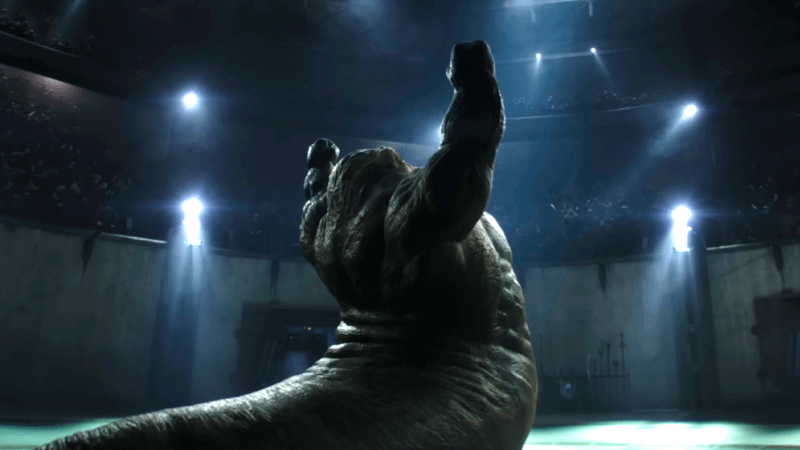
Rotta was only glimpsed in the trailer, entertaining a crowd in the center of an arena, which was seemingly teased in the movie's synopsis that mentioned Din Djarin would be "venturing into a gladiator fight where the creatures from Dejarik have become larger than life" in the 2026 blockbuster.
It's easy to imagine Rotta being the host of such an event before he is somehow roped into Din Djarin's conflict with the Imperial Remnants. Jeremy Allen White previously hinted at Rotta's sidekick role in The Mandalorian & Grogu, hinting that he and Din Djarin will be "running around for a lot of the movie together."
For the most part, the Hutts in Star Wars speak Huttese, as opposed to Galactic Basic (the in-universe name for English). There have been exceptions to that rule, such as Ziro, and it's easy to see Rotta being another in The Mandalorian & Grogu, as it would be strange to cast such an acclaimed actor to speak jibberish.
Interestingly, Rotta the Hutt was 55 years old during The Clone Wars, meaning he should be around 86 in The Mandalorian & Grogu. As Hutt lifespans are around 1000 years old, with childhood spanning roughly the first 70 years, moviegoers may be in for a late teen to young adult Rotta from White.
Only time will tell what Rotta has been doing in the 31 years between The Clone Wars and The Mandalorian & Grogu, or how he reacted to Jabba's death several years prior in Return of the Jedi. Regardless, it seems he will have a more heroic or anti-heroic presence than his traditionally villainous family.