Most stories told within the galaxy far, far away are family-friendly, even when it comes to Star Wars Legends content, meaning if Disney wanted to adapt any of those Legends stories, regarding appropriate content, there wouldn’t be too many issues. However, there are a few exceptions, as Star Wars pushed the boundaries on certain occasions, so Disney could never get away with adapting those specific stories today for different reasons.
Most of what has been released under the Star Wars umbrella is original content that has not been adapted from prior source material. For example, the sequel trilogy was its own idea that didn't come from anything in Star Wars Legends. However, sometimes Star Wars does choose to bring certain book elements and non-canon details to a production.
The best example of this is Grand Admiral Thrawn. Thrawn was created by Timothy Zahn in a 1992 novel titled Heir to the Empire (notably, this book was also the first time Coruscant was ever referenced), which is not a part of Star Wars canon. However, Disney canonized Thrawn in Star Wars Rebels, keeping his backstory and character traits consistent with what was established about him in Legends.
Then, in the Ahsoka series, Star Wars loosely adapted some other elements of the Heir to the Empire trilogy, proving that Disney and Lucasfilm aren't opposed to adapting content from Star Wars Legends. However, as mentioned, a few stories will never be brought to life, as they would be far too dark and mature for Disney.
The Five Most Unadaptable Star Wars Legends Stories
The New Jedi Order: Star by Star
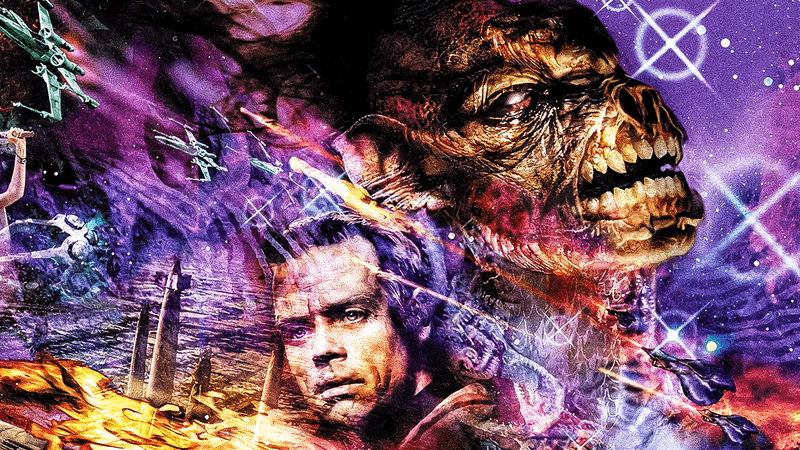
Few Legends stories better demonstrate the franchise's willingness to go incredibly dark than The New Jedi Order: Star by Star. It is important to note that, even though all of the projects on this list would likely never be adapted because of their nature, that doesn't mean that they are bad projects. Instead, they just don't fit with Disney and Lucasfilm's current plan for the Star Wars brand.
The Yuuzhan Vong (the main antagonists of this story) invasion was already an unusually brutal storyline for Star Wars, but Star by Star takes the conflict to another level. The novel features torture, psychological torment, and horrifying biological weapons as young Jedi sent on a mission to Myrkr are captured by the Yuuzhan Vong.
The Vong's concept of breaking a prisoner involves psychologically destroying their victim through repeated torment and visions of death. The Myrkr prisoners are subjected to brutal treatment, including repeated torture with the deadly voxyn.
Star by Star is also not afraid to kill major characters, which is not a bad thing, and its willingness to place young heroes in genuinely horrifying situations gives the story a sense of danger that is difficult to reproduce in a modern franchise blockbuster. In essence, Star by Star is likely the closest Star Wars has ever gotten to pure horror. Many fans have begged Lucasfilm to create a horror project set in the Star Wars universe, but Star by Star would still likely go farther than many want, especially if it were to be adapted faithfully.
The Star Wars Legends book's darkness is also inseparable from the Yuuzhan Vong themselves. Their culture revolves around pain, sacrifice, and violence, making them one of the most disturbing enemies ever created for Star Wars.
Disney could potentially introduce elements of the Yuuzhan Vong into canon someday (many thought that they could be included in Ahsoka when it was revealed that the series was introducing a new galaxy), but faithfully adapting Star by Star would be another matter entirely. The torture, deaths, and sheer brutality would almost certainly need to be toned down.
And that is precisely what would make such an adaptation difficult: removing the darkest elements would risk removing much of what made Star by Star so memorable in the first place.
Shatterpoint
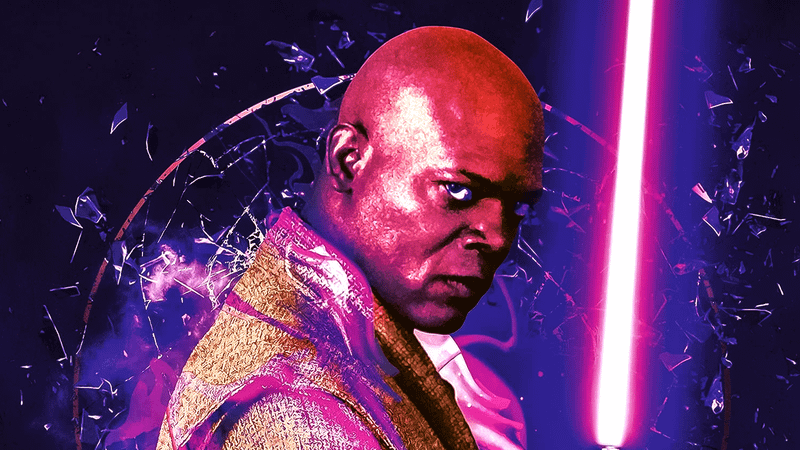
Matthew Stover's Shatterpoint is one of the most psychologically intense Star Wars novels ever written.
The story follows Mace Windu as he travels to Haruun Kal to find his former apprentice, Depa Billaba, who has seemingly succumbed to the horrors of war. Stover deliberately modeled the novel after works such as Heart of Darkness and Apocalypse Now, while also drawing inspiration from All Quiet on the Western Front. Knowing anything about those projects says enough about what Shatterpoint is like tonally.
Haruun Kal is a brutal jungle war zone where violence, racial tension, and psychological deterioration permeate almost everything. The novel repeatedly forces Mace to confront the uncomfortable reality that the Jedi are not simply peacekeepers anymore, and are instead soldiers participating in a horrific war.
Even the planet's wildlife becomes terrifying. Fever wasps implant larvae inside victims, with the larvae feeding on brain cells and eventually causing seizures, spasms, and death.
The result is a Star Wars story that feels considerably more mature than the average Jedi adventure, and one that Disney and Lucasfilm would undoubtedly want to tone down on multiple fronts if they ever wanted to bring it to life via a film or Disney+ series.
That is not necessarily because of one particular violent scene. It is because Shatterpoint treats war itself as horrifying. Its themes surrounding racism, colonialism, guerrilla warfare, and the psychological consequences of violence would require a much more serious approach than a conventional Disney+ Star Wars series.
An adaptation is technically possible, though. Andor didn't shy away from the horrors of warfare and the way it affected different people. But an adaptation that truly captured Stover's intent would probably be one of the bleakest Star Wars productions ever made, and it definitely wouldn't make for an enjoyable story.
Death Troopers
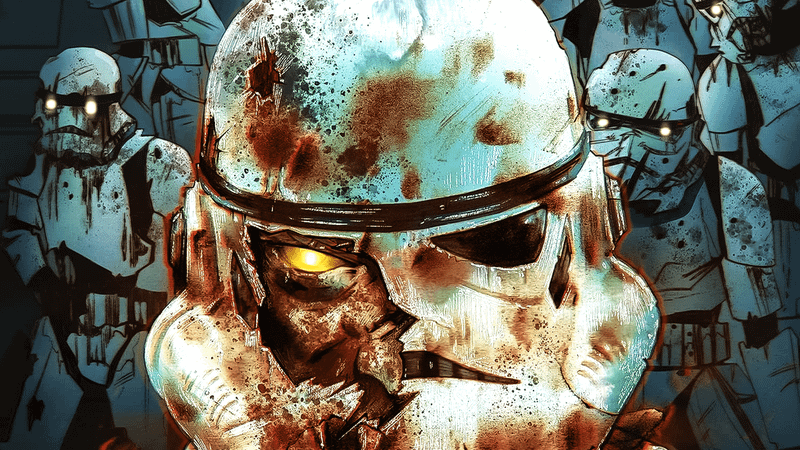
Earlier, it was mentioned that Star by Star may be the closest Star Wars has ever come to pure horror. That is true, but one could make an argument that Death Troopers is even more rooted in horror, and that it includes even more extreme elements, especially when it comes to body horror.
Death Troopers is perhaps the most obvious example of a Star Wars Legends story that Disney could adapt in concept, but would have difficulty adapting faithfully.
Joe Schreiber's 2009 novel is essentially a Star Wars zombie horror story. When a mysterious virus breaks loose aboard an abandoned Imperial prison ship, the survivors find themselves trapped with an increasingly aggressive population of undead.
The novel fully embraces horror rather than merely borrowing a few elements. It is absolutely unusually creepy for Star Wars, with some comparing its premise to the Dead Space video game franchise.
The zombies are also more than mindless monsters. The infection produces disturbing behavior, and the book uses the isolated Star Destroyer setting to create a claustrophobic atmosphere that is very different from a conventional Star Wars adventure.
Star Wars has occasionally experimented with horror, and modern Disney projects have shown more willingness to explore different genres. However, Death Troopers is fundamentally a zombie story filled with gruesome deaths and an atmosphere closer to adult survival horror than traditional Star Wars.
It would probably work brilliantly as a limited series aimed at an older audience. However, a straightforward adaptation would have to preserve the horror rather than simply turning the zombies into another army of disposable monsters, making it difficult for Disney and Lucasfilm to accurately capture the uniqueness of the book.
The Battle of Jabiim
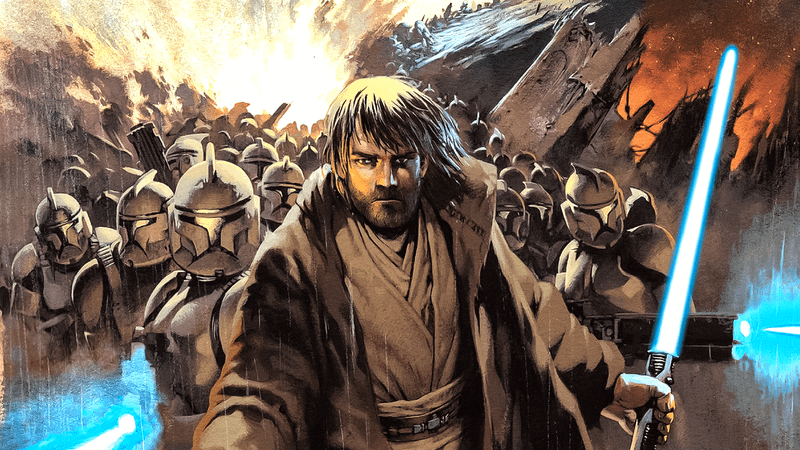
The Clone Wars have become synonymous with large-scale battles, but the Legends version of the Battle of Jabiim remains one of the most brutal examples of the conflict.
Originally told in the Republic comic series, the Battle of Jabiim has an unmistakably Vietnam War-inspired quality. The Republic becomes bogged down in a lengthy ground campaign against Jabiimi nationalists and Separatist forces, with terrible weather and difficult terrain making the conflict even more difficult.
The casualty figures are staggering. Around 10,000 clone troopers and Jedi were killed, while the Republic eventually abandoned Jabiim.
What makes the story particularly uncomfortable is that the Republic's retreat is perceived as a betrayal by the people who fought alongside it. The Jabiimi had sacrificed enormous numbers of lives, only to watch the Republic withdraw when victory was no longer considered worthwhile.
That gives the story a political complexity rarely seen in mainstream Star Wars. Now, Star Wars has never shied away from politics and has historically offered commentary on political issues, but it has never made the protagonists turn their backs on people they were helping and essentially leave them behind. The Republic is not simply the heroic side fighting evil in this story. Instead, it is an occupying power whose strategic decisions have catastrophic consequences for a population caught in the middle.
An adaptation could certainly depict a bloody Clone Wars battle, but preserving the full scale of the tragedy, including the sense that the Republic abandoned its allies, would make for an unusually bleak Disney-era Star Wars story that would paint the heroes in a bad light.
Star Wars: Dark Times
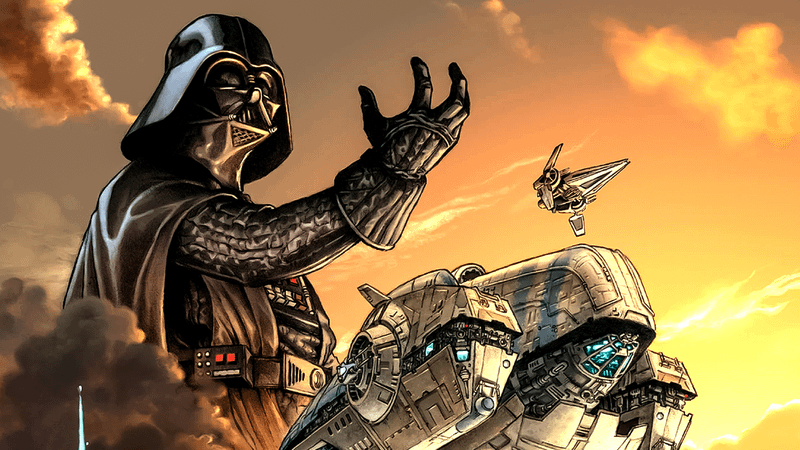
The title Star Wars: Dark Times is not exactly subtle about what readers are getting. The comic series has often been described as one of the most grim corners of Star Wars storytelling, and for good reason.
Set shortly after the rise of the Galactic Empire, one specific story told within the comics follows Jedi Master Dass Jennir and Bomo Greenbark as they struggle to survive in a galaxy increasingly dominated by Imperial oppression. The story is deliberately bleak, showing the immediate aftermath of Revenge of the Sith from the perspective of ordinary beings whose lives have been destroyed by the new regime.
But one storyline pushes Dark Times into especially disturbing territory, and it has to do with cannibalism. Not implied cannibalism, either. Literal cannibalism.
Bomo desperately searches for his missing daughter, Resa, only to discover that she was sold into slavery. The man who purchased her, Dezono Qua, is a wealthy human with a horrifying habit: He eats sentient beings. The story ultimately reveals that Qua ate Resa.
That is an extraordinarily dark concept for Star Wars, particularly because the story is not simply using cannibalism as a throwaway shock. Resa is an innocent child, and her fate becomes part of a broader story about slavery, Imperial indifference, and the destruction of families.
Disney could certainly depict the Empire's cruelty, but faithfully adapting this storyline would require confronting child slavery and cannibalism in a way that would be difficult to reconcile with the tone of a mainstream Star Wars production. At the end of the day, the issues featured in this story are likely ones that Disney would never want to touch, as it could undoubtedly turn a large portion of the audience away from Star Wars for good.