DC announced its third-ever superhero movie trilogy, the first to be produced under James Gunn's DC Studios banner, featuring one of the brand's greatest heroes. DC trilogies hold significant meaning as they enable complete hero's journeys while tackling themes deeply rooted in DC Comics' storytelling. Despite that, DC has only used this strategy twice: in Christopher Nolan's The Dark Knight trilogy and in the animated Justice League: Crisis on Infinite Earths, which concluded the Tomorrowverse. Until now, James Gunn's DC Studios, which formed in late 2022 when Gunn and Peter Safran took the reins of DC's movie & television arm, had not publicly announced any plans for an on-screen trilogy.
While James Gunn and DC Studios have mainly focused on producing content within the interconnected DCU (which kicked off with 2024's Creature Commandos and 2025's Superman and has over a half-dozen projects in various stages of development), it has also been making a number of projects that stand alone from the DCU. Live-action projects like The Penguin and The Batman Part II, which are part of Matt Reeves' The Batman Epic Crime Saga, and animated endeavors like My Adventures with Superman Season 3 and Starfire! are being produced and released outside of the DCU but still under James Gunn's DC Studios banner.
Looking ahead at DC Studios' live-action slate, James Gunn has reportedly considered developing a full trilogy for Reeves' The Batman, although those plans are far from solidified as the DCU sets the stage for its own iteration of the Caped Crusader. While Robert Pattinson stated in 2022 that he has his own ideas for how Bruce Wayne could evolve over three movies, Gunn remains firm that a third movie is far from being greenlit.
Additionally, Gunn's grand vision for the DCU is fronted not by a trilogy, but an entire four-film saga, with Superman at its center - 2027's Man of Tomorrow is set to be its second installment.
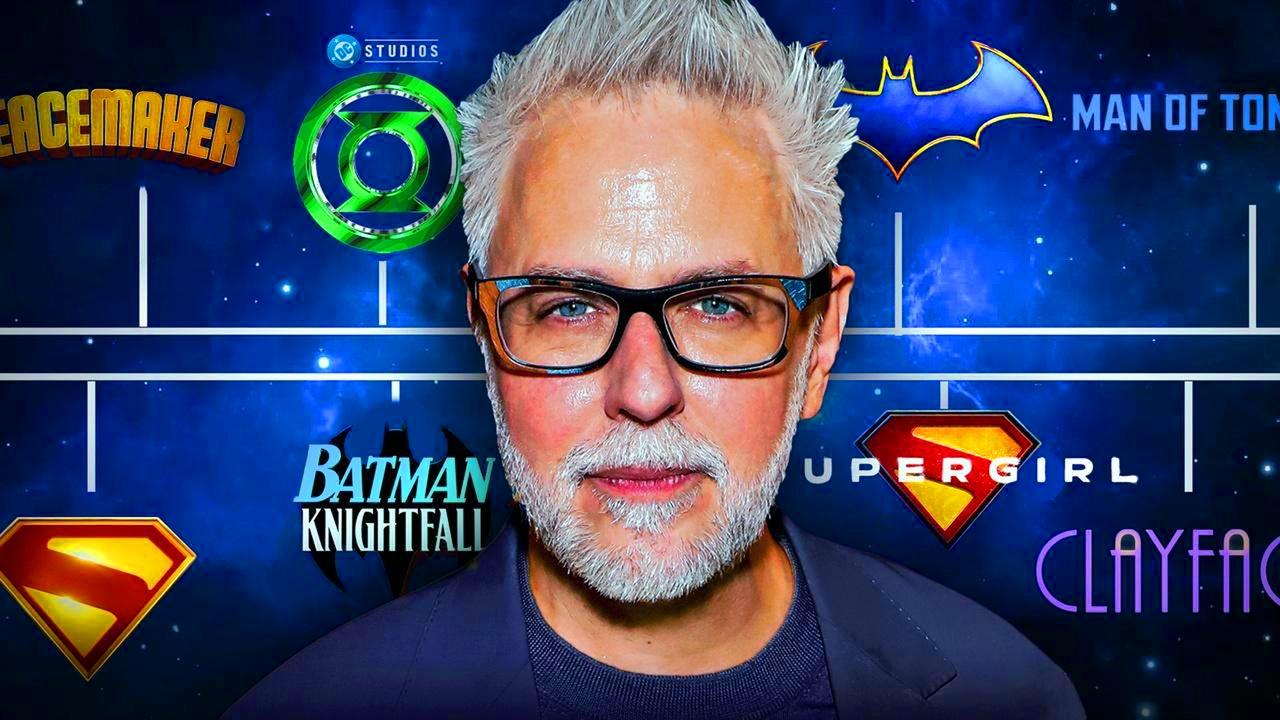
DC Studios, alongside Warner Bros. Animation and Warner Home Entertainment, confirmed that Batman: Knightfall will be DC's next superhero trilogy and announced the premiere of the first movie at the Annecy International Animated Film Festival in early May 2026. The upcoming trilogy is based on the Batman story arc of the same name that depicts Bane systematically dismantling the Dark Knight before exploring the consequences of his absence and return. This marks the first full movie trilogy to be greenlit under James Gunn's tenure at DC Studios.
Based on the original 1993-1994 comics event, the first part of the trilogy, Batman: Knightfall Part 1: Knightfall, will largely focus on Bane clashing with Batman. This Elseworlds-style project, confirmed to have a shorter-than-expected runtime, is not part of James Gunn and Peter Safran's DCU. Instead, it is a faithful and mature take on the Knightfall storyline that exposes Batman's vulnerability and his enduring journey, anchored by his resilience.
The other two parts of the trilogy are expected to explore the Knightquest and KnightsEnd storyline.
Batman: Knightfall Part 1: Knightfall is set to be released sometime in 2026, following its premiere at Annecy in June. It will join several other movie trilogies in DC's catalog, along with a few quadrilogies.
Every Other DC Superhero Movie Trilogy
The Dark Knight Trilogy
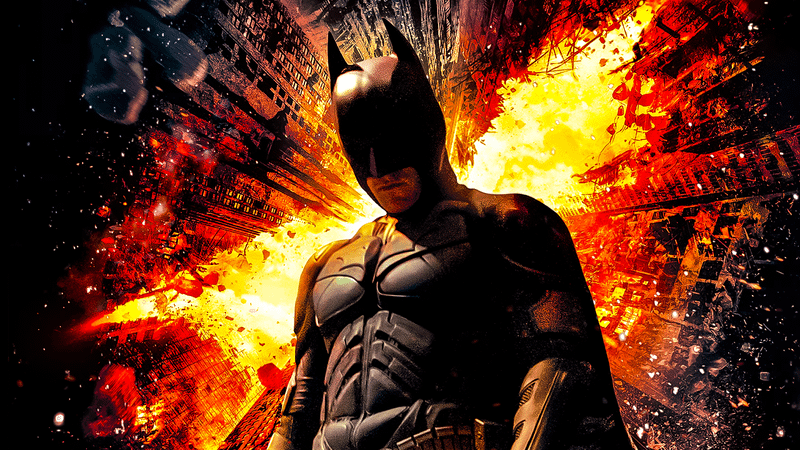
Released: 2005-2012
Christopher Nolan's groundbreaking Batman trilogy, featuring Batman Begins, The Dark Knight, and The Dark Knight Rises, is considered one of the greatest superhero trilogies in the modern era.
It introduced a Batman reboot anchored by grit, realism, and psychological depth. The trilogy delivered a strong foundation through its thematic weight, which tackled fear, chaos, and class struggle. Some argued that it "rescued" the Batman character following the box-office flop and fan complaints about Batman & Robin, while also spearheading a new era of superhero movies.
Nolan's trilogy grossed over $2.4 billion and earned widespread acclaim from fans and critics. This trilogy proved the superhero genre can tackle serious themes while remaining entertaining and honoring comic book roots.
Justice League: Crisis on Infinite Earths Trilogy
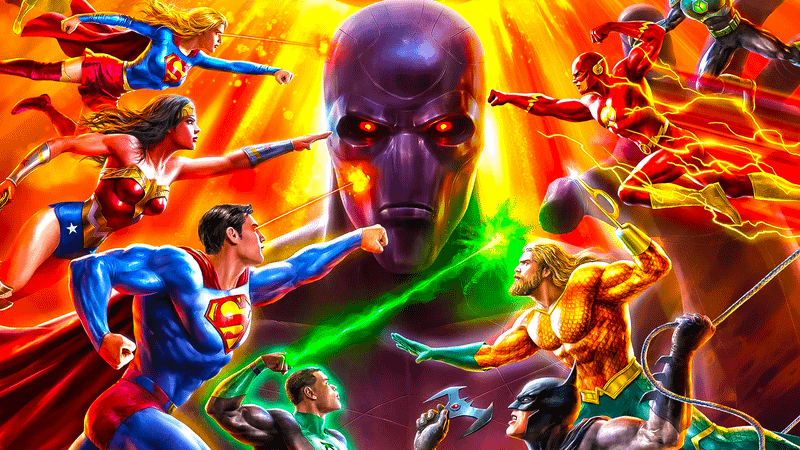
Released: January 2024 - July 2024 (Part I to Part III)
As DC Animation's three-part animated event, the Justice League: Crisis on Infinite Earths trilogy was a celebration of what came before and what was to come (read more about what happened after Crisis on Infinite Earths).
It effectively wrapped up the Tomorrowverse with the destruction of the Multiverse, resetting the animated continuity in a massive, fan-service-heavy crossover that featured the likes of Kevin Conroy's Batman, Mark Hamill's Joker, Batman Beyond, the Justice League and Teen Titans show from Cartoon Network, and the big reveal in the end that it was actually a continuation of the DC Animated Universe's final movie, Justice League Dark: Apokolips War.
The Crisis on Infinite Earths animated trilogy is what the Arrowverse's on-screen version was to past shows in other continuities: a love letter to the past and a pathway for future stories.
BONUS: Christopher Reeve's Superman Trilogy (Part of a Quadrilogy)
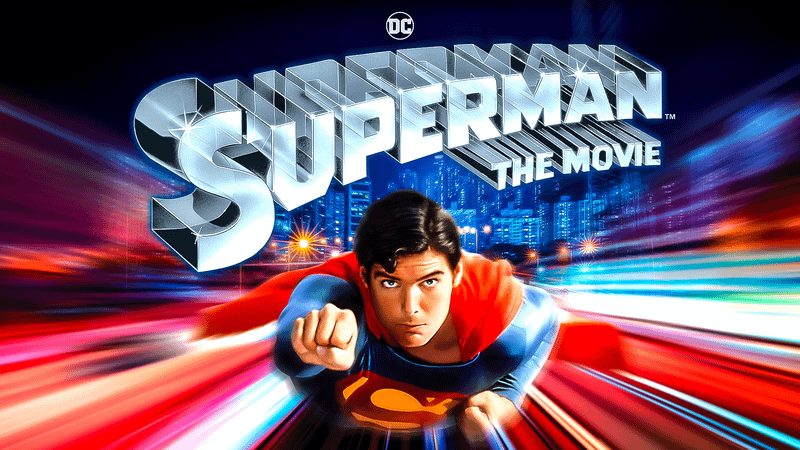
Released: 1978-1987 (Superman, Superman II, Superman III, Superman IV: The Quest for Peace)
The Christopher Reeve-led Superman quadrilogy showed that superheroes can be successful and headline big-budget blockbusters.
It set the template for finding the right balance between origin stories, romance, and spectacle, anchored by Reeve's incredible portrayal, which became the gold standard for decades. From a grounded villain like Lex Luthor to a more complex and powerful Nuclear Man, the quadrilogy introduced threats that pushed Superman to his limit and made him the superhero fans know and love today.
The first two movies are widely considered classics, while the latter two, though uneven, still delivered entertaining stories that completed the saga. Reeve's Superman remains a symbol of heroism and optimism, emulated by modern-day Supermen, namely Henry Cavill and the DCU's David Corenswet.
BONUS: '80s/'90s Batman movies (Part of a Quadrilogy)
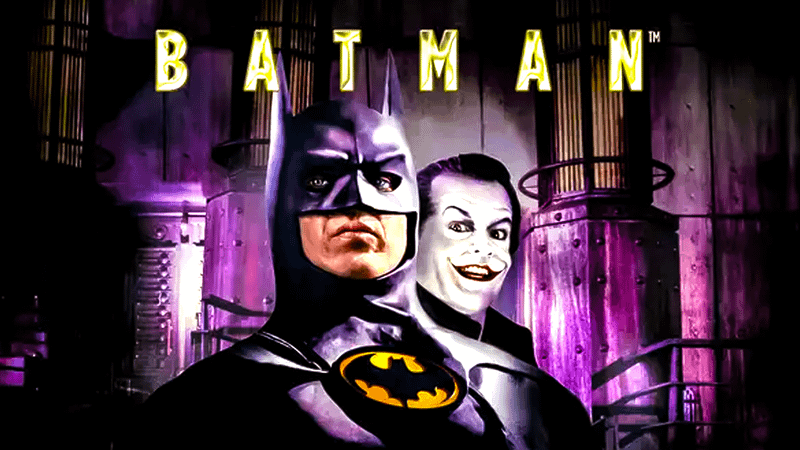
Released: 1989-1997 (Batman, Batman Returns, Batman Forever, Batman & Robin)
Many fans argue that the 1980s and 1990s Batman movies are part of a larger quadrilogy of Dark Knight movies, despite the tonal whiplash and recasts.
These four movies represent a distinct era of Batman on the big screen, bridging Tim Burton's gothic vision to director Joel Schumacher's comedic spectacle. Many also note that the films form a loose, chronological progression of Batman stories, collectively defining Batman's cinematic identity before Nolan's iconic Dark Knight trilogy.
Michael Keaton, George Clooney, and Val Kilmer all played Batman in these movies, while a star-studded lineup of actors portrayed iconic DC villains, including Jack Nicholson as Joker, Danny DeVito as Penguin, Michelle Pfeiffer as Catwoman, Tommy Lee Jones as Two-Face, Jim Carrey as the Riddler, Uma Thurman as Poison Ivy, and Arnold Schwarzenegger as Mr. Freeze.
This quadrilogy proved one thing: Batman could thrive across different interpretations.