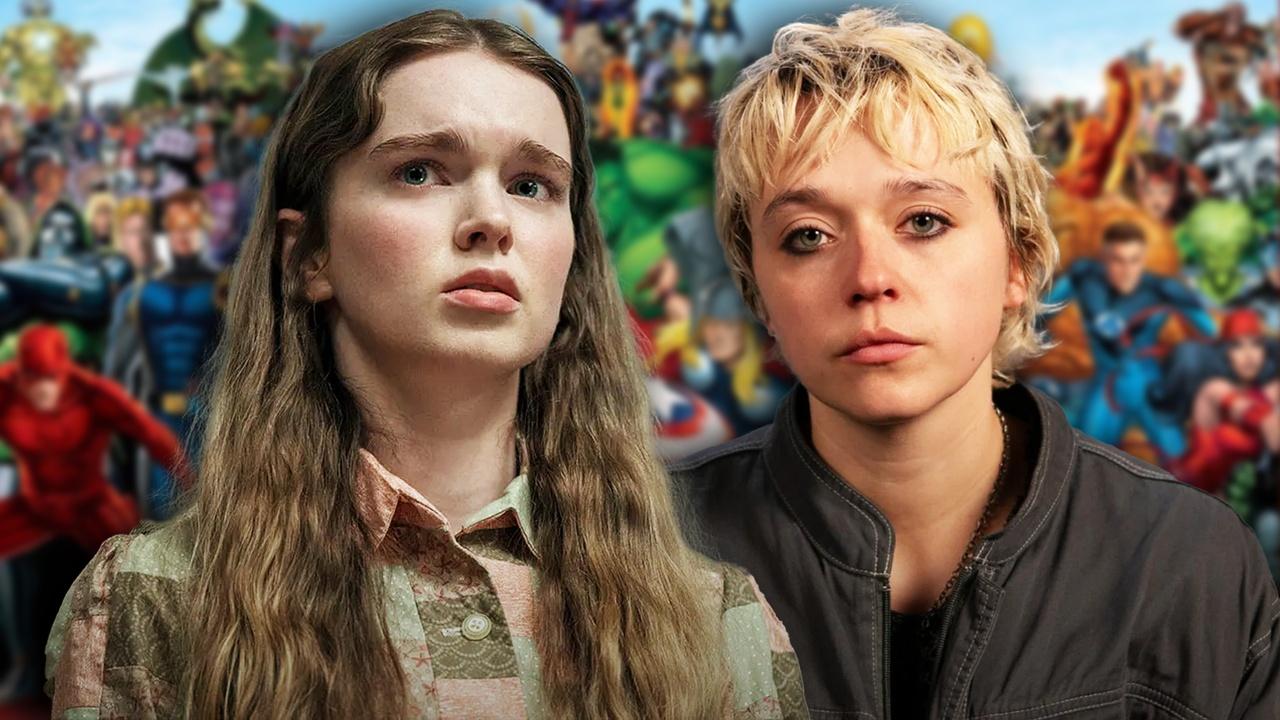
Carrie Season 2 is heading into an entirely different direction after the expansion of Stephen King's franchise, and this decision is clearly divisive among fans. Prime Video's modern-day retelling of Carrie introduced many changes from the book, such as exploring social media cruelty, a more loving (but still cruel) version of Margaret White, and the inclusion of a mysterious female group with telekinetic powers. Carrie Season 1 ended with Carrie surviving the destructive events at Ewen High School and in Chamberlain, Maine, setting the stage for a vastly different second season.
Carrie was pulled from the rubble of her mother's house by Emaline and driven out of town toward other people with powers. Margaret White, who also possessed a weaker form of telekinesis, managed to save herself from the collapse only to be killed later by Kate Siegel's Adelaide, who managed to stop her heart after an interview. Adelaide's line to Margaret about "a lot of people have a little bit of Shine, and they don't even know it," effectively folds Carrie's telekinesis into the psychic framework of Stephen King's The Shining and Doctor Sleep.
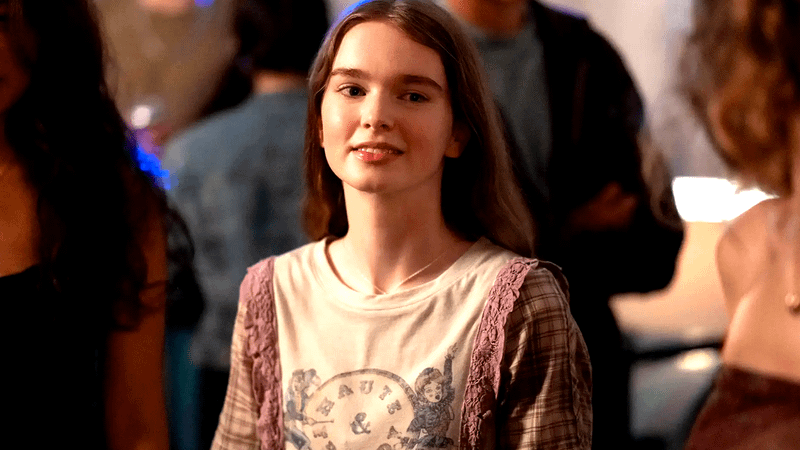
Adelaide's line turned a self-contained tragedy into the opening chapter of a large board, seemingly introducing "Avengers-like" elements in the finale. Speaking with Entertainment Weekly at this year's San Diego Comic-Con in July 2026, Carrie producer and writer, Mike Flanagan, confirmed that the series is "not as a finite story," because "the potential of the characters and of the greater world that she belongs to" invites a strong continuation:
"The beauty of not really being beholden to the book or to any of the previous adaptations is that the potential of the characters and of the greater world that she belongs to allows us to look at it not as a finite story. I don’t speculate as to what it could be or what Amazon may want to do with it down the line. My priority is to make these eight episodes as great as I can from start to finish."
In a separate interview with Collider, Flanagan admitted that his version of Carrie has a three-season structure, calling it his "dream scenario" if the series gets renewed by Prime Video:
"In my dream scenario. I think it’s three seasons. In my dream scenario, I think Carrie has a wonderful three-step arc. It’s a trilogy, really."
From the get-go, it has been planned for Carrie to stay alive until the end. In an interview with Inverse, Flanagan explained the need to change the ending, hinting that it raises the question, "What could this mean moving forward?"
"We had to end this so that if the last frame of video in Episode 8 is the last time we ever see this version of Carrie, that had to be right, that had to work. But always with this, because we knew she was going to survive the story very early, it was like, well, what could this mean moving forward?”
The decision to continue Carrie's story includes introducing Adelaide and her group of mysterious women, and this is the clearest "Avengers-style" pivot that has split the fanbase because Carrie is known for being an otherwise tightly focused adaptation. Most of the season's other changes, such as its modern setting, social media humiliation, and a more complicated Margaret, have drawn milder reactions.
Fans aren't pleased with Carrie Season 2's approach of "marvelizing" Stephen King's Shining universe, turning it into an expansive shared world. One viewer (via Reddit) who liked nearly every other change wrote that the ending and Emaline's inclusion as a whole were the disappointment, explicitly calling out the "Avengers-esque plot."
Another said that the show was close to a 10 until the last episode, then argued that the "Avengers-ification" of Carrie's powers worked in small doses earlier but completely took over the finale and distracted from the prom destruction and Margaret's death, which were supposed to hit emotionally hard.
In the finale, it was made clear that Emaline took control of Carrie, with him serving as the driver of the wheel when Carrie killed her schoolmates and destroyed the town. Other comments objected to the shift because it undercut the point of Carrie's evolution in the finale.
Why Carrie Taking the 'Avengers-Esque' Root Shouldn't Be Taken as a Problem
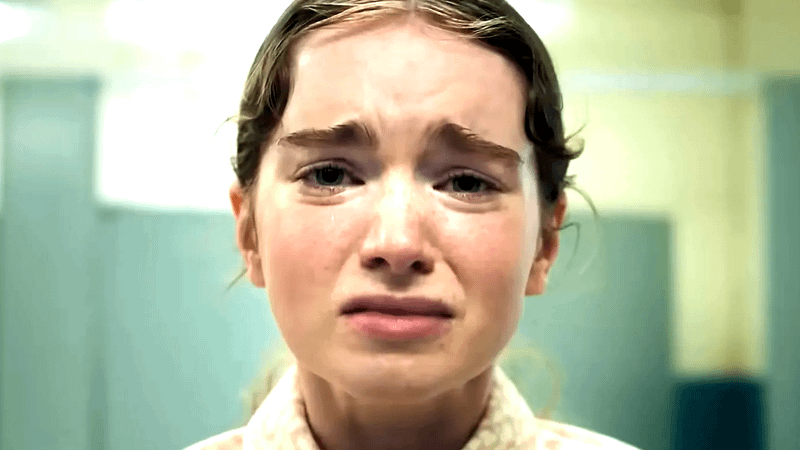
It's worth noting that Mike Flanagan's approach of "marvelizing" Carrie is not a betrayal of the source material. The finale opened a larger psychic world and left Carrie alive, but that move sits closer to how Stephen King already writes his stories than to a Marvel team-up template, and it also doesn't erase the tragedy the season just told (read more about the character ages of the cast of Carrie).
Stephen King's own books have never kept the shine in separate boxes. Telekinesis in Carrie is the "TK gene," and it's only the tip of the iceberg. The Shining introduced Dick Hallorann and Danny Torrance with broader psychic gifts, and then Doctor Sleep, The Institute, and Firestarter keep expanding on it, unleashing children with overlapping powers, institutions that hunt them, and nomads who feed on them. If King had written Carrie earlier (Carrie is King's first novel, published in 1974), Carrie White would have had the Shining.
The practical reason for the change is the format. Carrie is a short book, spanning only 207 pages, that seemingly fits a movie. An eight-episode series cannot stay within that frame without padding, and Flanagan has been consistent in his solution, given his comments about a three-season structure. Survival and the introduction of other women with the shine are the clearest solutions for sending this version of Carrie into the world and expanding the franchise like never before.
While shared universe fatigue is real, the Avengers-esque plot is necessary for this version of Carrie to stand out.