
Plenty of changes are always to be expected when adapting comic books into movies, some for the best, but many for the worse. Sadly, Craig Gillespie's Supergirl, starring Milly Alcock, is another case of changes made for the worse, with one change in particular outright ruining the thematic crux of writer Tom King and artist Bilquis Evely's Supergirl: Woman of Tomorrow.
It was already concerning news when DC Studios co-CEO James Gunn alluded to Supergirl having her Pre-Crisis origin rather than her Post-Crisis roots. A change confirmed by Kara herself in Supergirl when she told Ruthye her tragic origin story, mentioning that she was born eight years after the destruction of Krypton and raised on the floating piece of Argo City. But even that change pales in comparison to the ending.
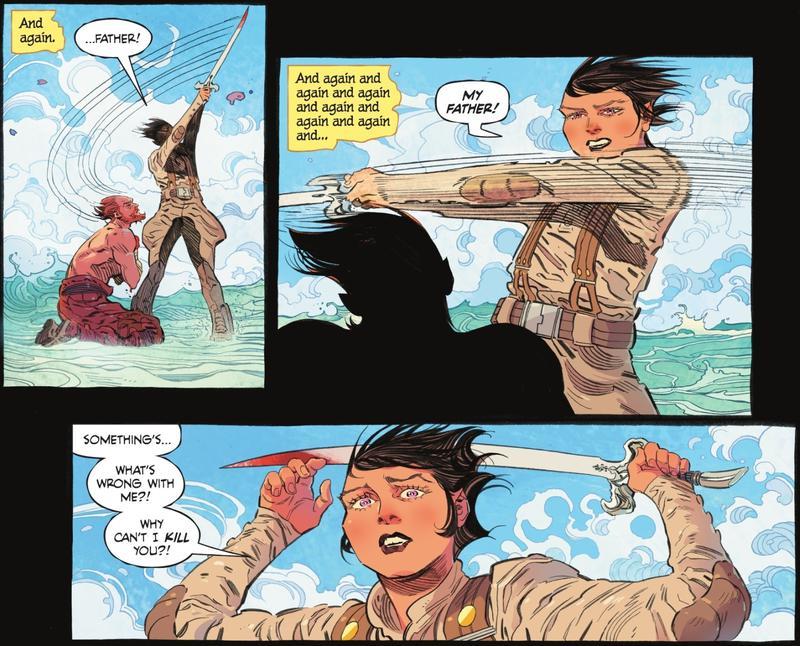
In the original comic, after Kara and Ruthye had finally captured Krem in the hopes of coaxing the antidote for Krypto out of him, Ruthye was left alone with him when Supergirl had to fight the Brigands. The young girl took this as an opportunity to finally get her revenge on Krem for killing her father, even giving him a fair fight and handily defeating him. But when the moment came to strike Krem down, Ruthye couldn't bring herself to kill him.

However, Supergirl soon returned with the body of Comet, Kara's Kryptonian horse (long story), who had died helping her fight the Brigands. Utterly jaded, Supergirl was prepared to kill Krem herself until Ruthye tried stopping her, as they didn't have the antidote for Krypto yet. It is here that the big twist of Supergirl: Woman of Tomorrow is revealed: Krypto was fine, and Kara had lied.

The poison was never a danger to the dog, and she knew what Krem looked like from the start. She only used both as an excuse to go on this journey with Ruthye and attempt to teach her the simple lesson that killing was wrong, but more so, how it wouldn't bring her any real sense of closure.
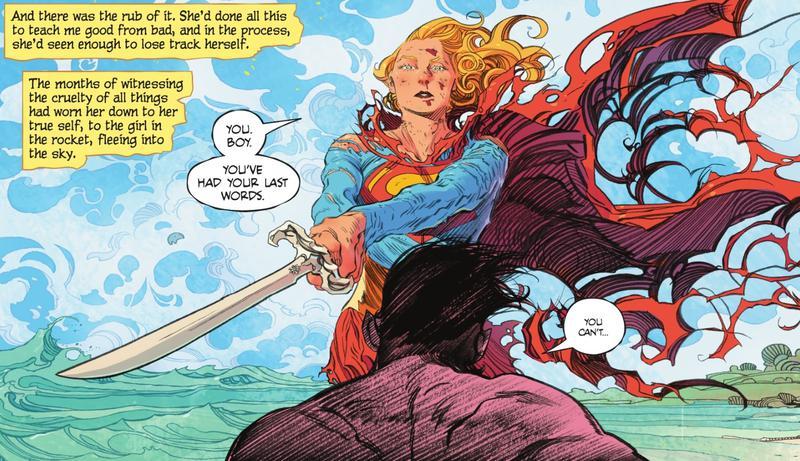
As Kara prepared to swing Ruthye's family sword to lob off Krem's head, the girl desperately yelled at the Kryptonian that she had learned her lesson. That, after everything she had witnessed and experienced on their journey together, she had realized, "enough killing's been done." Kara relents, sparing Krem, and instead traps him in the Phantom Zone as punishment.
Supergirl having her Pre-Crisis origin instead of her Post-Crisis one, while regrettable, wasn't a dealbreaker. Krypto being in actual danger from the poison was another change that removes nuance from the character, but gives audiences a more personal goal for Milly Alcock's Kara to strive for. Jason Momoa's inclusion as Lobo, while ultimately inconsequential to the movie's plot, doesn't ruin it.
What actually ruins it is the ending that contradicts not only its own themes but its direct inspiration, Supergirl: Woman of Tomorrow—a straightforward deconstruction of the typical revenge quest and the emptiness that comes with vengeance.
How the DCU Ruins the Ending of Woman of Tomorrow
The climax of Supergirl ends with a bombastic fight with the Brigands and Krem, the latter of whom ends up thoroughly beaten by Supergirl, who recovered from the planet's Kryoponite sun. Ruthye has him at her mercy with her father's sword, ready to kill him, but in a reversal of the original comic, it's Kara who has to convince Ruthye to stay her blade. Again, a negligible change that ends with the same result: Ruthye learning the lesson that killing Krem would only ruin her soul.
The two hug, Kara takes the sword from Ruthye, and proceeds to immediately undo the entire moral qualm of the movie by vindictively jamming Ruthye's family sword into Krem's guts, then his throat, killing him. Yes, Supergirl does it in the name of all the countless women Krem had trafficked, and her dog, but it still muddies the core lesson of the movie itself, let alone the comic it was based on.
If Supergirl had framed this as something that would negatively affect Kara, as she had warned Ruthye, it would have made more thematic sense as Kara's way of sparing the girl's still innocent soul. Instead, the movie frames it as the morally right decision, and by the time Kara returns to Earth, she appears more fulfilled and confident in herself, setting up her next appearance in her cousin's sequel.

It also isn't like Kara Zor-El is entirely against killing or capital punishment either. Something that is directly commented on in Supergirl: Woman of Tomorrow issue #5, when she and Ruthye witness the public execution of one Brigand at the hands of a planet he helped pillage and destroy, with Supergirl doing nothing to stop them.
What would have been more compatible with the movie's themes and Kara's insistence to Ruthye that killing Krem wouldn't bring her any relief would have been for the women the Brigands had enslaved to kill Krem instead, with Supergirl deliberately not interfering. It would also have harkened back to Supergirl: Woman of Tomorrow, with the people of that planet killing the Brigand.
In Tom King and Bilquis Evely's Woman of Tomorrow, Kara was only setting out to change the mind of one girl, not the galaxy. But the movie felt like it wanted to have its moral superiority about killing, while still having the primary satisfaction of the hero killing the bad guy, too.