It's been seven years since LAIKA Studios released one of its famous, handcrafted stop-motion animated films, but in that time, the studio has been busy. Featuring 233 handcrafted puppets, more than 1000 artists and craftspeople, and 2804 shots over 231 weeks, LAIKA's new film Wildwood might just be the studio's most ambitious film to date.
Ahead of its release on October 23, LAIKA unveiled Wildwood at TIFF, hosting a panel presentation featuring a nearly 30-minute preview of the film, as well as a dedicated pop-up event in Toronto's Portland Square, where fans could view several of the movie's intricate handmade puppets.
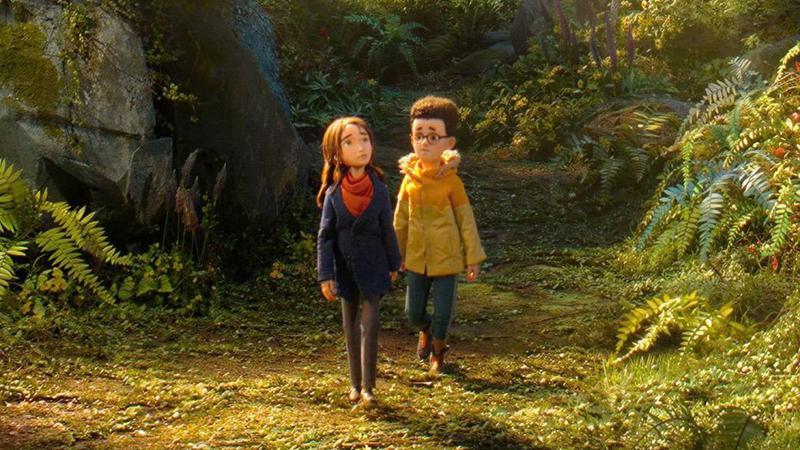
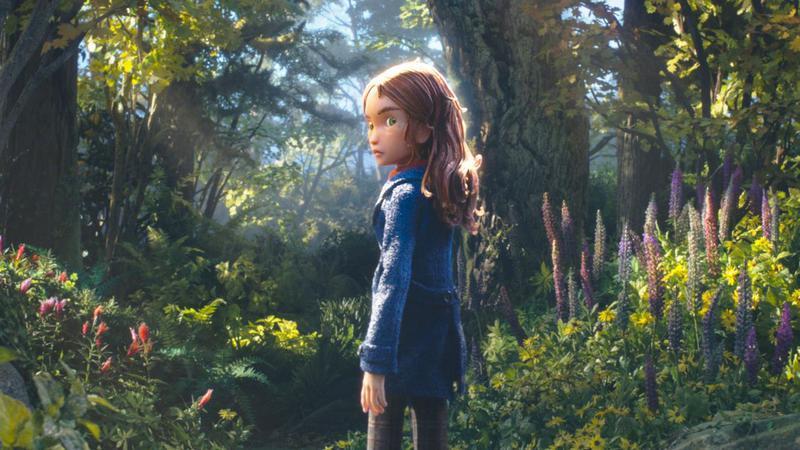
The new fantasy film follows a teenager, Prue (Peyton Elizabeth Lee), and her classmate, Curtis (Jacob Tremblay), as they venture into a magical forest in Portland to rescue Prue's abducted brother.
During the Wildwood: Inside the Performance panel at TIFF, which The Direct was in attendance at, star Jacob Tremblay and LAIKA creatives Brad Schiff (Head of Animation/Wildwood Animation Supervisor), Rachelle Lambden (Lead Animator), and Tom Carey (Stop-Motion Animator) shared more on the production process for Wildwood and what it takes to make a film as detailed and polished as this one.
How LAIKA Makes Its Animation Look So Amazing
Over the years, LAIKA Studios has become well known as a leader in the animation industry, with hits like Kubo and the Two Strings, Coraline, and The Boxtrolls.
For those who don't know how stop motion animation differs from computer-generated animation, Schiff explained his job as "[creating] authentic performances with inanimate puppets," sharing that to do that he'll "take a picture of a puppet, and move every single part of its body, and [then] take another picture and do it again, and again, and again. Then, when you play those photos together, it creates the illusion of life."
The process is intricate, painstaking, and slow, but results in something unlike anything else in the animation landscape.
Lambden added that stop motion is "actually closer to theater and live-action" than CG animation is, explaining that the latter has the opportunity to "go back in and correct" things, while stop motion would require them to "delete or start again."
Rachelle Lambden: "Well, CG and stop motion may share the same goal to create believable performances, but stop motion is fundamentally different due to the process and the physical world that it exists in. In some ways, it's actually closer to theater and live action.
With CG, there's an opportunity to go back in and correct and make it better and improve it. However, with stop motion, it's a linear process, so we shoot one frame at a time, one after another, and we build that performance. So the only way to correct that is to delete or start again. So our best tool is to prepare, and so how we do that is we shoot a keyframe block, followed by a rehearsal, which is like a dress rehearsal in theater, and then we shoot the final hero animation."
Live-Action vs. Stop Motion
Lambden shared that, despite working in a small-scale world, LAIKA's projects still address real-world challenges. The puppets still obey the laws of physics, so asking them to do something like jumping or falling involves a complicated rigging process. Lambden added that there are still mishaps on set, with a dedicated "puppet hospital" at LAIKA to mend any accidents:
Rachelle Lambden: "Even though we're in a tiny world, we actually have a lot of real-world challenges. So, with gravity, if we want a character to jump into the air, we need to rig it. And if a puppet breaks its arm, we actually have a puppet hospital. So there's a synchronicity when all of these elements come together, and we create the performance."
Schiff shared that another challenge is maintaining consistency when a team of up to 40 people is working on a single character. "We build a robust character bible," Schiff said. "Everybody knows how she's supposed to be and what her mannerisms are."
Brad Schiff: "In a live action film, you've got a protagonist that is one actor who plays a part in the entire film, and we have a team of 40 animators who are animating a particular character throughout the film. So, Prue, for instance, we had, I think, 36 Prue puppets, so it wasn't uncommon to have 30 different animators animating Prue at any given time.
So, in order to do that, we build a robust character bible, that we can share with the animation team. Everybody knows how she's supposed to walk, [and] what her mannerisms are. So no matter who's animating her, if they incorporate those things, individual style goes away, and it all feels like it's animated by one set of hands instead of 40."
The Wildwood team also explained how director Travis Knight (who recently directed Masters of the Universe) drew on his experience across live-action and animated projects for Wildwood. Lambden said that Knight "has a deep understanding of the [stop motion] medium," and pairs it with his knowledge of working with actors on live-action sets, so "you can have conversations with him as if you are an actor:"
Rachelle Lambden: "Travis is an incredible director, and he's got experience in feature films and live action as well as animation. But the other incredible thing is he is a very talented stop motion animator, and that's fantastic because he has a deep understanding of the medium, and he understands it technically, but he also understands how to push it creatively.
Because of his experience in feature films with live-action actors, you can have conversations with him that are more as if you are an actor, and he's very clear about the intention and the emotional expectation of the shot. So they're not just A to B shots, but you, as an animator, can bring a lot more to the table. What our goal is is ultimately to have that puppet feel like it drops away. That ends up being the medium, but really what you're watching is a live character who's living, breathing, and thinking."
Jacob Tremblay's Experience on Wildwood

Like most other major animation studios, LAIKA recruits a number of high-profile voice actors to bring its handcrafted characters to life. For Wildwood, Jacob Tremblay (star of The Little Mermaid and Room) came on board as Prue's classmate, Curtis, an awkward and endearing teenage boy.
Tremblay began working on Wildwood around five years ago, when the actor was still a young teen. During the panel, the actor shared that he was "going through puberty" while voicing Curtis, which helped him imbue the character with nervous energy and voice cracks:
Jacob Tremblay: "So, this was like the point in my life where I was just going through puberty. So, you can probably tell from my voice that it's changed a little bit... I think it was very easy to play into this kind of nervous kid, because I was having a lot of voice cracks, and you guys probably heard that a lot too. I'm like throwing that in there. One thing I will say though is, though it is an animated film, and we need to have fun and bring it to life, for the most part, the performances stayed pretty grounded."
Tremblay also had the chance to visit LAIKA studios in person in Portland, where he shared some of his realizations seeing the process come to life. "I didn't know that the skin [of the puppets] would be kind of realistic and squishy," the actor said. Tremblay added that he was blown away by "how big the sets are:"
Jacob Tremblay: "I didn't know that the skin would be kind of realistic and squishy, like rubbery. So that was a little weird. I mean, I grew up watching LAIKA's films, and one of the things I never realized or never really thought about was the scale of how big the the sets are, because they're just made for the background of these puppets, but then you go there and they have these huge studio buildings just full of these sets, like the size of the stage. It's crazy. And the attention to detail, too, is just immaculate."