
Ever since the first Hunger Games film, audiences have known that Haymitch Abernathy had a tragic history and a catastrophic time winning his own games back in the day. Well, now it's time for fans to experience the depressing devastation of his story with The Hunger Games: Sunrise on the Reaping.
Taking place twenty-four years before the first The Hunger Games, Sunrise on the Reaping follows Joseph Zada's 16-year-old Haymitch Abernathy as he's pulled into the 50th Hunger Games to represent District 12. Also known as the Second Quarter Quell, this year's games are different. This time, there are twice as many tributes—four per district.
Joining Joseph Zada in Sunrise on the Reaping are McKenna Grace as Maysilee Donner, Ralph Fiennes as President Snow, Jesse Plemons as Plutarch Heavensbee, Elle Fanning (from the recent Predator: Badlands film) as Effie Trinket, Whitney Peak as Lenore Dove, and so many more.
The Direct sat down with The Hunger Games: Sunrise on the Reaping director Francis Lawrence and producer Nina Jacobson to discuss how they kept audiences from drowning in the sadness of Haymitch's origin story, and what makes this installment of the franchise truly unique.
Keeping Audiences From Drowning In Haymitch's Tragic Hunger Games Story

"My Goal Is Always to Find as Full an Emotional Meal as Possible
- The Direct: "Haymitch does not have a very good time in this film. I think we all know that was going to happen, given where he is in the original movies. But can you both talk about working to make sure audiences never drown in the darkness and depression of Hamish's story?"
Francis Lawrence: Part of it comes from, obviously, Suzanne's source material, but I think you know it's finding layers... My goal is always to give as full an emotional meal as possible, right? So that means ideally you cry, ideally you laugh, ideally you're terrified, ideally you have moments of wonder. You know that you have all of these things...
Lawrence noted that there's a "balance" and a "sort of nuance that makes stories interesting:"
Lawrence: That's something that we strive to do is to sort of create worlds and stories where you can have that full experience, so you can see the positivity of him for that first morning, and see his love with his girlfriend and with his family, and feel the stress of seeing him go to the games in the Capitol, and have humor with Caesar Flickerman or Effie, and all of that. I think it's just really trying to find all of that balance because I think it's that sort of nuance that makes stories interesting.
Nina Jacobson: It is a very emotional book and a very emotional movie, but I also think it's really hopeful because once you sort of realize all that he went through and his ability to endure it and to keep resisting and to keep fighting and to hang in there, there would be no 'Catching Fire,' no revolution, no ending of the games without that endurance and that courage and that holding on to your belief that change—that nothing is inevitable. That you can make a change, but you might not see it right away.
It's a message that Jacobson feels is perfect "for a generation that is living through a time where it feels very hard to imagine things changing:"
Jacobson: You might take a generation. And I think for a generation that is living through a time where it feels very hard to imagine things changing, I think it's actually a very hopeful message, which is like it can get dark as hell, and it's still worth the fight, and it's still worth hanging in there, and it's still worth passing the baton because sooner or later you're going to pass the baton to someone who can help change it all.
What Makes The Hunger Games: Sunrise on the Reaping a Truly Unique Installment
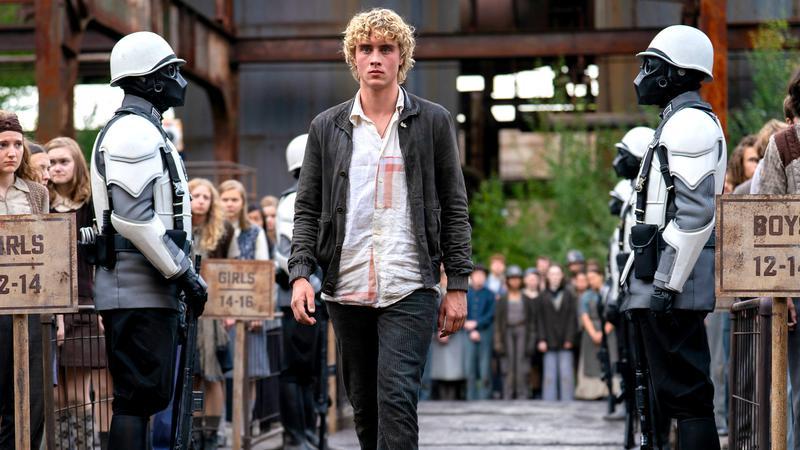
"This One Pulls the Curtain Behind [The Games] In Ways That the Others Haven't
- The Direct: "If you were to kind of point at anything specific that you feel is truly unique about this film that really sets it apart from the previous installments, what would you both say that is?"
Francis Lawrence: I mean, I think I would point to two things. One is that I think that the reason these books all exist is because Suzanne writes about very thematic, specific thematic material. So the idea of this movie being about implicit submission, and it being a movie that's about a sort of call to action, right? That you can't be apathetic and sit back and say nothing. You have to stand up. You have to fight, and not expect instant gratification. That it could take years, even generations, for things to happen. That's definitely one thing that is defining for the movie.
Lawrence added that "the aesthetic is very unique and specific" to Hunger Games: Sunrise on the Reaping.
Lawrence: And I would say the other thing is the aesthetic is very unique and specific to it, and luckily, because of the way Suzanne writes these books, they exist in different sort of parts of the timeline of the overall series, which allows a lot of visual freedom in creating different aesthetics for each of the movies.
Nina Jacobson: Francis and I [would] laugh sometimes about that when we first realized that we were going to get to go back to the world of Panem. It was with 'Ballad of Songbirds and Snakes,' and I love that book. But when you let fans know how you've been, maybe hoping for a return to Panem. Well, you have all these characters you love. Well, this isn't about any of them. This is about the guy you hate. It's about the villain, and... the spectacle of the games, well, it doesn't really have that either. They're brutal. They're short...
"The things that we learned in [Ballad of Songbirds and Snakes] actually brings bring different lens to this movie," Jacobson further elaborated.
Jacobson: ... And yet I think the things that we learned in 'Ballad' actually bring such a different lens to this movie because of your insight into Snow, his relationship with [District] 12, those Covey girls, and the trouble they can stir up, and how personal it is for him, but also all the things that he learned that we have come to associate with the games. Now we understand that side of it...
She went on to add that in Sunrise on the Reaping, the movie shows the games and its propaganda "through the lens of the person making them into propaganda:"
Jacobson: And then the other thing is the Plutarch side of it, the making of the propaganda. We know that games are propaganda, but we've never sort of seen them through the lens of the person making them into propaganda, and so whether it's seeing that The Reaping you see on TV is not The Reaping that happened; it's The Reaping you see on TV. Same with the Chariot Parade or the games themselves...
"I love that this one pulls the curtain behind [the games] in ways that the others haven't," Jacobson concluded.
Jacobson: And I think for a very media-savvy audience, I love that this explores that side of it because I think, see, audiences are very smart. Young people are very smart. They know that they're eating, you know, canned and produced entertainment. That reality TV is not reality. But I love that this one pulls the curtain behind [the games] in ways that the others haven't.
Our full interview with the Hunger Games: Sunrise on the Reaping filmmakers can be seen here: