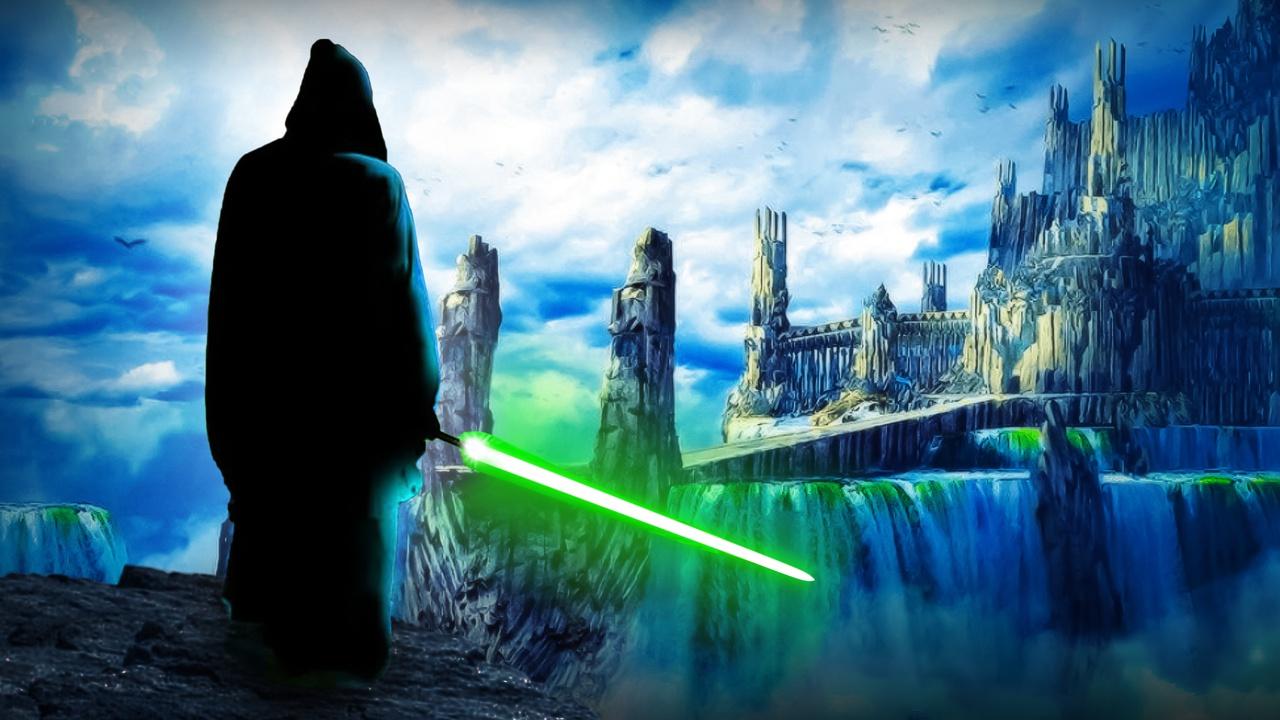
After many years of secrecy, Star Wars finally revealed official imagery of the Netherworld of the Force, also known as the afterlife of the Star Wars universe, or the place where Force ghosts reside. Since 1980's The Empire Strikes Back, Star Wars fans have been familiar with Force ghosts and knew that the spirit of a Jedi did not end when their physical bodies perished. Then, in 2005's Revenge of the Sith, Yoda specifically namedropped the Netherworld of the Force, indicating that it was where the spirits of Jedi went to become ghosts.
A recently released canon Star Wars comic book finally showcased what the Netherworld of the Force (or the afterlife) looks like. Star Wars' afterlife has been talked about through dialogue over the years, but this is the first time it has been explicitly shown in detail in any project.
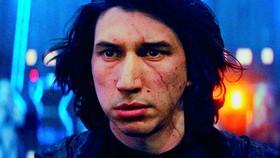
The comic (Legacy of Vader #10), which premiered in November 2025, showcased Kylo Ren traveling to the Netherworld of the Force and interacting with the Force ghost of Luke Skywalker. Since this story features Luke as a Force ghost, it takes place after the events of The Last Jedi.
Essentially, the comic follows Kylo Ren as he searches for answers about Darth Vader, as well as how he can rid himself of Luke Skywalker, who is seemingly always on Kylo's conscience. To do that, he visits Vader's old castle on Mustafar, and he is thrust into multiple otherworldly realms.
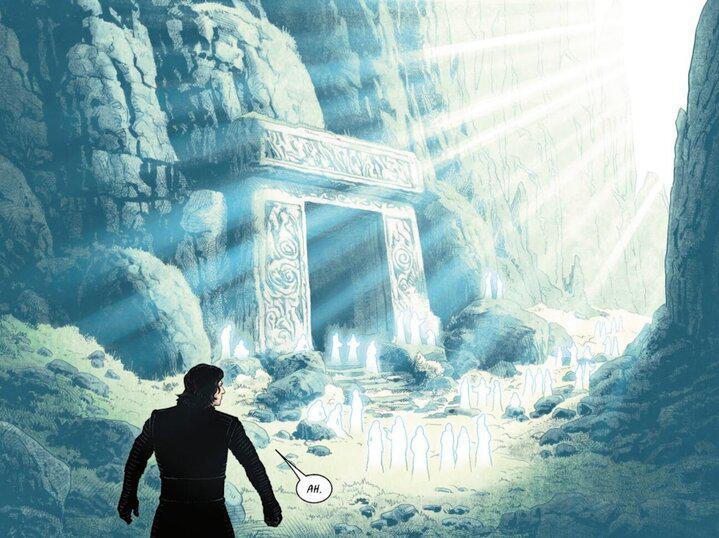
One of those realms is full of light and peace, and in it, Kylo only has a blue lightsaber by his side. When he first arrives, there seems to be an entrance to a temple ahead of him, as well as many ghostly figures.
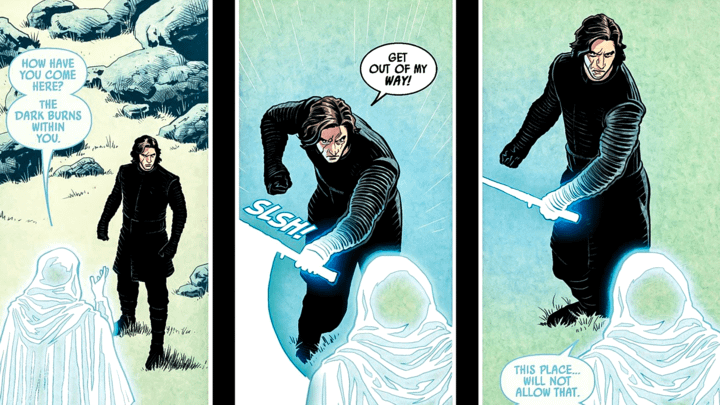
At one point, Kylo even tries to cut down a Force ghost who questions how he is there since there is so much darkness in him. Obviously, since Kylo is in the afterlife, he cannot hurt the Force ghost.
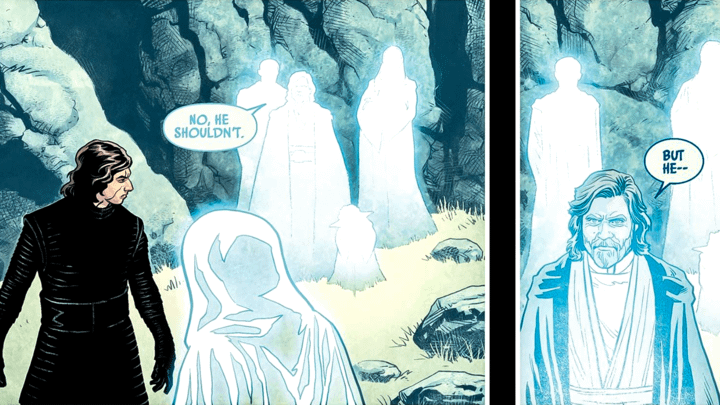
Then, a familiar voice comes from behind Kylo, and readers can instantly recognize that it is the ghost of Luke Skywalker, who is notably standing beside Yoda.
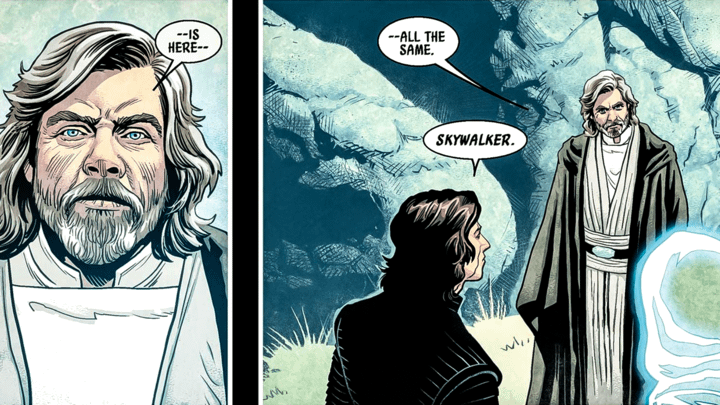
Luke confronts Kylo and appears more like his human self as he gets closer.
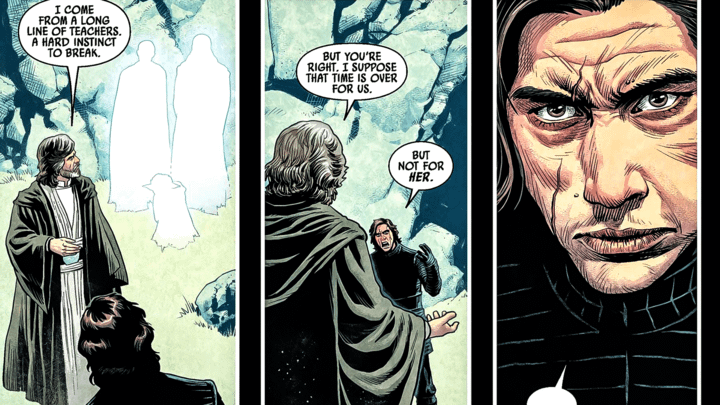
In one panel, there are three other blue silhouettes behind Luke. The comic does not confirm who they are, but Luke states that he "[comes] from a long line of teachers," implying that the three ghosts are Yoda, Obi-Wan Kenobi, and Qui-Gon Jinn.
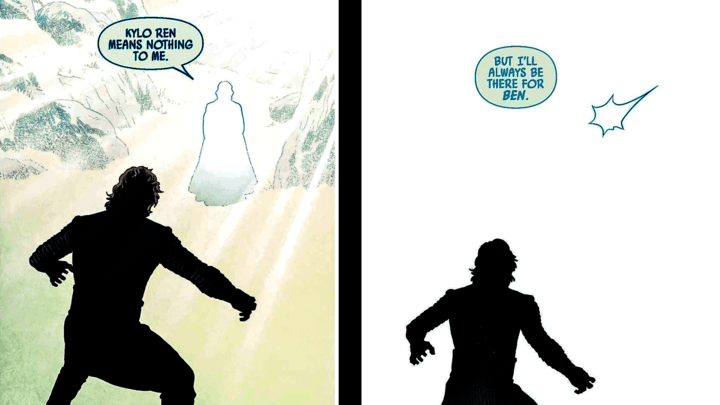
After speaking with Kylo for some time, Luke says that "Kylo Ren means nothing to [him]," but that he will "always be there for Ben (Solo)."
The comic does not spend a ton of time fleshing out the Star Wars afterlife realm, but it does confirm that it is essentially a place of eternal light. The surrounding area has physical formations of rocks and mountains, but they are all in a blue hue, as are the Force ghosts.
As mentioned, this is the first time in Star Wars canon that the Netherworld of the Force has been showcased in its entirety. It pulls back the curtain a bit to show what beings do while in the realm, teasing that they are in a place of eternal fellowship and happiness with one another.
Star Wars' Netherworld of the Force (Heaven) and Chaos (Hell) Explained
At its core, the concept of the afterlife in Star Wars is extremely similar to the afterlife most Christians believe in. For instance, the Netherworld of the Force is Star Wars' representation of Heaven, as it is a place of eternal peace and light. There is a common misconception that only Jedi can enter the Netherworld, but that is not true. Other living beings, no matter if they are human, alien, animal, or creature, can live in the Netherworld.
Like Christianity, Star Wars also has its own version of Hell, which is referred to as Chaos. Chaos (which is also known as the Void) is an unpleasant realm of the afterlife. Just as the Christian Bible often associates the number six with imperfection, sin, and rebellion (with the number 666 being directly associated with the Antichrist), Star Wars' version of Hell is said to be a pit guarded by six impenetrable gates.
Chaos is not talked about nearly as much as the Netherworld is, but it does exist. Characters even use the word "hell" in canon media just as people in the real world do. For example, in The Empire Strikes Back, Han Solo says, "Then I'll see you in Hell," further implying that the fictional universe has its own version of a dark afterlife.
Star Wars does not explicitly state how it is decided which beings are sent to the Netherworld and which are banished to Chaos. Most likely, since the Netherworld is filled with the spirits of Jedi, and not Sith, it is based on the morality of individuals while they are alive.