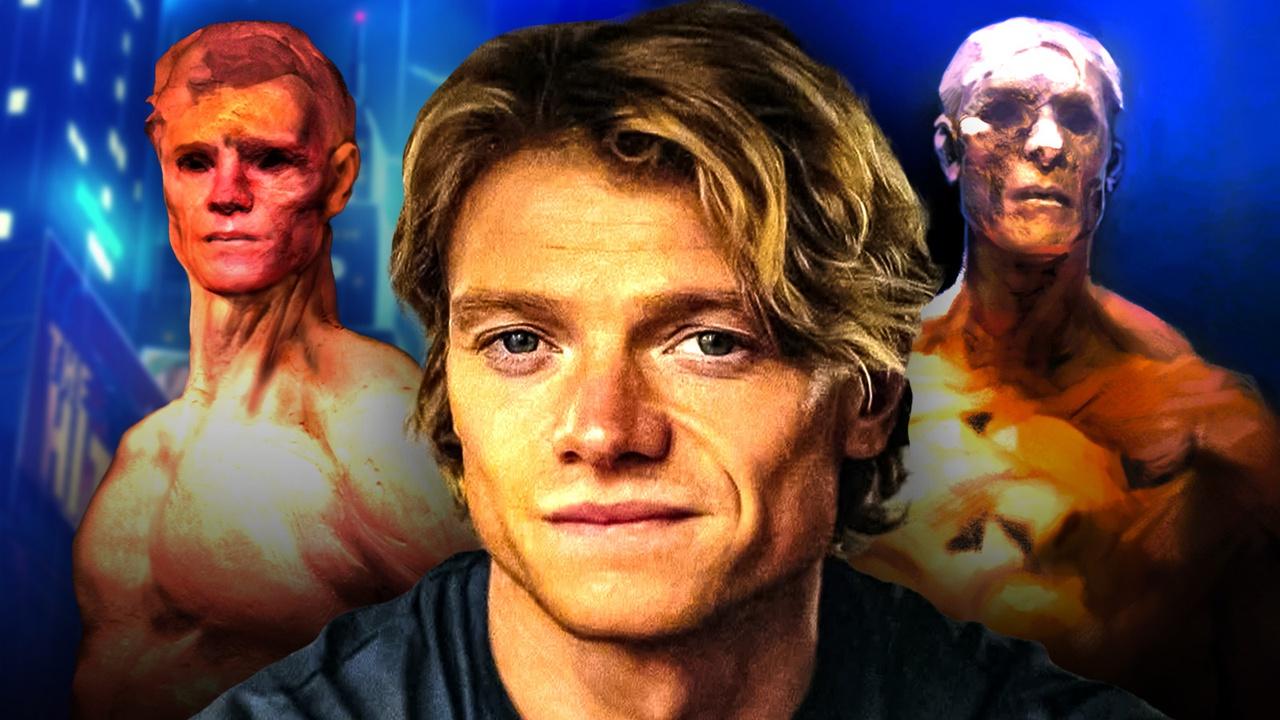
Clayface's terrifying final form in the DCU horror film that hit theaters on October 23 could have looked very different, and concept art from the film's early development proves it. Clayface is the third film in James Gunn's DCU and the fledgling universe's first foray into horror, an R-rated body-horror tale written by Mike Flanagan and Hossein Amini and produced by Matt Reeves alongside Gunn and Peter Safran. Since its release, the film has been well received, and one of its best elements is Matt Hagen's grotesque body morphing. Director James Watkins and the creatives on board could have gone a very different way with Clayface's final design, but their choice turned out just as good.
Artist Carlos Huante shared his unused designs for Matt Hagen's clay form on Instagram, and they paint a far more terrifying picture of the Batman villain than what made it to theaters. Huante worked on Clayface before the movie was even greenlit. His designs show Tom Rhys Harries' character in a far more grotesque state of mutation, a sharp contrast with the finished film's more polished take on Hagen's transformation.
The artwork Huante posted shows a muscular, shirtless Hagen who looks more clay than human. In one image, Hagen has an asymmetric skull with deeply textured, scarred skin. Another shows one of his arms elongated and swollen. A gray-toned piece is among the most intriguing, giving Clayface a truly monstrous vibe. That design also bears a striking resemblance to the Ethan Bennett version of Clayface from the 2004 animated series The Batman.
Huante is no stranger to vicious-looking creatures, and it shows. The veteran concept artist worked as a creature designer on Prometheus and Alien: Covenant and developed early designs for Legendary's Godzilla. His take on Clayface comes with all the hallmarks of that creature-feature background.
Given how strong the design is, it's surprising DC didn't use his take. As it turns out, there's a story there, and Huante told it in his post.
He explained that he "did some work on it before it was greenlit" and admitted that "it wasn't clear what they were going to do with it at first." Once the project took shape as an origin story, the direction became obvious to him: "it was going to be a horror movie rather than the Batman supervillain."
The artist then revealed that he was "only hired for a week" and added that even that short stint "seemed to be a stretch for their budget," and the Clayface team ultimately went another way.
How DC Approached Clayface's Monstrous Form in the Final Film
Although the finished film went another way with Clayface's form, the result still looks great, leaning into the body-horror approach Peter Safran once compared to The Fly. In the film, Matt, a rising Gotham actor fresh off an Oscar nomination, gets his face carved up in a knife attack ordered by crime boss Markos Szabo after a one-night stand with the mobster's girlfriend.
Desperate to reclaim his career, Matt turns to Dr. Caitlyn Corr, a fringe scientist developing an experimental restorative treatment using nanites. The procedure works, but it turns him into a shapeshifter, and his quest for revenge spirals into the birth of the villain Clayface.
The full creature only appears in the movie's closing moments, after Dr. Corr triggers the nanites' kill switch and Matt's body melts away into Gotham's sewers. Instead of dying, he survives down there, and the final scene shows his body changing into a hulking monstrous form as he roars in rage.
Getting that final look right didn't come easy, with the team circling through other designs after Huante's. Watkins admitted they went through "a lot of different iterations" and only had "a vague sense" of the endpoint. Production designer James Price took the first crack at the creature, Legacy Effects built the practical mid-transformation stages worn by Harries, and the final CG version came to life from there.
The crew even hired a six-foot-seven stand-in and designed him a full monster suit so Watkins and cinematographer Rob Hardy could test lighting on set, even though the finished shot is fully CGI. All in all, Clayface's design turned out great, making good use of its lean $40 million budget.
Geraldo Amartey is a writer at The Direct. He joined the team in 2025, bringing with him four years of experience covering entertainment news, pop culture, and fan-favorite franchises for sites like YEN, Briefly and Tuko.