Project Hail Mary's movie adaptation omits a pivotal detail that clarifies humanity's fate back on Earth. Following a huge marketing push from Amazon MGM Studios, and filmmakers Chris Miller and Phil Lord, the Ryan Gosling-led sci-fi film has arrived in theaters with strong box office momentum. However, fans of Andy Weir's 2021 bestselling novel have quickly pointed out several changes from the source material. Among them, the absence of a crucial end-of-story reveal leaves the movie's version of Earth’s outcome far more ambiguous than in the book.
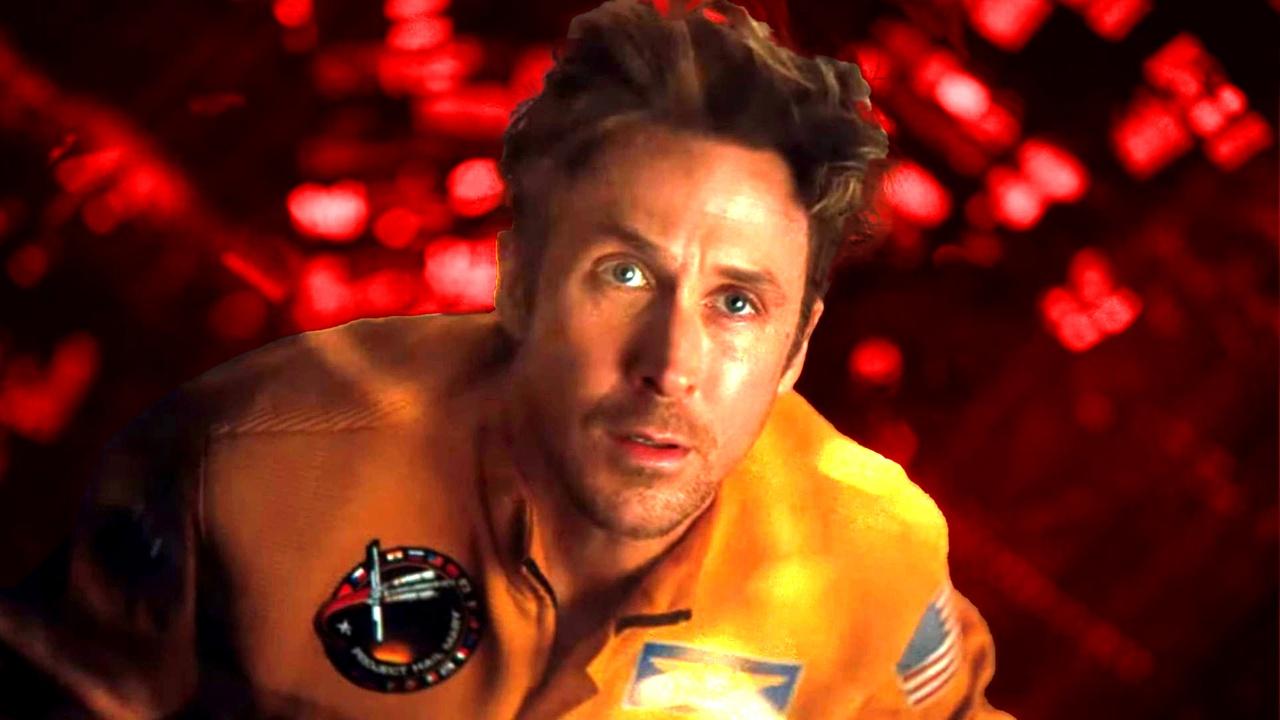
In general, Lord and Miller's Project Hail Mary sticks the landing in a way most book fans were hoping for. It follows the same emotional and narrative arc: Ryland Grace (Gosling), a middle school teacher turned reluctant astronaut, is sent on a last-ditch mission to stop the Sun from dying.
Along the way, his unexpected friendship with the alien Rocky ends up being the heart of the story, just like it was on the page and arguably one of the film's biggest wins.
But the movie does make one small, yet meaningful, tweak to the ending. The broad strokes are identical. Grace ultimately chooses not to return to Earth, even though he has the means to do so, because he has to save his friend.
When he realizes Rocky is stranded without fuel or power, he turns the ship around, sacrifices his chance to go home, and saves his friend. That decision leads him to the planet Erid, where he now lives in a human-compatible dome, built by the Eridians.
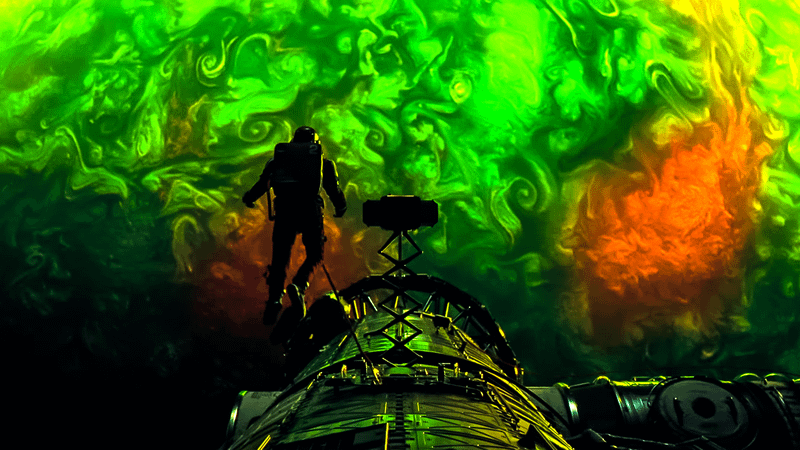
Where things shift is in how the story treats Earth's fate.
In the film, we actually cut back to Earth and see Eva Stratt (Sandra Hüller) receiving what audiences can assume is all of Grace's data. She's shown watching his recordings and heavily inferred that the Taumoeba project is about to be implemented to eliminate the Astrophage. It strongly suggests that humanity is on the path to survival, but it stops short of outright confirmation.
That's a notable departure from Weir's book. In the novel's final chapter, the Eridian scientists confirm that the Sun's luminosity has been restored, meaning Grace's plan worked.
There's no ambiguity, Earth is saved, full stop. Just as important, Grace himself gets that closure. He knows his sacrifice meant something.
The film, on the other hand, leaves that door slightly open. Earth will likely be saved, but it's never definitively stated... and Grace never finds out for sure.
It's a subtle change to basically the same ending, but it shifts the moment from one of confirmed success to one that leans more toward faith and uncertainty, giving the story a slightly different conclusion.
Despite this, and some other tweaks to the journey, Project Hail Mary is receiving rave reviews from critics and general audiences alike. The new sci-fi film has a 95% critics score and 97% audience score on Rotten Tomatoes, making it the clear best movie of 2026 so far for a lot of moviegoers.
Notable Project Hail Mary Movie Changes
Before the ending, the rest of the adaptation's changes are a mixed bag of smart trade-offs, and most of them work.
The biggest cut is the "coma-resistant DNA" angle. In the book, a key reason why Grace has to be the scientist replacement on the Hail Mary mission is because of a rare genetic trait that lets him survive the long sleep. All of the crew members going on the one-way Hail Mary trip are coma-resistant.
The movie tosses that entirely, replacing it with pure urgency. The timeline is so tight that they launch immediately, or millions more people die.
A lot of Grace's inner monologue is gone, too. The book is first-person, so you're living inside his head, experiencing every panic spiral and every scientific breakthrough in real time. The film obviously can't replicate that, and the result is a leaner, slightly less personal story.
On the addition side, Grace actually visits Rocky's ship in the movie, which never happens in the book. Rocky always comes to him. But getting to step inside the Blip-A and see how Rocky lives is too good of a visual opportunity to pass up, and it really works.