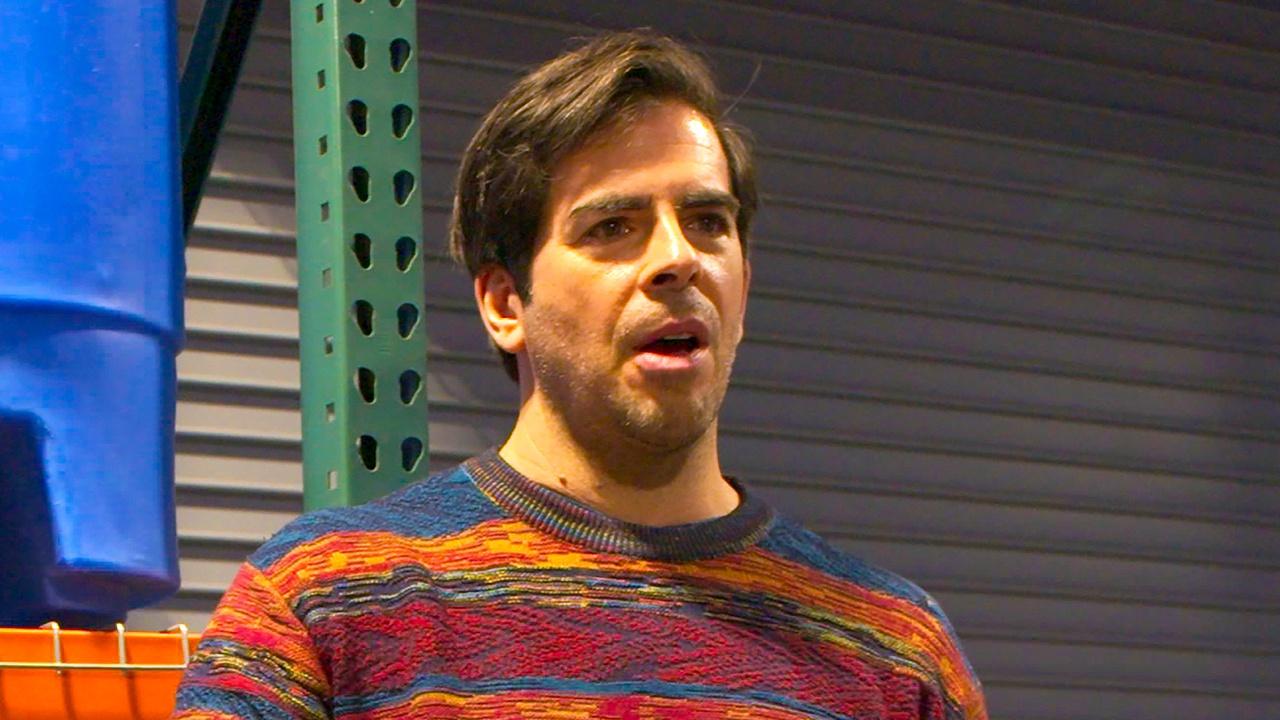
Death Boom is an eye-opening documentary directed by Jessica Chandler and produced by Eli Roth, who previously helmed fan-favorite horror films such as Thanksgiving. Death Boom offers an incredible glimpse into the death care industry, informing audiences about the many ways they can handle their remains after death and delving into the industry's challenges. One of those problems? It's not prepared for the impending 77 million baby boomer deaths.
The Direct sat down with both Chandler and Roth to discuss the horror film Death Boom, their discovery of extreme embalming, and the issues plaguing the death care industry. For coverage on Roth's previous documentary, check out The Direct's interview with him about Let the Devil In.
Discovering Extreme Embalming, a Rare but Dangerous Process
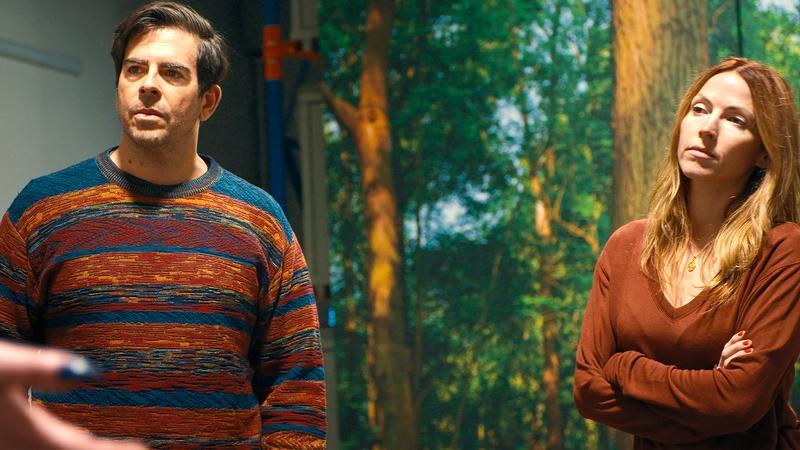
Ever Wanted to Pose Someone Until the End of Time?
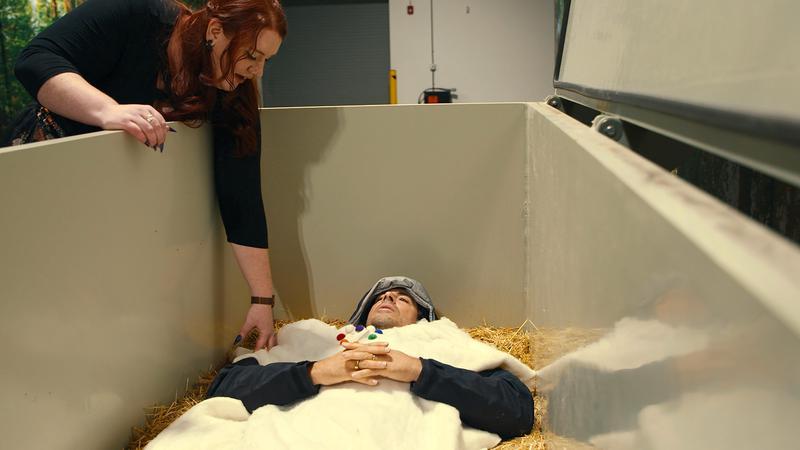
One of the first things that Death Boom addresses is the idea of extreme embalming. The process is that, rather than lying down in a casket, someone who is embalmed is posed in various positions, such as on a motorcycle or playing their favorite instrument.
Jessica Chandler: With extreme embalming, there wasn't really much to learn about that. It's not very common.
Eli Roth: But it is done. So we were never able to [with] the timing of the movie—I mean, when you go to a funeral home, Jessica went there and filmed cremations and embalming, and we went to Natural Organic Production. The timing of the shoot to film an extreme embalming or a service is very—they're not that common, but they are done... it was one of the more absurd aspects of it, but it's just crazy.
While Eli Roth admitted that "[they] understand where it comes from," the process of extreme embalming is still "so bad for the environment:"
Roth: Just when you think you've seen everything there, you know what people are being embalmed in and buried in, and it was already so bad for the environment and for the ground that to have this moment when you're dead, I—we understand where it comes from, you know, you want to be remembered that way. Funerals are for the living. It's like, oh, this person loved their motorcycle. Let's bury them riding their motorcycle. They want to, you know, their microphone singing all of the things of like a symbol of who they were in life...
While it is meant as a celebration of one's life and passions, Roth conceded that "what you're really doing is poisoning all of their loved ones:"
Roth: But what you're really doing is poisoning all of their loved ones, because that just goes right into the ground, and all of that poison just leaks into the soil, and if you cremate someone, then all of it just goes right up into the air with no filtration, and right into our rain system and our food.
"Someone came up with it as a way to make money," Roth hypothesized, adding that "it's this insane use of land:"
Roth: But extreme embalming to us is like someone came up with it as a way to make money. It's like those clear glass coffins, which are, you know, your body could turn to soup from that. We don't know what that does. I mean, it's not like being wrapped in a linen trout or even a pine box. It's like the lacking that goes on these coffins. The stuff is just going right into the dirt or into concrete. It's this insane use of land.
At the end of the day, Chandler added that "if somebody wants to do it, we're not saying don't do these things:"
Chandler: It's not very practical anymore. And listen, if somebody wants to do it, we're not saying don't do these things. Whatever your choice is, wherever you find peace, but after a certain point, you kind of have to be a little bit conscious of what's happening...
The Problems With the Death Care Industry
"COVID Showed How Unprepared the Death Care Industry is for What's Coming..."
The death care industry is plagued. From greed to overzealous religious institutes and lack of preparation, both Eli Roth and Jessica Chandler worked hard to get to the bottom of the problems facing the industry.
Roth explained how "COVID showed how unprepared the death care industry is for what's coming:"
Eli Roth: So, what was crazy to us was again that COVID showed how unprepared the death care industry is for what's coming, and that all the baby boomers are going to die in the next 15 years. With 76 million people we need to put somewhere, and they were already out of space. And then you think about the planet, and there are 8 billion people. What are we going to do? And the fact is, death is the subject that we're not supposed to talk about, and the death care industry likes it that way, so they can keep doing this, and the answer to why this is all being blocked.
"We have a choice of everything in our lives, except what to do with our bodies when we're dead," the filmmaker explained:
Roth: I mean, we have a choice of everything in our lives, except what to do with our bodies when we're dead. And we're told to recycle, and we recycle everything—we cycle every cup, every piece of tin foil, every piece of plastic gets recycled. The one thing we are legally blocked from recycling is ourselves, and we are meant to return to the planet. We are designed by God to return to the soil, [it's] just how our bodies are created, and there are people who are blocking it because they want to charge $100,000 for a funeral service.
There are plenty of other burial methods beyond the standard embalming and cremation. Methods such as water cremation or natural, organic processes are available, though some are illegal in various states, impeding their mainstream adoption.
Jessica Chandler: We just want to make sure that these other methods get legalized in all of the states, because not a lot of states, it's not, it's not legal in a lot of states to compost or do water cremation, and those are pretty incredible innovations. Funeral directors want to be able to offer whatever the family needs, right? That's why they're there to serve families, and so when they can't offer these methods, because it's a legal mistake, they then have to send the bodies across state lines, get the disposition done, and then send the remains back, and then it's an added cost to the service already, and so it's just, there's no scientific reason for these green methods for water creation and composting to continue to be illegal in most of the states.
Some of the biggest barriers faced in the death care industry are politicians and the Catholic Church.
Roth: Yeah, the politicians are bought by the funeral industry... We need the parishioners of the Catholic Church to tell their religious leaders to allow these methods. We can only point out what's there. There is something that we cannot attack the funeral industry and the directors, because they are there to take care of us when we're gone...
On top of it all, the funeral directors themselves struggle deeply, with the emotional weight of the job having adverse effects, and the chemicals they use can lead to leukemia.
Roth: I mean, think of the worst moment of your life that gets absorbed by the funeral director. Now watch them do that all day, every day, with everyone they meet, worst moment of their lives. It's a heavy, heavy job. It takes a mental toll on them. The formaldehyde causes myeloid leukemia. They lose their sense of smell. It's a very, very, very hard job. So, what we also need to do is find a way to take care of these people as well, who are absorbing, you know, the worst moments of our lives.