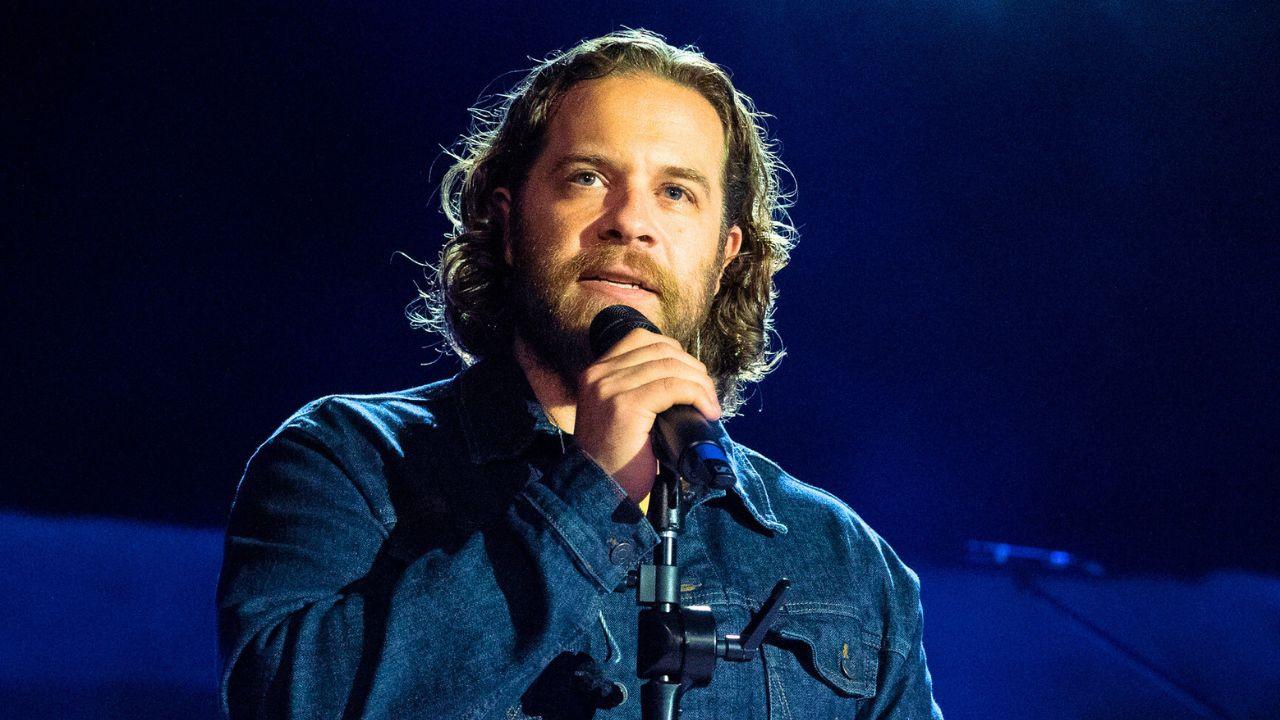
I Can Only Imagine 2 is a rare case. While musicians' biopics are a frequent trend in Hollywood of late, with Bob Dylan's A Complete Unknown, Robbie Williams' Better Man, and Bruce Springsteen's Deliver Me From Nowhere all releasing in the past two years, it's much rarer to see a sequel to a biopic. That's where I Can Only Imagine 2 stands out.
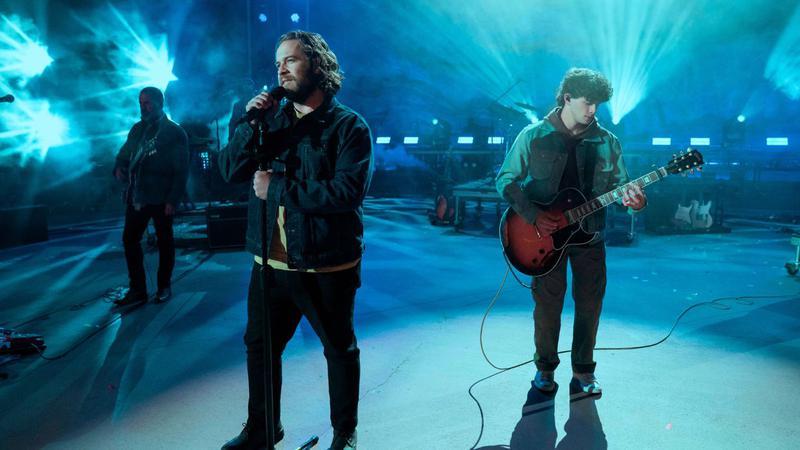
Coming eight years after 2018's I Can Only Imagine, which revealed the inspiration behind Christian music band MercyMe's hit song of the same name, I Can Only Imagine 2 continues the story of lead singer Bart Millard and his struggles with being a good parent and husband. On the decision to do a sequel, director Andrew Erwin told The Direct that Bart's "happily ever after kind of didn't last" and that making a sequel felt like "the second half of a whole.
John Michael Finley returns to play Millard, who said he was enticed to return to the film because he was "going through a phase in life right now that's not too dissimilar to what Bart was going through at the time." He's joined by Outlander's Sophie Skelton as Bart's wife, Shannon, who said that taking over the role from I Can Only Imagine's Madeline Carroll was "an interesting challenge."
But Millard's inspirational journey isn't the only one on display in I Can Only Imagine 2, as This is Us' Milo Ventimiglia joins the cast as Tim Timmons, a fellow musician who tours with MercyMe. Timmons is fighting his own battle behind the scenes, but his friendship with the band, particularly Bart's son, Sam (played by Sammy Dell), leads him to become a co-writer on the band's hit single,
"Even If." Ventimiglia said that getting to know the real-life Timmons "filled [him] with such confidence that there was no way that [he] wouldn't do this [film]."
The Direct's conversations with John Michael Finley (Bart), Sammy Dell (Sam), Sophie Skelton (Shannon), Milo Ventimiglia (Tim), Arielle Kebbel (Hillary), Dennis Quaid (Arthur), along with director Andrew Erwin and musicians Bart Millard and Tim Timmons, can be found below. I Can Only Imagine 2 is in theaters on February 20, 2026.
Why MercyMe's Story Deserved a Sequel
"It Felt Like the Second Half of a Whole..."
- The Direct: "Biopics are quite a popular genre these days, but sequels to biopics are incredibly rare. I was curious to know: how was this sequel born, and at what point did you know that you had more to say about this story in film form?"
Bart Millard: "I agreed to meet with [writer/co-director] Brent McCorkle... and we kept running around trying to figure out ideas, and then he finally said 'Where'd the song [Even If] come from?' And I told him the story, and he's in tears, going, 'that's it. That's the movie.' And, what if we were able to bring the characters back in this universe and make it a sequel? And so, I wish I could take more credit, but it was, you know, smarter people than me came up with the idea, and I was amazed at how well it turned out."
Andrew Erwin: "I was the last one to convince, I was really resistant, because of what you said, it's like a true story. I only wanted to go back if there was more story to tell. But Brent McCorkle, who co-directed this with me, is very convincing, and he and Bart had been talking about the rest of Bart's life, and the idea that, after everything seemed to work out in the first movie in his life, really, there was more to tell. The happily ever after kind of didn't last, and there was just this struggle, especially with fatherhood, about 'how do I give to my son what my dad never gave to me? I had two months with a good dad. I had 22 years with an abusive one. And how do I turn around and be a father to my kids?' And so there's that.
And then this idea of just how to find hope and meaning in life when it's hard. So there's a lot of depth to this story that caught me off guard. A story has to move me emotionally first before I feel like I can honestly tell it for other people, and this, being a sequel, it felt like the second half of a whole. It felt like it completed the story for me."
- The Direct: "What was it about this part of your character's life story that really excited you about returning to play them?"
John Michael Finley: "I'm going through a phase in life right now that's not too dissimilar to what Bart was going through at the time. And I couldn't wait to jump into the role of a father. I couldn't wait to explore some of the issues that often get overlooked. I mean, how often do you see a story about Type 1 diabetes, or cancer, or death in the family, or loss of faith, or things like that? And so it's just honestly been my pleasure to be vulnerable and tell some of the heavy stories that need to be told."
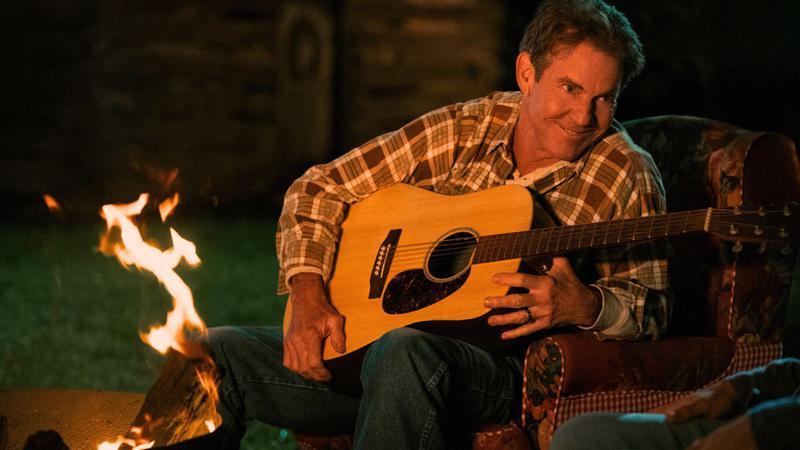
Dennis Quaid: "[Arthur] is just Bart's memory at this point, which made it sweet, in a sense, because that's how we're left with our memories in life, right? The more memories we can create, that's our love, you know? I want to be in everything that [Andrew Erwin] does, and it has a special place in my heart, this movie, and I just wanted to be a part of it."
Adding New Voices to the Band
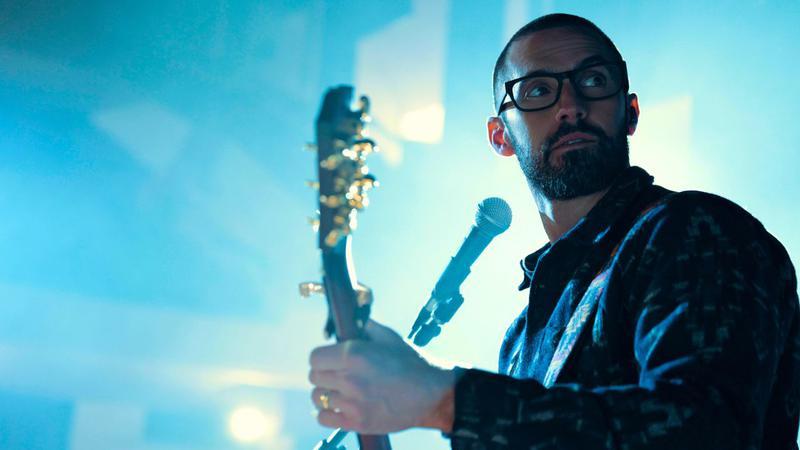
"I’ve Found Compassion for Myself That I Had Hadn’t Had Before..."
- The Direct: "This is a true story, which can be quite daunting for an actor to join, Milo, what is it about Tim's story that drew you to want to play him on the screen?"
Milo Ventimiglia: "You have this beautiful script in front of you, and then on top of it, you have this beautiful character that they're asking you to play, and then you go the level deeper: he is a real, live human being. So I'm thinking to myself, 'wow, all that goodness, all that grace, all that gratitude from this character that I'm reading in words on a page, how do they exist in real life?'
And when I got to know Tim and spend time with Tim, I was like, 'Oh my gosh, I fully understand why the words on the page were as written.' Tim is even more loving. There's more gratitude, there's more grace, there's more of just everything that I was experiencing from the script. It really honestly filled me with such confidence that there was no way that I wouldn't do this. There was no way that I was even afraid of the prospect of it."
- The Direct: "Tim, you were quite involved in the process. You were on set quite a lot. Can you tell me a bit about your input into the film and your working dynamic with Milo?"
Tim Timmons: "This is kind of my first experience in this, having somebody play me. I know the music world really well, but the film world is a whole different thing. I just got to sit there, and honestly, I was bawling often when Milo would be doing some part of my cancer journey, just to look at myself from the outside of me. I mean, who gets to do that? And I've found compassion for myself that I had hadn't had before."
- The Direct: "Sammy, if you're new to this franchise, did you have a chance to meet or interact with the real-life Sam Millard and get advice from him?"
Sammy Dell: "I was able to really talk with Sam and kind of break down his point of view and dig deeper into what we were trying to explore with the movie. I mean, Sam and I, we have a lot of ways that we're similar, and so not only did I get to portray him in this movie, I feel like I got a pretty good friend in my corner."
- The Direct: "Sophie, you're taking over the role of Shannon from another actor from the previous film [Madeline Carroll]. I was just curious if that influenced how you approached the character at all?"
Sophie Skelton: "It did, I mean, that's the thing. Playing a real life person is always tricky, but then adding this layer of also wanting to respect what Madeline had done so beautifully with Shannon, it was kind of finding the medium between that.
We were lucky. The beginning of the movie, obviously picks up not too far from from where Madeline left Shannon, and then we have the 10 year jump. So that gave me the opportunity to kind of morph the lines together and play kind of Madeline's version of that younger Shannon, and then also play Shannon as she is now obviously older. So that 10 year gap was actually really great, because it was almost like playing two different characters.
Shannon initially is a very young mother, and still maybe has some of the mannerisms and tendencies that Madeline had, but then as she gets older, there's still some lingerings of some mannerisms that I put in there, just to show that she's the same person, but in terms of her being a little bit more rooted in herself and just more mature and more comfortable in her shoes as a mother, that was a good transition to put in there too.
It was an interesting challenge. It's not a challenge I've had before where you've got to marry those two things."
I Can Only Imagine 2's Inspiring Female Characters
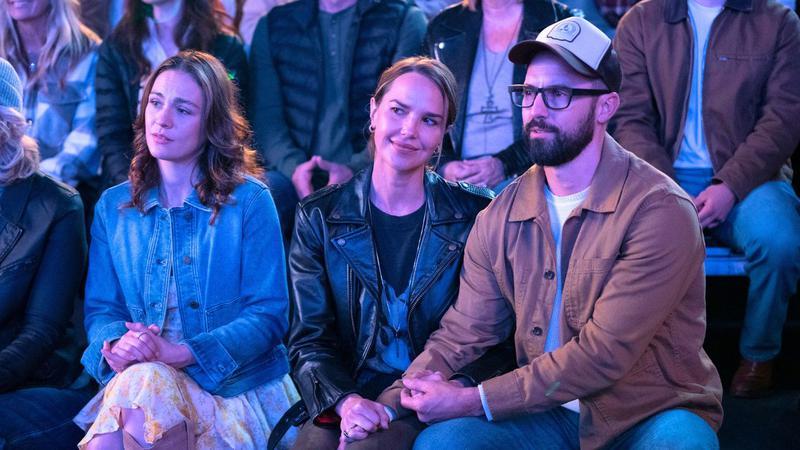
"It Takes a Lot of Courage and Guts These Days To Raise a Family..."
- The Direct: "Both your characters are very supportive wives in the film, but they do have a lot more depth than that. Could you talk a bit about how you feel your characters go beyond that supportive wife stereotype?"
Arielle Kebbel: "I would like to really recognize anyone who is at home raising kids and being a wife and a partner, you know? To say like, has more depth than that, I don't think that's an accurate representation. I think that it takes a lot of courage and guts these days to raise a family and, so I think it's really important to acknowledge.
Because Hillary, for example, she's a nurse, and she's also at home, dealing with circumstances that I can't talk about because *spoiler alert*, but you know, one of the reasons she's became a nurse is actually that was her way of coping with the information that was that happened at home, which you'll see when you see the movie.
So, you know, yes, she has a separate career, but also it was spun from genuine curiosity about what was happening to Tim and it was actually a way that she helped deal with her grief, was to go straight into it and medically start educating herself."
Sophie Skelton: "I think for Shannon, one of the challenges that I saw in the script, is if you've made that choice as a couple, for you to be the one keeping the house in order, raising the family and doing that incredible challenge, and your partner is the one that you've chosen in the balance to be the one that's working and creating and writing music. What happens when that person has writer's block and can't do that, and their whole identity is wrapped up in that? Then your hands are kind of tied.
[Shannon] couldn't then just go out and be sort of smashing what she was doing outside of the house, because she was the one having to keep everything in order while Bart has been on tour. So that takes an incredible strength as well, to kind of feel that the only way that you can get your family out of this is to just keep on doing what you're doing and hope that that person figures their stuff out. That was an incredible strength that I hadn't really considered that much before."
Why I Can Only Imagine 2 Will Strike a Chord With Audiences
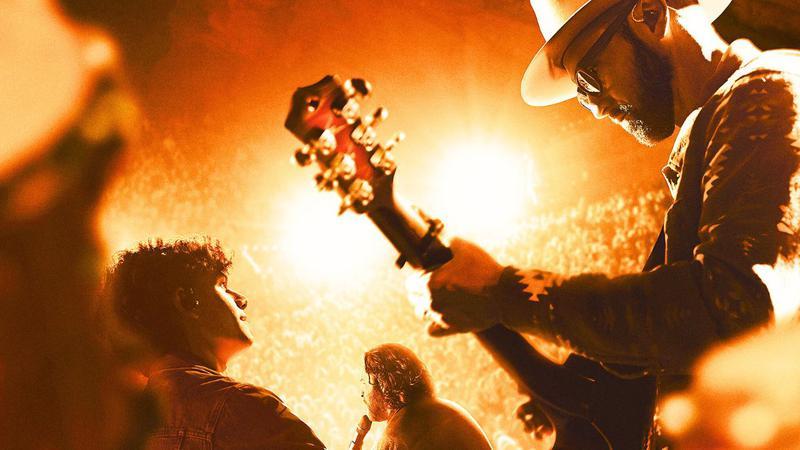
"I Think They’re Things That Many People Go Through, and I Think That’s What Makes It Special..."
- The Direct: "The first I Can Only Imagine film came out years ago now. Was there anything that you learned from seeing the reaction to it that changed your approach to this one?"
Bart Millard: "I mean, for me, it was the reaction. I mean, if the story's there and the movie's done right, it's worth doing. I've been in MercyMe for over 30 years and singing in front of people and telling these stories, but the net that a movie can cast and the reach that it has is like nothing I've ever seen, especially after the first one. So knowing the potential, if the story is told right, that it could affect a lot of people, which is, for me personally, what I was called to do is to show people there's hope. And this is new to me, the movie world, but it's amazing the impact that it can potentially have."
John Michael Finley: "I think people connect with honesty, vulnerability and truth, even though all those things can be subjective. You know, I don't think there's anything all that special about any of these people and these stories or the things they're going through. I think they're things that many people go through, and I think that's what makes it special. I think we kind of learned from the first film that, man, if we can just keep that honesty and that vulnerability, I think I think people will connect."