Marvel Studios may finally be giving Ultron the second chance he needs, as the company is looking to right all of the wrongs that were made in Avengers: Age of Ultron. James Spader's Ultron remains one of the MCU's most divisive villains after making his debut in 2015's Avengers: Age of Ultron. While the artificial intelligence was praised for Spader's distinctive performance and Ultron's darkly humorous personality, the character's story ultimately ended after just one movie when Vision seemingly destroyed his final body.
Now, more than 11 years later, Marvel Television's VisionQuest (which is scheduled to debut on Disney+ on October 14) is bringing Ultron back alongside Paul Bettany's Vision. More importantly, everything revealed about the Disney+ series suggests Marvel is taking a dramatically different approach to the character this time around, so, in a way, Marvel is looking to fix everything wrong with Age of Ultron.
Ultron will not simply return as another villain looking to destroy the world. Instead, VisionQuest will explore his connection to Vision, his time spent trapped inside Vision's mind, and what the AI has done with himself after spending years observing humanity, which gives Marvel an opportunity to address several of the biggest criticisms surrounding Age of Ultron while making the character more important to Vision's story.
Ultron Is Finally More Than a One-Movie Villain
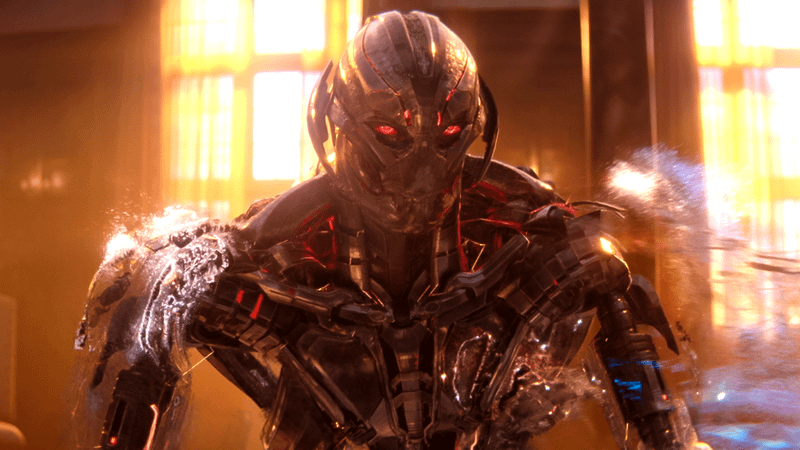
One of the biggest problems with Ultron's MCU story (at least according to many fans) was how quickly it ended. Despite being introduced as one of the Avengers' most dangerous enemies, Ultron was created, turned against humanity, built an army, fought the Avengers, and was seemingly destroyed within a single movie. By the end of Age of Ultron, Vision had eliminated the last remaining version of his creator, bringing Ultron's story to a definitive conclusion.
Notably, this is the only time that an Avengers antagonist has only been heavily featured in one film. Loki was the primary villain in 2012's The Avengers, and he returned in multiple MCU projects after being defeated in that entry. Thanos was included and teased in a couple of different films, and was then focused on heavily in both Avengers: Infinity War and Avengers: Endgame. Therefore, Ultron has always been somewhat of an outlier, as he was only really showcased in Age of Ultron. However, that is no longer the case.
VisionQuest now reveals that Ultron survived in a very different form. According to Vision actor Paul Bettany, Ultron has spent the years since Age of Ultron inside Vision's mind. Specifically, Bettany noted that he has been living "in a very urban loft upstairs" in Vision's head (which is being called the Mind Space):
"The downstairs and the outside are this really strange, nightmarish, in a certain way, mansion, but in a pastoral setting, and Ultron lives in a very urban loft upstairs, and many stories upstairs isn't it like hundreds of stories or something, and he's just been imprisoned for by now it would be what 14 years or something."
Spader himself addressed this as well, saying that Ultron has spent the years since Age of Ultron "painting," as he has "had access to the internet, television, history," and more, so he has "just been consuming." Rather than simply sitting around waiting to be destroyed again, Ultron has apparently spent years learning:
"He's been in prison. He's had access to the internet, television, history, and he's just been consuming, and he's been painting. He's become a painter... He's just making trouble in this house with [Vision], who he loves and hates, and all these other AIs who he couldn't give a s*** about."
This alone is a significant upgrade for the character. Ultron is no longer simply the villain who appeared in one Avengers movie and died. He has now existed alongside Vision for years, quietly observing humanity and accumulating knowledge, and is now making his presence known again.
The fact that Marvel is bringing Spader back also gives the MCU a chance to take advantage of one of the character's greatest strengths: his personality.
Spader's performance was one of the most memorable aspects of Age of Ultron, and VisionQuest appears ready to put that personality back at the center of the character rather than treating him as another CGI threat.
So, Marvel is not only bringing Ultron back in VisionQuest, which already makes the character more formidable and interesting, but he will be coming back in a different manner, making the character feel less two-dimensional.
VisionQuest Gives Ultron and Vision the Family Dynamic Age of Ultron Needed
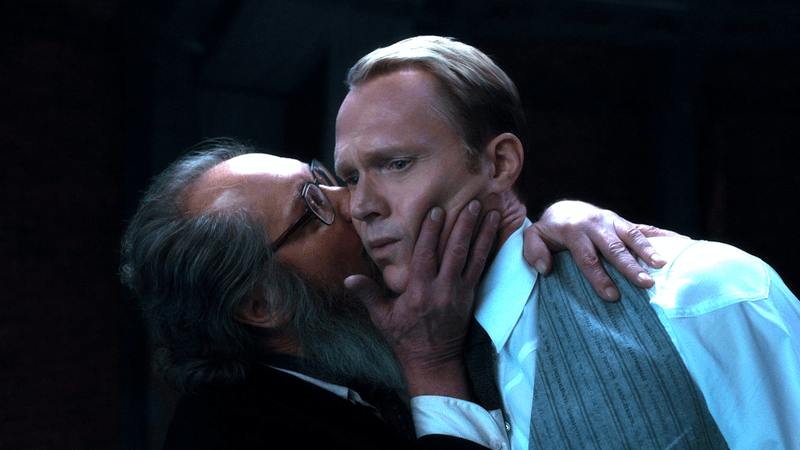
Age of Ultron established an unusually complicated connection between Vision and Ultron. Ultron was responsible for creating the body that would eventually become Vision, while Vision ultimately became the being who destroyed him.
However, the movie did not have enough time to fully explore what that relationship meant, and VisionQuest can finally change that.
The upcoming series is built around White Vision attempting to understand who he is after receiving the memories of the original Vision. That naturally leads him back to his own origins, including the artificial intelligence that helped create him.
Terry Matalas has teased that Ultron and Vision are a core dynamic of the series, with audiences seeing a great deal of James Spader and Paul Bettany together. Footage that has been released from VisionQuest supports this, as it makes it seem as though the show will be more of an exploration of Ultron and Vision (and their dynamic), rather than just Vision.
In an interview with Fandango at Disney's D23 event (as shared via YouTube), Matalas revealed that Ultron being featured in the WandaVision sequel came from "that last scene in Age of Ultron with Vision and Ultron finally having a conversation." Throughout that entire movie, those two characters didn't interact directly a lot. However, they were given the chance to do just that right at the end, but it only lasted moments.
Many fans believed that it was one of the strongest scenes of Age of Ultron, mainly because of the dynamic between Ultron and Vision. Therefore, it was a bit disappointing that it would be the only moment the two characters got to spend with each other. However, now that Ultron is coming back, Marvel can build on the dynamic that was presented in that scene and make it more interesting:
"[Ultron’s inclusion] came really from that last scene in 'Age of Ultron' with Vision and Ultron finally having a conversation. These two AIs having this perspective on humanity, which — and to me it's one of the best scenes in Marvel. I knew it by heart already, and I could watch that forever."
Bettany himself has gone even further, describing their relationship as a bizarre combination of "father-son" and "therapist-psychopath," which alone demonstrates how different VisionQuest's Ultron will be:
"We have a sort of father-son, therapist-psychopath relationship. Which is the craziest idea ever. [He is] my psychopathic life coach."
Instead of simply being Vision's enemy, Ultron is now effectively part of his family. He is simultaneously his creator, his predecessor, his enemy, and potentially one of the only beings capable of understanding the unique problems Vision faces.
Ultron Doesn't Need Another World-Domination Plan
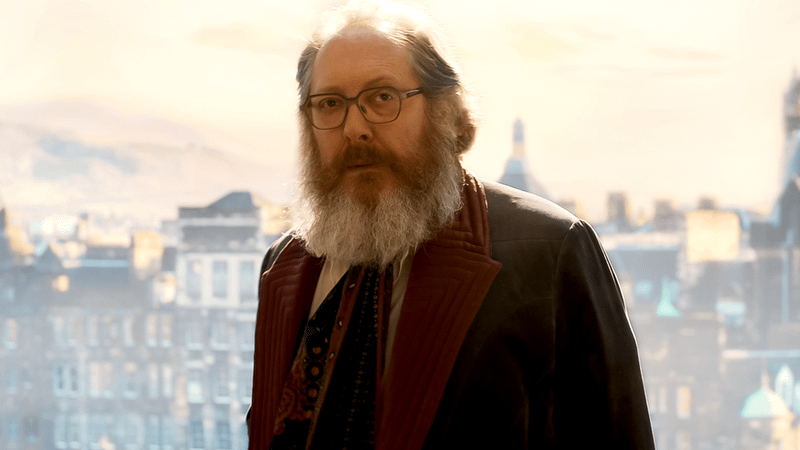
Another major improvement VisionQuest can make is giving Ultron something more interesting to actually want. In Age of Ultron, the AI's ultimate plan was relatively straightforward: humanity was flawed, therefore humanity needed to be eliminated. He attempted to accomplish that by creating a massive extinction-level event in Sokovia.
It worked fine for the purposes of an Avengers blockbuster, but it also made Ultron's motivations feel familiar and cliché, so, by nature, it was essentially uninteresting, especially compared to the motivations that other Avengers villains have had. Luckily, VisionQuest appears to be taking the character in a much more personal direction.
As mentioned, Ultron has apparently spent years trapped inside Vision, observing humanity rather than trying to destroy it. Spader has teased that the character has an insatiable desire for knowledge, with Ultron spending his imprisonment consuming information.
That alone is a fascinating evolution, and makes Ultron a much deeper villain thematically.
Ultron's conflict no longer needs to be about whether humanity deserves to survive. Instead, it can be about what Ultron thinks of the world after spending years studying it. Perhaps more importantly, his biggest conflict may now be with Vision himself.
If Ultron is trapped inside the mind of the being he helped create, he has an intimate connection to Vision that no other MCU villain possesses. He knows where Vision came from, understands his programming, and knows what it means to exist as an artificial intelligence struggling to understand humanity.
That gives Ultron a reason to be involved in Vision's story beyond simply being the villain adn wanting world domination. On the surface, it already makes Ultron a much more compelling character.
VisionQuest Can Make Ultron More Dangerous Without Making Him Bigger
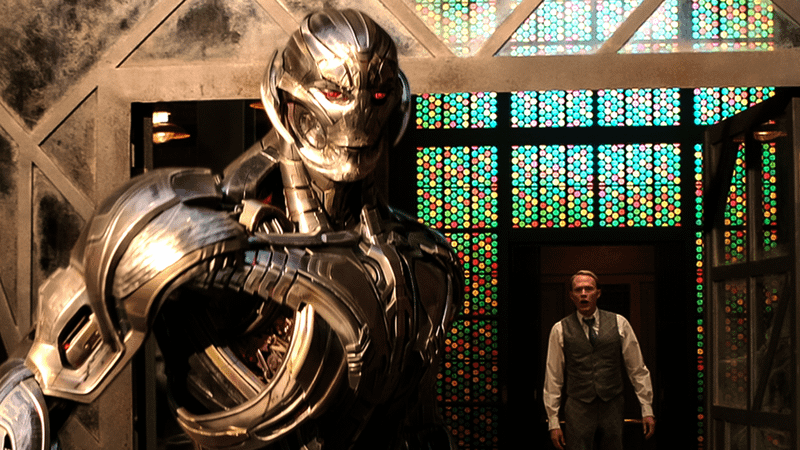
Perhaps the smartest thing Marvel can do is avoid turning Ultron into another giant Avengers-level threat. The character does not need an army of robots or another attempt to destroy the planet in order to be a great antagonist.
In fact, keeping him contained inside Vision's mind could make him considerably more compelling, and could allow fans to even relate to the character on some fronts, which is something else that was missing in Age of Ultron. As mentioned, Ultron's motivations in Age of Ultron were pretty basic, and did not present the audience with the chance to wonder if what Ultron was doing could be right.
For example, even though Thanos (who was recently brought back in a VisionQuest poster) went off the deep end with his decision to wipe out half of the universe, the core problem that he was trying to solve was not unrelatable, and actually made fans question what they would do if they were put in a similar position to Thanos. Basically, Thanos' situation questioned objective morality in a fascinating way, and Ultron never had that.
Now that Ultron is in Vision's head, and has actually studied humanity, he could present scenarios and questions to Vision that could make him a relatable villain. It is worth noting that Ultron being depicted in human form doesn't hurt things either, as that makes him even more relatable than being a robot.
Ultron can advise him, manipulate him, challenge him, and potentially exploit the weaknesses Vision is still struggling to understand, which makes the threat becomes psychological rather than physical. Psychology is something everyone can relate to, and everyone has conscious, so the fact that Ultron is somewhat acting like Vision's conscious and could influence his decisions makes him much more interesting than a robot who simply wants to take over the world.
Age of Ultron introduced an incredibly entertaining AI villain, but had to resolve his story within a two-and-a-half-hour Avengers movie. VisionQuest can finally slow down and examine what makes Ultron interesting.
He can be funny without constantly making jokes, he can be dangerous without trying to destroy the world, and most importantly, he can have a meaningful relationship with Vision instead of simply being the villain Vision defeats.
After more than a decade, Marvel finally has the opportunity to make Ultron feel like more than a missed opportunity. If VisionQuest delivers on what its trailers and stars have teased, Age of Ultron could eventually look very different in retrospect.