Liongate's first Greenland film lived up to its premise: the entire world experienced an extinction-level event when Comet Clarke slammed into Earth. The only safe haven for everyone to retreat to was in Greenland, which they got to, joining a community in a safe and sound bunker.
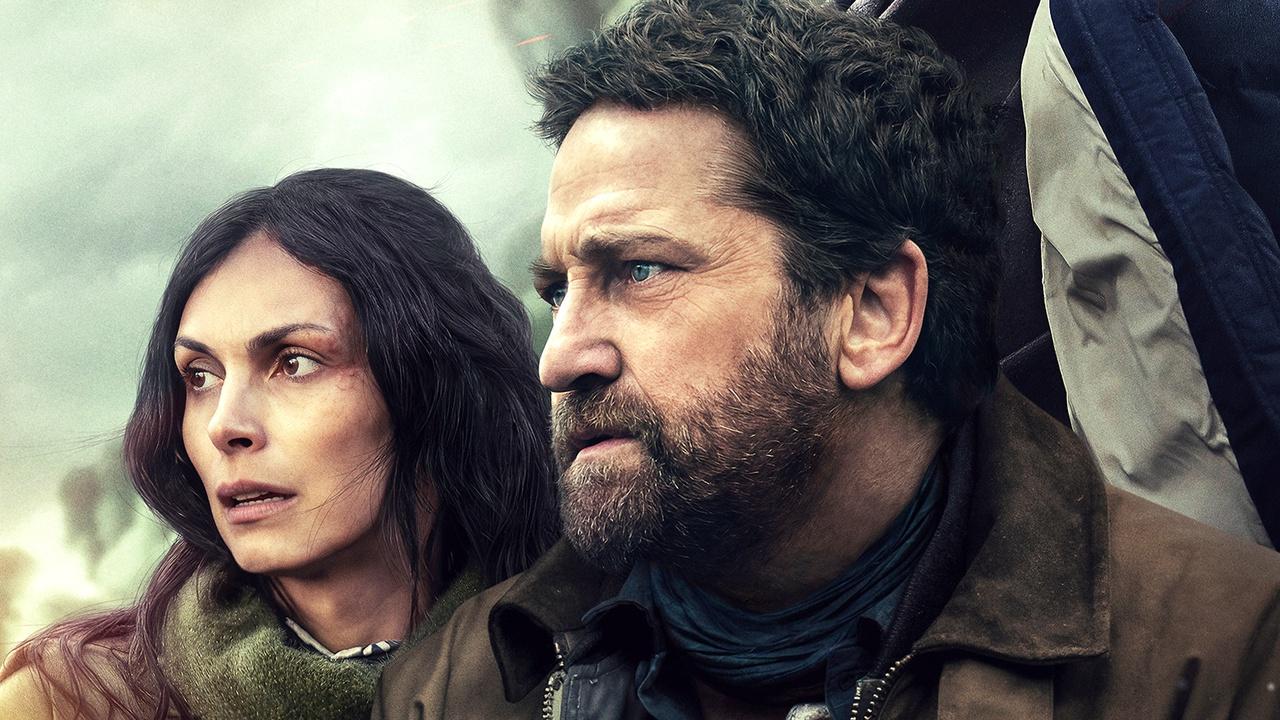
Five years later, a sequel has arrived with Greenland 2: Migration. The movie reunites the main cast from the first film, including Gerard Butler (John Garrity), Morena Baccarin (Allison Garrity), and Roman Griffin Davis (Nathan Garrity), among others. The original film's director, Ric Roman Waugh, also returns to the directing chair.
Thanks to the sequel, Greenland 2: Migration, the Garrity bunker is no longer safe, and they're looking for a new haven: Impact Crater Clarke, in Southern France. The crater, according to their data in the film, is the last place safe from the apocalyptic conditions of Earth.
The Direct's Russ Milheim sat down with Greenland 2: Migration director Ric Roman Waugh to explore whether something like that could be remotely, scientifically possible.
Waugh confirmed that the idea is based on "a pretty common scientific theory," one that relates to the extinction of the dinosaurs. The theory says that after that apocalyptic event, "one of the first places that the Earth rebounded was actually in the crater outside the Yucatan."
Overall, the director explained that they "did a lot of research" about how a comet smashing into Earth would affect everything, including taking into account the things that humans have added to the equation, such as "nuclear power." Waugh elaborated that they "used a lot of modern-day science to understand, as well as the history of what happened in the first extinction event."
More of Ric Roman Waugh's interview with The Direct's Russ Milheim can be read below. Greenland 2: Migration is set to hit theaters on January 9, 2026.
For more post-apocalyptic storytelling, make sure to check out Amazon Studios' Fallout, which is in the midst of a thrilling Season 2.
The Research Behind Greenland 2: Migration and Its New Safe Haven
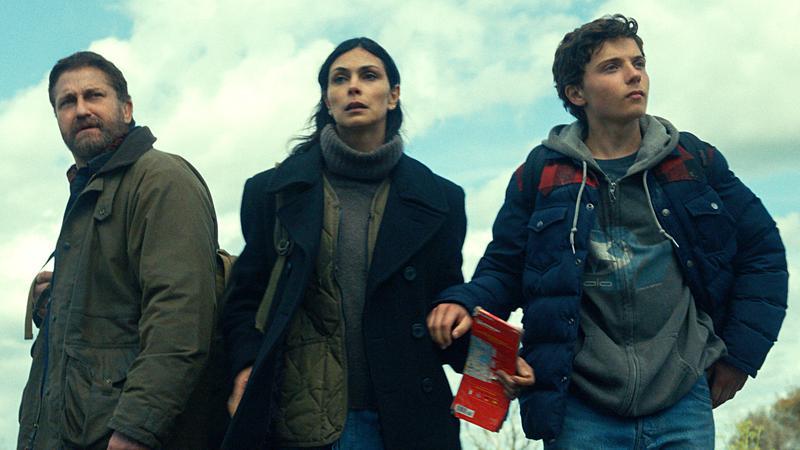
The New Safe Haven Has a Direct Connection to the Dinosaurs.
- The Direct: "They're looking to move to a new location, an impact crater that is supposedly a paradise, in a sense, a safe haven. Within your research, could that actually exist in a situation like this? Are those impact areas potentially safe zones?"
Ric Roman Waugh: There's a pretty common scientific theory. Again, it's a theory, [that] years ago, one of the first places that the Earth rebounded was actually in the crater outside the Yucatan [following the extinction of the dinosaurs], that it became its own microclimate, and then with the sediment and everything else that was inside of it, it started to rebound. It was one that they believed was one of the places that Mother Earth started rebounding the earliest.
- The Direct: "How much research was there, at least on your end, in terms of what an actual impact event like this would do to the world?"
Waugh: We did a lot of research, not only [about] what happened during the first extinction event, like how long it took for the atmosphere to kind of clear itself enough that you could even be above ground. But the other issue that we took on, which wasn't during the dinosaurs, is what we've done to this planet.
We rely on nuclear power now. There's a lot of infrastructure. There are a lot of precious metals that have burned, leak toxicity—not that I'm against any of these things. It was just more of a practical thing of what happens when all the safeguards that we use for radiation and hospitals, let alone warheads and so forth, what happens when that stuff starts being admitted into the atmosphere and so forth?
So we used a lot of modern-day science to understand, as well as the history of what happened in the first extinction event, and so forth, as well as watching devastation around this earth, which is kind of a morbid thing to study, but how fast Mother Nature will rebound in certain instances when she won't. So, a lot of that was really brought into the process of what our topography would look like and the perils that our family would go through.
Keeping This Sequel Fresh From the First Greenland
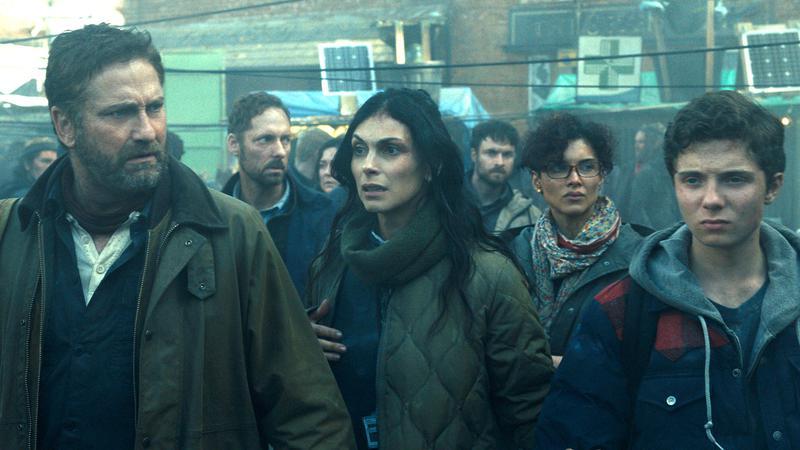
"We Never Treat It As a Sequel."
- The Direct: "Coming into this sequel, I'm curious, because you obviously did the first movie as well, how did you specifically want this movie to carry itself in different ways from the first?"
Ric Roman Waugh: We never treat it as a sequel. We never even thought we'd make a second movie. But then, when we finally found the storyline, it was about making it the second chapter that the movies could be watched, you know, back to back, and you would see the odyssey of a family. You would see a family that could barely be together, and then by the end of the odyssey, doing everything they can to not only stay together, but what is their legacy for?
So, it was all about the family's journey, and then having that, that way of showing the audience, we're not going to pull any punches. We're going to make this as real and grounded, as much as it is in a hyperreal setting, but the journey itself was as real as we could make it.
- The Direct: "Both movies do kind of feature a journey across the world in very different ways. Was it ever challenging for you to make sure that it never felt like the film was repeating itself?"
Waugh: Yeah, it is. It started with, really, where the arc was for the character, for the family in the first movie, and then where we would start the second movie. And so much so that, when we really got the story cracked, and knew that, okay, there is an appetite for the second movie, and that it was really important to all of us that it was still about love and kindness and hope, even though this world was going to be very bleak, right? But what was the heart of it?
Well, the timeline of it started to become, we knew this movie would be released five years later. So that means Nathan is five years older, and it means that they've been in the bunker for five years. Because a lot of people believe these five years for the air to clear out enough that people would be able to even see the sun again, you know, through the atmosphere. So a lot of that stuff was trying to take place in a way that made it more of a reality for us.
And then it became about the journey of my first thought of, what has every species done since the beginning of time to survive? Well, they've migrated. So what if you had that safety of the bunker and it's taken away from you. Where would you go, not only to survive, but to live? And then, how would you get there when we don't have planes anymore, these things are irrelevant, you know, and you're suddenly back to land compasses and whatever it could be.
And also, which was my favorite part of the second movie, is if you rock the world that hard, and the tectonic plates shift, you get to shape the snow globe. So you get to reinvent the world a bit, of how it looks and how it shaped.