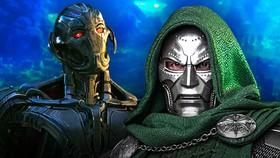
In DC Studios' official podcast covering Lanterns, writer Tom King described the series as "...a show that's about legacy..." and "...passing things on." A theme that couldn't be more blatant when the premiere ended with Aaron Pierre's John Stewart finding the frozen body of Kyle Chandler's Hal Jordan, Earth's first and then only Green Lantern, and Stewart's resentful mentor.
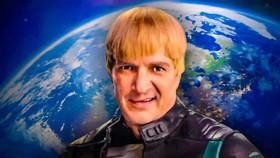
While Stewart was initially trained to become Jordan's replacement, it has since been revealed that Nathan Fillion's Guy Gardner became his replacement instead. In the official podcast, King affirmed that "Guy has the ring" after Jordan's death, making him the sole Green Lantern of Earth and Sector 2814. However, given Pierre's casting in Man of Tomorrow, it's unlikely to stay that way.
Even those vaguely familiar with Green Lantern know that, as opposed to what Lanterns has suggested, Earth has had more than one Emerald Knight on duty. In fact, Earth has a hilarious number of Green Lanterns compared to other sectors in the comics. There are many potential explanations the DCU could take from them for why Earth has so many, but we might as well also examine how The Guardians feel about Earth in Lanterns.
"One" Lantern Per Sector
According to a buzzed Hal Jordan in Lanterns, his predecessor, Abin Sur, was "responsible for maintaining the peace and sovereignty of Sector 2814," suggesting it was the dying alien's sole responsibility, the same as in the comics. A responsibility in the DCU that then fell to Hal Jordan, and then evidently Guy Gardner, but where does that leave a ringless John Stewart?
Guy Gardner debuted 58 years ago in Green Lantern (1960) #59 as a potential alternative candidate to Hal Jordan. The two quickly connected, and Jordan became relieved that, if he were to ever die in the line of duty as Green Lantern, Gardner would take his place.
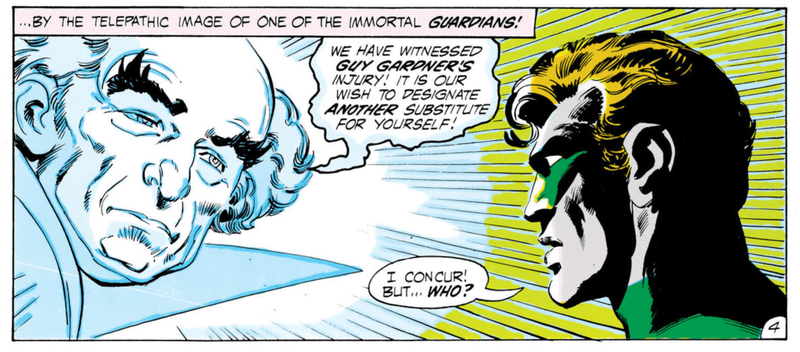
However, when Gardner was hit by a bus, the Guardians were forced to find another substitute for Jordan in case anything happened to him, and named John Stewart as the new reserve Lantern. At least, that was the explanation writer Dennis O'Neil offered when he introduced Stewart in Green Lantern #87, preserving the rule of only one Lantern per sector and explaining why Earth now had two potential Lanterns.
It wasn't until Hal Jordan quit the Corps years later to live out his life with Carol Ferris in issue #172 of Green Lantern that Stewart and Gardner finally received their own personal and permanent Power Rings in issues #182 and #195, respectively. The reason they were both made full-time Lanterns was that the Corps was spread thin dealing with the Anti-Monitor during the Crisis on Infinite Earths and needed more members, finally breaking the longstanding rule.
In the DCU, it's likely that with Jordan dead and Gardner the new Lantern, Stewart would become Gardner's successor instead, which either means that the red-headed Lantern could bite the dust in Man of Tomorrow, or more likely, Earth would be allowed two active Green Lanterns to face the existential threat of Braniac like they were when the Anti-Monitor attacked.
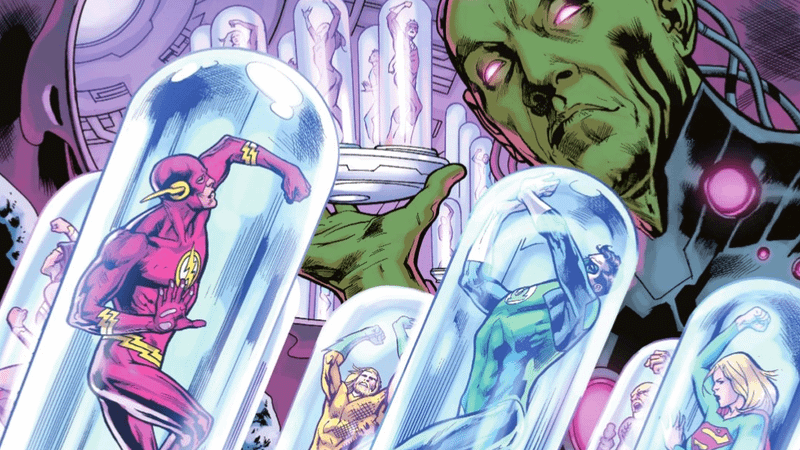
Of course, in the comics, this arrangement between the original three didn't last long when a grief-stricken Hal Jordan became Parallax, destroying the Green Lantern Corps and absorbing the central power battery on Oa. The only one left to stop him was a newly recruited Kyle Rayner in Green Lantern (1990) #50, remaining the only Lantern in the universe for years until he finally restored the battery, reviving the Guardians and the Corps.
Years later, under writer Geoff Johns, the Guardians introduced a new policy mandating that each sector have two Green Lanterns and abandoned the concept of "backup" members. Instead, excess Lanterns would be granted rings and called Honor Guard, stationed on Oa, and available to act in any sector across the universe at any time.
It was then, finally, that there was no longer the burden of needing an excuse every time someone on Earth was granted a Power Ring. But that still didn't explain why so many humans became Green Lanterns compared to other species in the universe.
An Exception for Earth
To put it bluntly, at one point or another in DC Comics, Earth quite literally became the center of the Multiverse, despite often being referred to as a "backwater" planet of no importance, as it is in Lanterns. Once upon a time, Earth was even home to The White Entity, the embodiment of life in the universe and a central figure in the Green Lantern comic book event Blackest Night.
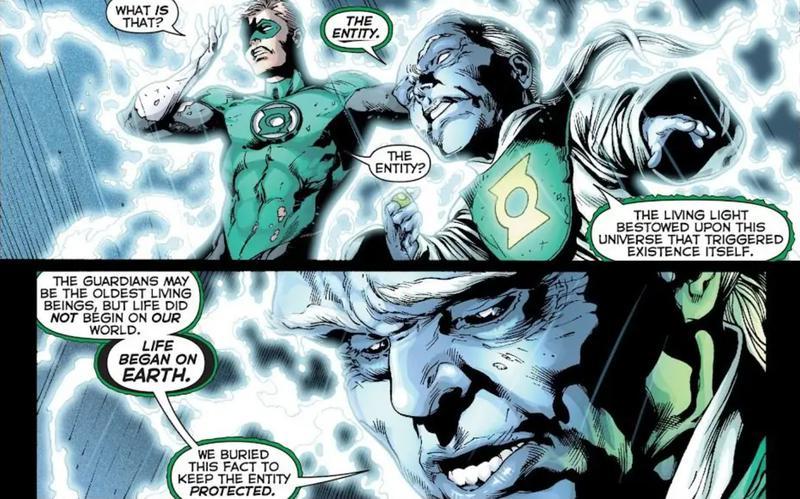
The Guardians of the Universe tried everything they could to draw attention away from Earth, even avoiding enlisting any humans in the Green Lantern Corps for the longest time, until Abin Sur died while investigating Earth. Even in Lanterns, Jordan asserted to Stewart that the Guardians "never wanted any Lantern coming near our little shithole planet."
In the current DCU, it's already apparent that Earth will quickly become more important than the Guardians of the Universe ever expected. Not only is it currently home to two of the last Kryptonians in existence, drawing the attention of Brainiac, but Blue Beetle's scarab is an infiltration unit for the Reach, planetary conquerors and bitter enemies of the Corps.
It's no wonder that the Guardians eventually allowed Earth to have so many Lanterns, considering the monumental importance of the planet to the universe and how many universal conflicts it ends up embroiled in.
No Evil Shall Escape Their Sight
Guy Gardner, Hal Jordan, and John Stewart have already made their live-action appearance in the DCU, and barring any miraculous resurrections, only Gardner and Jordan will be sticking around for Man of Tomorrow and beyond. However, any number of worthy Green Lanterns could show up in the future, but there are four more human Lanterns that are the most likely to join the Corps next.
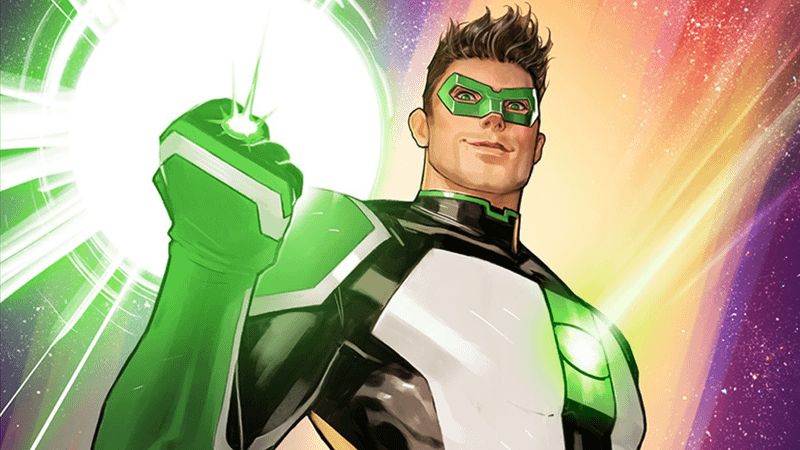
The aforementioned Kyle Rayner is the most famous Lantern after the previous three. At one point, Rayner made a name for himself by not only restoring the Corps but mastering the entire emotional spectrum, wielding all seven colors and becoming the first true White Lantern.
However, despite some fans' concerns, just because John Stewart was shown attending art school in the latest episode of Lanterns doesn't mean Rayner's career as an artist becomes redundant in the DCU. After all, he's a graphic designer and comic book artist, not an architect like Jordan—it's a stark difference between someone with boundless imagination and someone who is exceptionally detail-oriented.
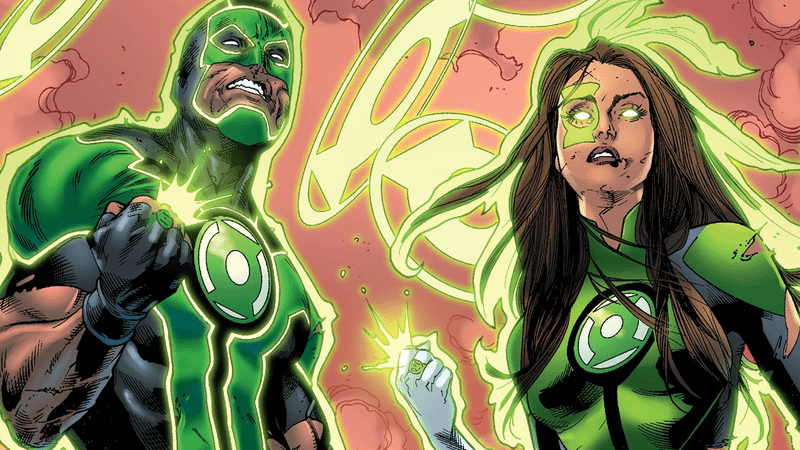
Both Simon Baz and Jessica Cruz gained their rings under drastically different circumstances. The former mechanic Baz was given a busted ring in the middle of being arrested in Green Lantern (2011) #0, and an agoraphobic Jessica Cruz was confronted by a Power Ring from another dimension that constantly told her to destroy the world in Justice League (2011) #30. Long story short, she got a normal ring from the Guardians later.
After the two failed basic training, Hal Jordan assigned them as partners to protect Earth, giving them only one power battery to share, which forced them to work together. Despite Simon's impulsiveness and Jessica's crippling anxiety, the two became best friends.
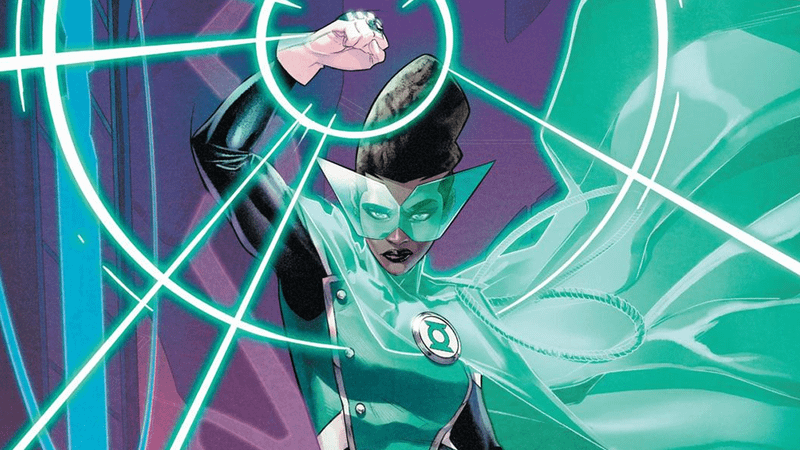
Finally, there's Sojourner "Jo" Mullein, the latest human Lantern that has been introduced, who was shockingly not assigned to Sector 2814, but a quadrant at the very edge of the Guardians' jurisdiction in Far Sector #1 as she conducts her space-bound investigations into murder and conspiracies.
What also sets her apart from the other human Lanterns is that she has an experimental self-charging Power Ring, which forces Jo to be more selective with her constructs.
Regardless of who shows up next, it's unlikely that Guy Gardner and John Stewart will remain the only human Lanterns in the DCU for long, despite that 58-year-old relic of a rule, especially with what potential dangers are looming in the future for the universe.