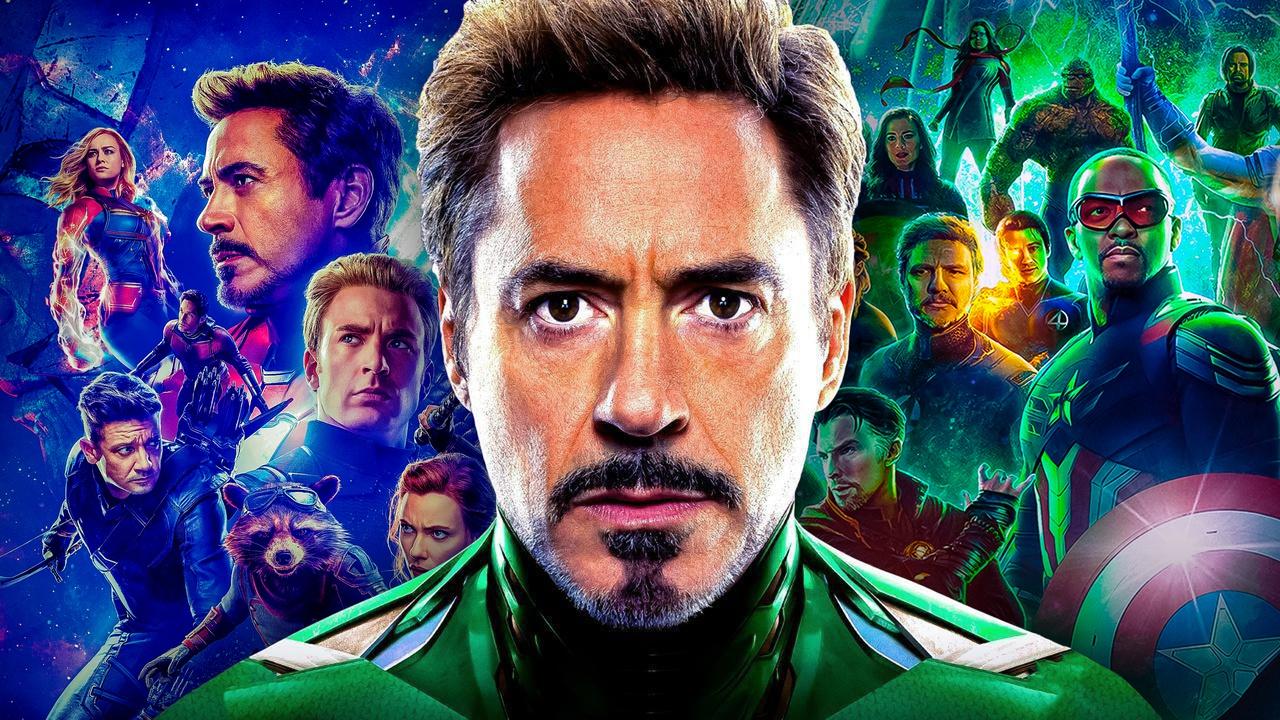
Seven years after Avengers: Endgame shattered box office records and concluded an 11-year saga, Marvel Studios is gearing up for its next ensemble epic with Avengers: Doomsday. The 2019 blockbuster served as the culmination of the Infinity Saga, delivering a level of payoff and cultural momentum that Doomsday could never hope to match. Despite that, with the Russo Brothers returning to direct and Robert Downey Jr. back in the fold, expectations are sky-high.
Setting an impossibly high bar, Endgame momentarily became the highest-grossing movie of all time, earning roughly $2.79 billion worldwide and briefly surpassing Avatar's long-standing global record. Endgame might have a chance at overtaking Avatar ($2.92 billion) when it's re-released on September 25.
Endgame also set the record for the biggest opening weekend ever, debuting to an unprecedented $357 million domestically and over $1.2 billion globally in its first five days. Marvel Studios beautifully set Endgame up for this success and had a myriad of record-breaking films before it, but in 2026, the MCU momentum is quite the opposite.
4 Reasons Avengers: Doomsday Will Do Worse Than Endgame
Superhero Fatigue

Since 2008, more than 90 live-action comic book movies have hit theaters. For nearly two decades, it has been Hollywood's most aggressively mined genre, largely thanks to Marvel Studios and its president, Kevin Feige.
What started as a risky shared-universe experiment turned into the industry’s dominant business model.
When The Avengers proved that interconnected storytelling could culminate in a billion-dollar payoff, every major studio took notes. Disney doubled down. Sony attempted to build its own adjacent Spider-Man universe. 20th Century Fox tried to extend the X-Men saga. Warner Bros. rushed the interconnectedness of the DC Extended Universe (DCEU).
Suddenly, each film wasn't just a standalone story but a small installment in a larger, ongoing franchise, designed less as a full meal and more as another course in a never-ending buffet. The problem? Audiences eventually get full.
To make matters worse, the genre hasn't exactly been firing on all cylinders. Sony's misfires like Madame Web, Morbius, and Kraven the Hunter worsen the entire genre's reputation. DC has also been a culprit, producing films like Joker: Folie à Deux, Wonder Woman 1984, and The Flash before James Gunn took over.
Even the final stretch of Fox's mutant era fizzled with Dark Phoenix and The New Mutants, now getting a 2028 reboot under Disney.
Ten years ago, that would've meant guaranteed success, but recent MCU films like Eternals, Thor: Love and Thunder, Ant-Man and the Wasp: Quantumania, and Captain America: Brave New World are part of the quality issue.
In 2019, Endgame felt like a once-in-a-generation cinematic event. Doomsday, fairly or not, is entering a comic book movie marketplace where audience perception has radically changed.
Marvel Studios' Weak 2025

After the MCU stormed back into the cultural conversation with Deadpool & Wolverine, which shattered the R-rated record with $1.3 billion worldwide, 2025 was another reality check.
All three MCU releases last year underperformed relative to expectations. The Fantastic Four: First Steps led the pack at $521.8 million globally, followed by Captain America: Brave New World at $415.1 million, while Thunderbolts*, despite strong reviews, stalled at $382.4 million.
None were The Marvels-level disasters, but they also didn't feel like must-see movies on the big screen. This is a gut check for a studio that used to print money.
The deeper issue is narrative. The main heroes in those three films are all foundational to Avengers: Doomsday. If audiences didn't fully show up for their solo or team-up introductions, it raises a legitimate question about why they would for this crossover event.
Contrast that with the year leading into Avengers: Endgame. In 2018, Black Panther earned $1.3 billion, Avengers: Infinity War crossed $2 billion, and even Ant-Man and the Wasp brought in $622.6 million. This was Marvel at the peak of its powers.
Even if Avengers: Doomsday tops 2026's global box office, the ceiling won't resemble 2019's $2 billion or more stratosphere.
Decrease in Blockbuster Sequel Success
Seven years removed from the global box office's record-setting $42.3 billion peak in 2019, theaters are still fighting for their futures.
The global box office still hasn't recovered to its pre-pandemic strength, with overall revenue and ticket sales noticeably below their late-2010s peak. At the same time, major sequels across multiple franchises have shown clear signs of diminishing returns.
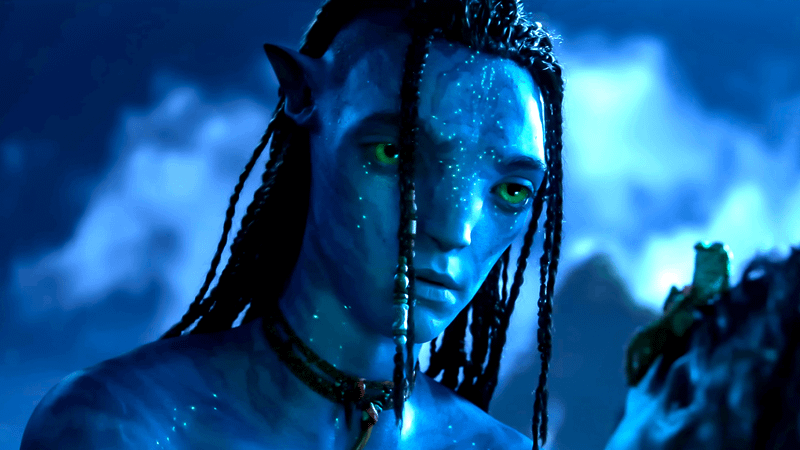
Disney's Christmas 2025 tentpole, Avatar: Fire and Ash, would be a dream result for most franchises at $1.48 billion worldwide. But compared to Avatar: The Way of Water, which surged to $2.3 billion globally, it represents a clear contraction.
Marvel Studios experienced the most dramatic modern sequel drop-off with The Marvels, which collapsed to $206.1 million worldwide after Captain Marvel soared to $1.13 billion. DC faced a parallel situation when Joker crossed the $1 billion mark, only for Joker: Folie à Deux to stall around $200 million five years later.
The broader takeaway is simple: even in a year expected to be packed with big movies, the overall theatrical marketplace is certainly smaller than 2019's ecosystem. And if the overall pie is reduced, expecting Avengers: Doomsday to carve out an Endgame-sized slice adds to its improbability.
Nostalgia Finally Backfires

This is admittedly the most speculative argument on the list, because nostalgia has historically been a financial cheat code for the MCU. Spider-Man: No Way Home and Deadpool & Wolverine proved that bringing familiar faces back into the fold can reignite audience urgency almost overnight.
But Avengers: Doomsday isn't just sprinkling nostalgia in; it's dumping the whole container. Robert Downey Jr. returning as Doctor Doom is a headline-grabber.
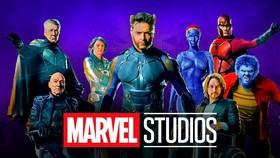
Add in the reintroduction of early 2000s-era X-Men and Chris Evans stepping back into the spotlight after what many fans considered a "perfect" farewell as Steve Rogers in Avengers: Endgame, and you have a movie leaning heavily on characters who have already ended their arcs.
No Way Home built its legacy returns directly into Tom Holland's arc; Tobey Maguire and Andrew Garfield weren’t cameos, they were narratively essential.
With Doomsday, are these returns organic extensions of the story, or are they spectacle-first decisions designed to manufacture an Endgame-level reaction?
Nostalgia can absolutely sell tickets (and most likely will), but there's still some room for doubt. And when compared to Endgame, no one can walk through that door to recapture the must-see hype.