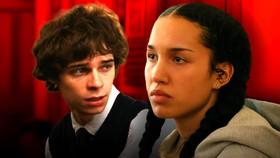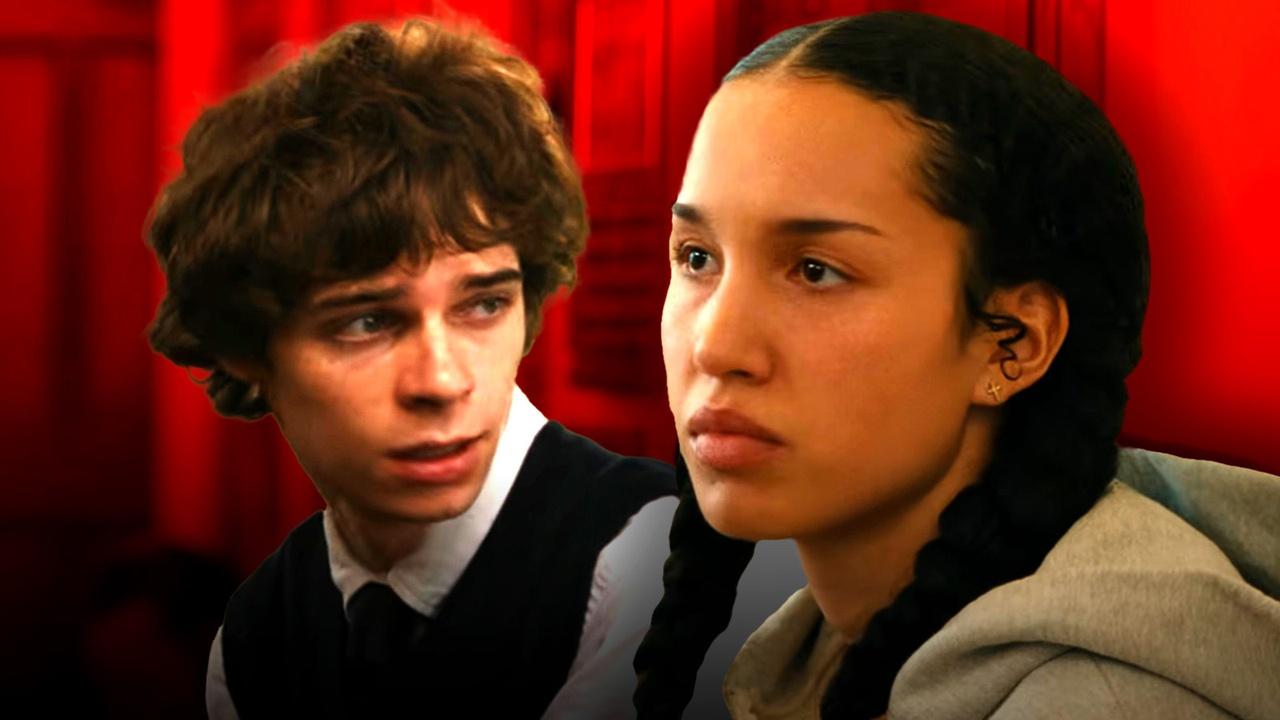
Netflix's The Body Episode 3 revealed far more disturbing details about Leo Anderson's drawings that Grace Franklin had initially caught a glimpse of, heightening the stakes she faced at St. Mark's Catholic School. Created by Quinn Shephard, The Body is Netflix's latest psychological drama set in 2004, following the elite all-girls dance team, the Lions, as a Halloween initiation spirals into chaos. At the center of the story is Grace Franklin (Sofia Wylie), a devout and disciplined new member of the Lions, known to her peers as "Saint Grace." Grace's strong faith and rule-following nature set her apart during tryouts, yet she is still pulled into the team's initiation ritual at an abandoned convent. The ritual revolved around a mock "sacrifice" for competition success; it went haywire when Grace collapsed and went into a prolonged coma after being pressured to take ecstasy.
Part of Grace's orbit at St. Mark's is Leo Anderson (Chucky alum Jackson Kelly), an introvert who prefers solitude and channels much of it into drawing. While working with Grace on a school project, he develops a powerful yet deeply conflicted attraction to her, one shaped by the strict religious environment of his family and his own tendency toward obsessive moral anxiety.
This private turmoil finds its clearest expression in his sketchbook, leading to an unexpected twist that changed everything in The Body.
What Leo Did Draw In The Body, Explained
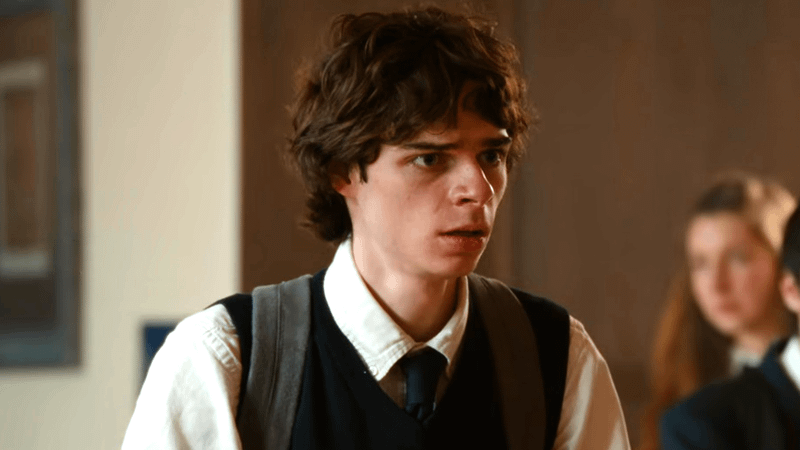
The Body Episode 1 explored the early dynamic between Grace and Leo, showcasing their shared history as they worked together on a group project. The pair's interactions are tentative and mostly ordinary, marked by Leo's quiet demeanor and Grace's politeness. However, it all changed when Grace discovers one of Leo's sketchbook drawings of her. Grace was clearly disturbed by what she saw, prompting her to push him away and tell him to leave. This early rupture completely redefined their connection before Grace's coma at the Halloween party.
The full weight of Leo's emotional turmoil was fully revealed at the end of The Body Episode 2, carrying over into Episode 3. Once Grace was in a coma, the drawings no longer remained private. It is worth noting that Jackson left some of his drawings in Grace's room, and this accidental mishap kickstarted the revelation that changed his life and outlook toward his peers.
As it turned out, Leo's sketchbook contained multiple depictions of Grace that fuse classical religious motifs with more intimate scenes. The first drawing that Grace's uncle, Father Franklin, discovered in Episode 3 shows Grace unclothed and bound in a manner that closely resembles the traditional Agnus Dei ("Lamb of God") painting. This work of art by Spanish artist Francisco de Zurbarán depicts a bound sacrificial lamb, a motif often used in Christian art to represent Christ's sacrifice.
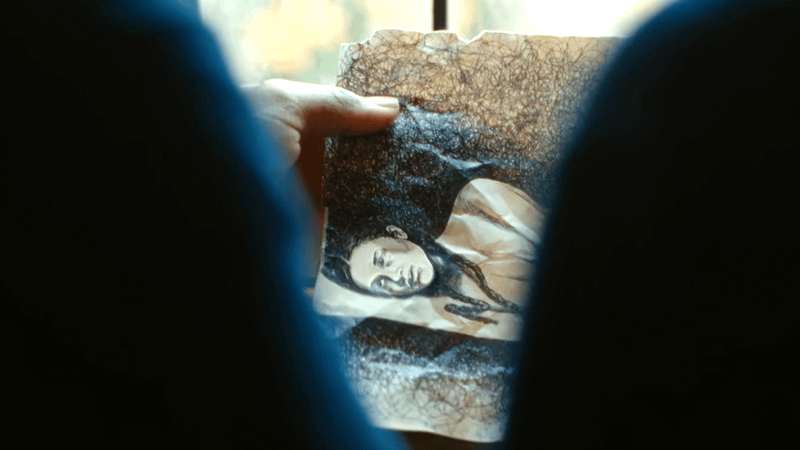
Given that most people at St. Mark's lacked the context to understand the religious symbolism in Leo's drawings, the images were widely interpreted in the most alarming way possible. The sketch of a quiet, introverted boy that showed Grace naked was taken as evidence of a dangerous fixation, one that could easily be read as proof of harmful intent.
As a result, Father Franklin and the authorities treated Leo as a primary person of interest. The wider school community quickly followed, channeling its fear and anger toward him and turning him into a convenient scapegoat. This revelation allowed those truly involved (aka Anya and the rest of the Lions) to avoid examining their own roles in the events surrounding Grace.
It only made matters worse when other drawings portrayed Grace in Christ-like or saintly guises, sometimes incorporating elements of suffering or devotion alongside more personal compositions that showed Leo and Grace together.
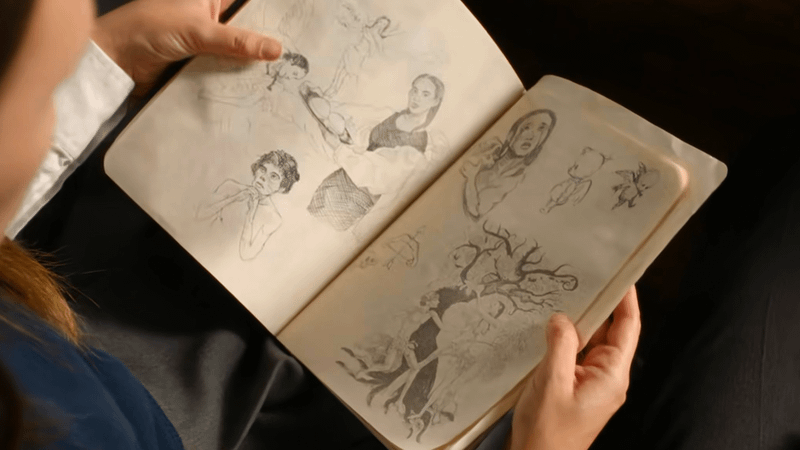
These drawings are not crude doodles either, as they are carefully rendered works that treated Grace as both an object of deep affection and a sacred figure. Leo explained that the drawings served as a private way to express his malicious or intimate thoughts about Grace (that he viewed as impure). Leo pointed out that he never intended Grace to see them, as they were meant for his eyes only. For him, it was a form of catharsis. Unfortunately, this private, conflicted expression of desire and guilt was transformed into something far more sinister in the public eye.
The deeper meaning behind Leo's drawings primarily centers on themes of adolescent desire and religious conditioning. Leo, who was raised in a highly restrictive environment shaped by his mother's intense religious belief, experiences ordinary teenage infatuation, but his upbringing deems this normal attraction as something dangerous and sinful.
In his mind, Leo's act of drawing Grace was seen as a holy or sacrificial gesture, appearing to be his attempt to purify those feelings. This act, however, unconsciously elevates Grace into something divine in his eyes. At the same time, the drawings carry the weight of guilt, as Leo became convinced that his private thoughts-turned-art somehow contaminated or harmed her (but she was really in a coma due to the ecstasy she took from Anya).
What Did Leo Do To Grace?

Leo's drawings created lasting ambiguity about Leo's intentions and actions the night Grace collapses, but The Body ultimately clarified his actions. It's worth noting that Episode 1 ended with Leo inside Grace's house, only to find her unconscious in her bed. He was unaware that Anya and Lisbeth had brought her home after she appeared to stop breathing following the Halloween party initiation. Leo was the one who called for medical help. It was also notable that Leo tried to apologize during the Halloween party, but he backed off when he saw Steven with her.
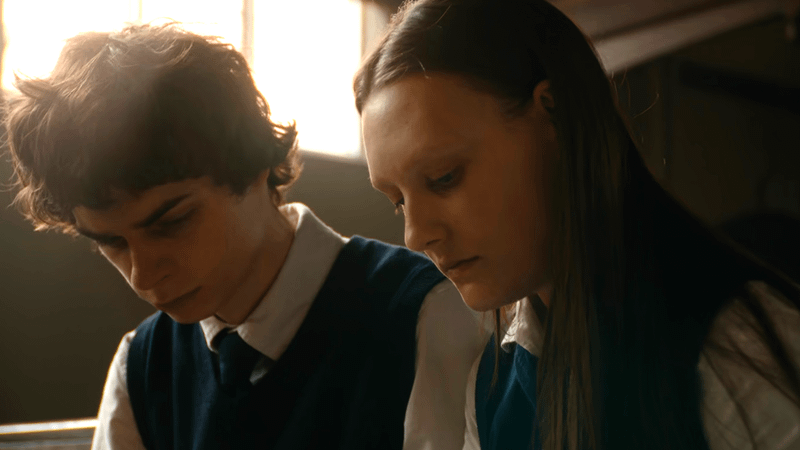
Clearly, there was no indication in The Body that Leo harmed Grace; his presence at the house is explained by his apology, and he initiated the emergency assistance. Suspicion arose only because Leo was the one who found Grace, combined with the disturbing drawings circulating that suggested his twisted fixation.
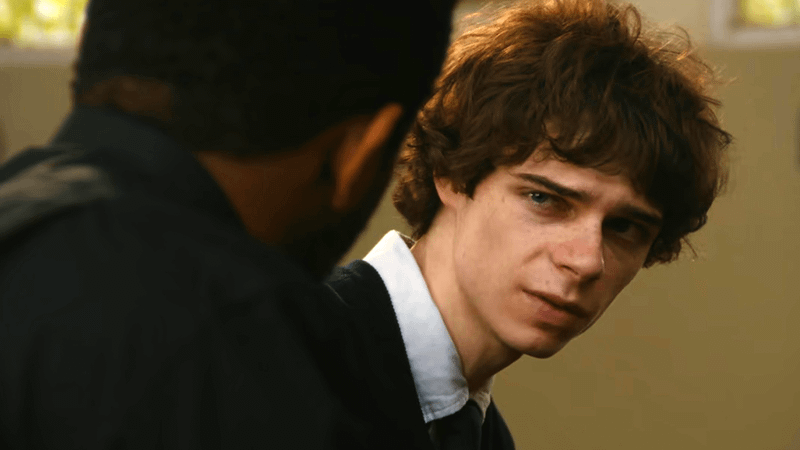
Leo, however, came out on the wrong end of the punishment because his innocence wasn't widely believed by his peers, which led to hazing by other students and a prolonged confrontation in the pool with Steven and his friends, ultimately pushing him to admit what he did. Under pressure, Leo finally broke down, admitting that the drawings were attempts to purge impure thoughts and blaming himself for having contaminated Grace with his sin (but he didn't commit any physical act).
Thankfully, Father Franklin recognized Leo's guilt, ultimately intervening in the matter by acknowledging that the drawings came from intense internal guilt rather than violence. At the end of the day, Leo did not hurt Grace, as his actions during that one fateful night were purely protective, even if it was rooted in his own conflicted feelings. The real harm to Grace originated elsewhere, mainly the party, the ecstasy, and peer pressure.
All in all, the drawings served as one of The Body's anchors in exploring the collision of faith, repression, and emerging identity, leading to how private internal turmoil can be misread as public danger when filtered through fear and strong religious beliefs.