
Star Wars retconned one of the most important blind spots in the prequel trilogy, revealing that the Jedi may have had an earlier opportunity to uncover Chancellor Palpatine’s rise to power. In Jar Jar #1, written by actor Ahmed Best and Arrowverse co-creator Marc Guggenheim, a new piece of canon recontextualizes how Palpatine’s political maneuvering wasn’t as airtight as previously believed.
The comic introduces a critical twist: Palpatine’s (Ian McDiarmid) plan to gain emergency powers didn’t go unnoticed. Instead, Jedi Knight Kelleran Beq (played by Best in The Mandalorian) uncovered the Chancellor’s true intentions and passed that knowledge along—indirectly—to Jar Jar Binks (also played by Best in the prequel trilogy). This revelation reframes the long-held belief that the Jedi remained completely in the dark until Revenge of the Sith, adding a new tragic layer to the Republic's fall.
Palpatine’s Plan Was Discovered Much Earlier
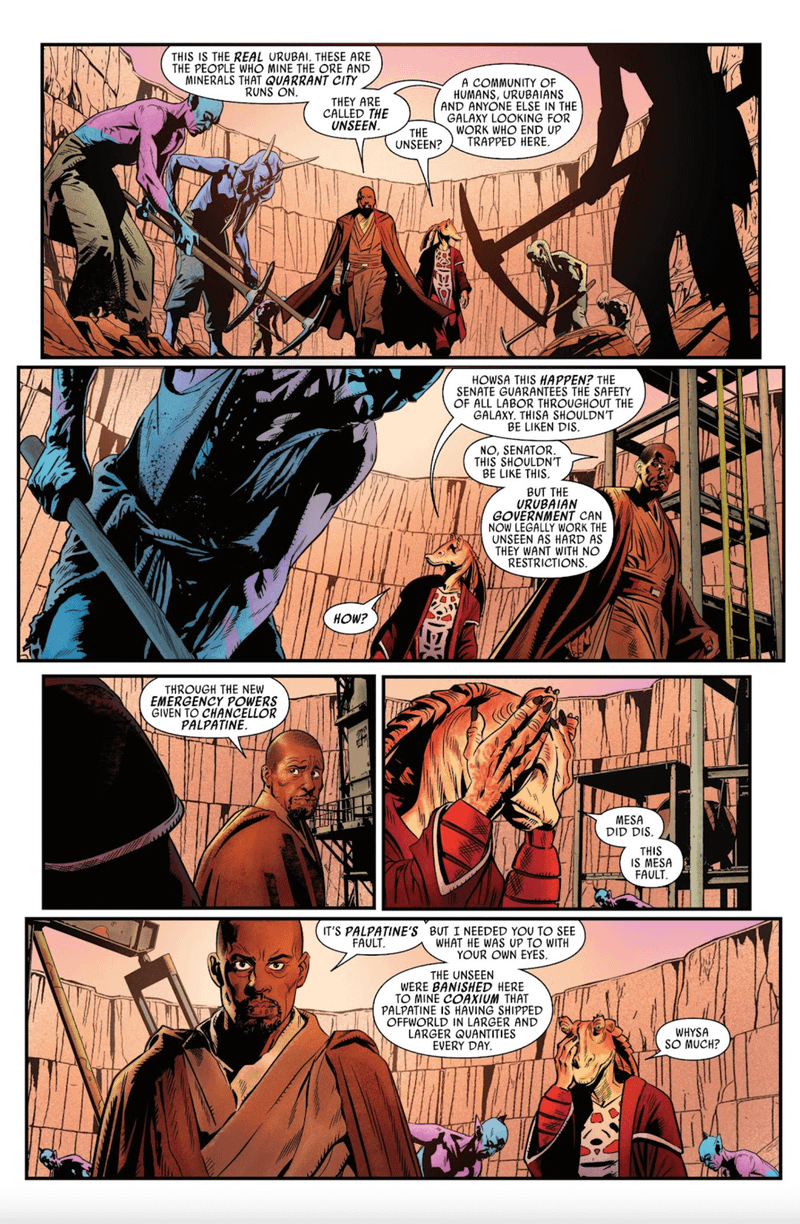
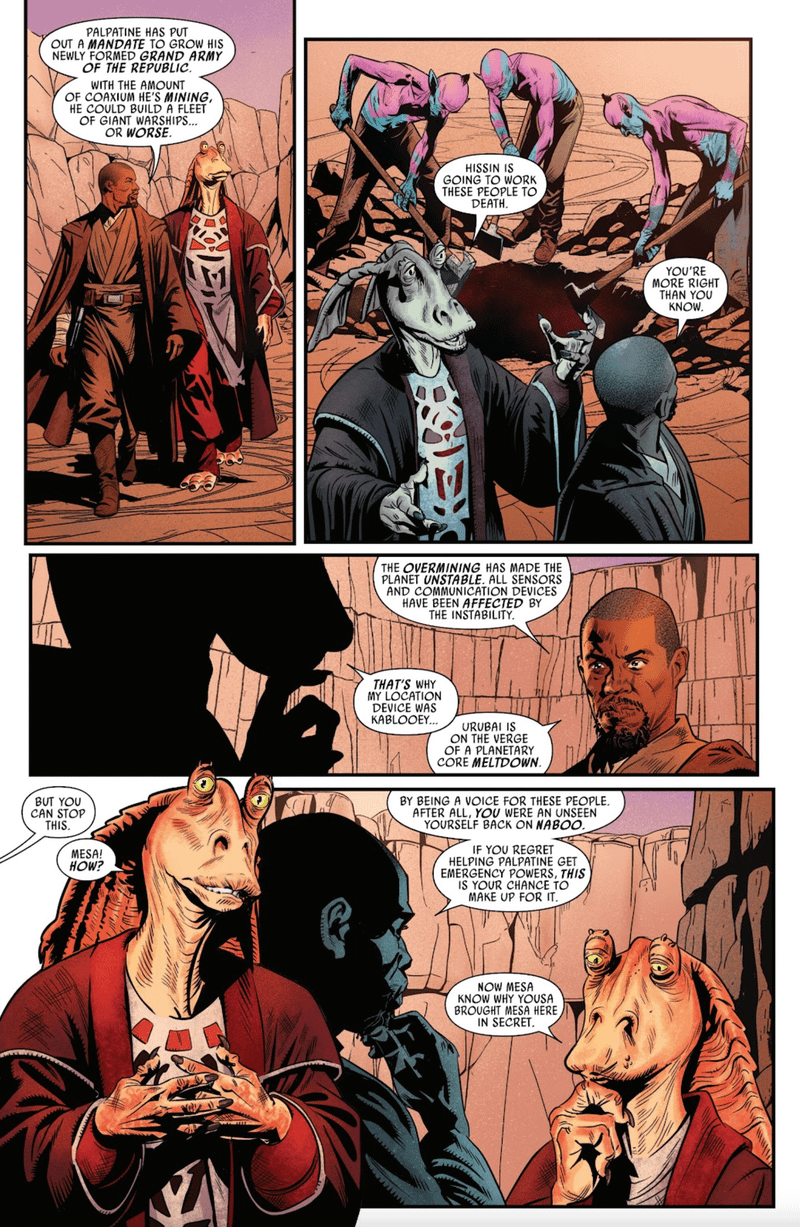
In Jar Jar #1, Kelleran Beq, best known to fans as the Jedi who saved Grogu during Order 66, takes on a much more pivotal role in the prequel-era timeline. The comic reveals that Beq became suspicious of Palpatine during the Chancellor’s push for emergency powers amid the Clone Wars.
Rather than accepting the political shift at face value, Beq deduced that the man who would become Emperor Palpatine was orchestrating events behind the scenes. He recognized that the growing conflict and the Senate’s fear were being leveraged to consolidate power in a way that ran counter to the Republic’s core principles.
This alone marks a major shift in canon. Previously, the Jedi Council appeared largely reactive, only beginning to suspect Palpatine late in Revenge of the Sith. Here, however, a Jedi already connected the dots well in advance.
Thankfully, Beq didn’t keep this information to himself. The comic shows him sharing his concerns with Gungan senator Jar Jar Binks, who, in Attack of the Clones, gave an impassioned speech in the Senate that played a key role in granting Palpatine those emergency powers, leading to the formation of the Galactic Empire.
By reframing Jar Jar as someone who was at least partially informed about Palpatine’s manipulations, the story reframes his infamous Senate decision. What was once portrayed as bumbling naivety is now a tragic, cautionary tale about missed warning signs and ignored gut instincts.
How This Changes the Downfall of the Jedi
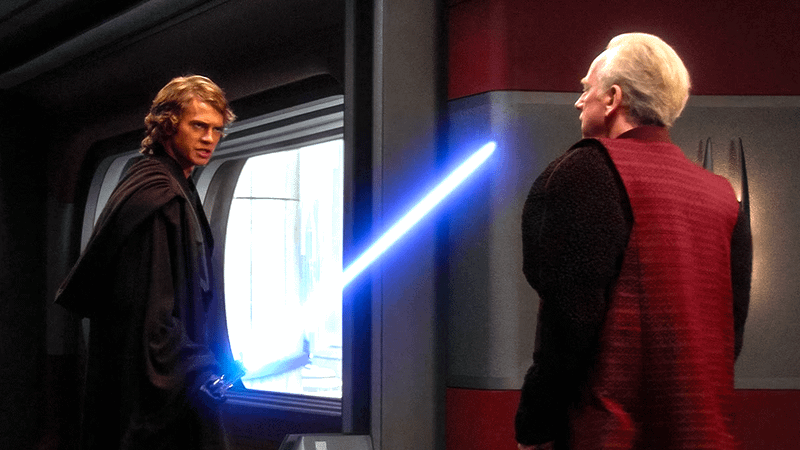
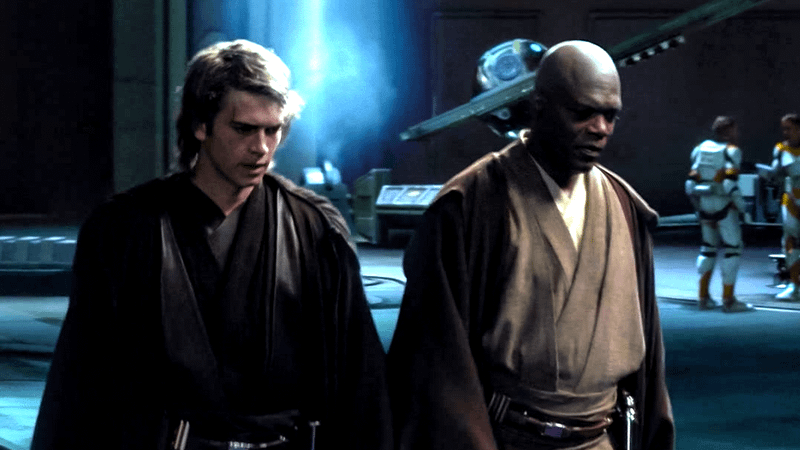
This new canon addition directly contrasts with how events unfold in Star Wars: Episode III - Revenge of the Sith. In the film, the Jedi only definitively learn of Palpatine’s Sith identity when he confesses his knowledge of the dark side to Anakin Skywalker (Hayden Christensen).
Anakin then reports this to Jedi High Council member Mace Windu (Samuel L. Jackson), triggering the confrontation that leads to Windu’s death and Anakin’s transformation into Darth Vader.
Until now, that moment served as the first true confirmation that the Sith had infiltrated the highest levels of the Republic. The Jedi Order’s failure was rooted in their arrogance and inability to sense Palpatine’s dark side presence, a limitation that has long been debated among fans.
Jar Jar #1 complicates that narrative because instead of the Jedi’s downfall being simply a product of ignorance and hubris, it now includes a missed opportunity. Beq had already identified Palpatine as a threat, not explicitly as a Sith Lord, but as a dangerous manipulator exploiting the system. While that distinction matters, it doesn’t absolve the Jedi of failing to act on credible suspicion.
In effect, the comic shifts the tragedy. The Jedi weren’t completely blindsided. They had enough information to act but failed to follow through.
Jar Jar #1 Changes Star Wars Forever
The biggest implication of Jar Jar #1 is how it reframes responsibility. For years, the Jedi Order’s failure was attributed to overconfidence, clouded vision through the Force, and Palpatine’s unparalleled ability to conceal his Sith identity. While those elements still hold true, this retcon introduces a more grounded, human flaw: inaction despite suspicion.
Beq’s discovery proves that Palpatine’s political strategy wasn’t flawless. It was detectable, just not acted upon decisively enough to stop it. That nuance adds weight to the Jedi’s collapse, turning it into a story not just about deception, but about hesitation and dereliction of duty.
It also reshapes Jar Jar’s legacy. Rather than being purely comedic or incompetent, he becomes a tragic participant in a larger failure of communication and judgment. If he had taken Beq’s warning more seriously, or if that information had reached the Jedi Council, the trajectory of the galaxy might have changed.
Ultimately, this retcon doesn’t contradict Revenge of the Sith. It deepens it and adds an all-too-familiar layer of human complexity. The moment Anakin exposes Palpatine is still the tipping point, but it’s no longer the beginning of the Jedi’s awareness. Instead, it’s the culmination of a warning that came too late to matter. And in true Star Wars fashion, that makes the fall of the Republic even more devastating.