Ryan Gosling's new movie, Project Hail Mary, based on Andy Weir's space-survival novel, has officially surpassed Marvel Studios' inaugural box office triumph. The film has been a runaway hit this spring, riding a wave of rave reviews and audience turnout that few recent releases have matched. Its latest earnings milestone doesn't just outpace Marvel's more recent underperformers; it now stands above the film that launched the studio's path to cinematic dominance nearly 20 years ago.
Project Hail Mary has now crossed the $320 million mark domestically, officially surpassing Iron Man's $319 million haul from 2008. It is a notable achievement for a (relatively) original alien encounter film in a shaky-at-best era at the box office.
Globally, the film has earned $640.1 million over seven weeks of release, more than $50 million clear of Iron Man's worldwide total, and it has taken down some serious competition along the way, including one of Disney's crown jewels, The Incredibles.

But passing Iron Man carries a different kind of weight. Iron Man is where it all started for the MCU. It is the first film to lay the narrative groundwork for what has since expanded into dozens of movies and TV shows over the past 18 years.
When looking at the overall achievement of Marvel Studios, especially during the 2010s, it's easy to point to its origin as a sign of things to come. In 2008, Iron Man was not a household name; he was a B-tier comic book character with far less cultural recognition than Marvel characters like Spider-Man or the X-Men.

Yet director Jon Favreau and a then-34-year-old producer named Kevin Feige somehow saw something bigger than another web-slinger or mutant story.
They found the right character arc, and more importantly, they found the right man in Robert Downey Jr., whose take on Tony Stark turned a risky bet into the foundation for the biggest film saga in Hollywood history.
Iron Man remains one of the best origin films the comic book genre has ever produced, and its greatest accomplishment was not what it was, but what it started: a $30-billion-dollar franchise.
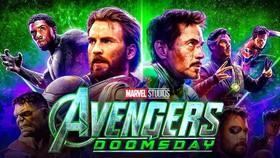
Now, nearly two decades later, Marvel is trying to recapture that original spark with Avengers: Doomsday, which is widely projected to be the top-grossing film of 2026, but it will have some competition for that title.
That a star-driven, original IP like Project Hail Mary is even in that conversation is a fascinating sign of the times. The film represents something Hollywood has been desperate to prove: that a non-franchise, non-sequel movie can command blockbuster numbers when the right talent and the right material come together.
Ryan Gosling has made that case this spring, and the conversation is already shifting toward what comes next. With Star Wars: Starfighter arriving in 2027, it will be worth watching closely how Gosling looks to build on one of the more impressive box office runs in recent memory.
How Marvel Can Recapture the Box Office
To understand the hill Marvel is currently climbing, look no further than its own 2025 slate. Captain America: Brave New World earned $200.5 million domestically, Thunderbolts* brought in $190.3 million, and even The Fantastic Four: First Steps topped out at $274.2 million. Project Hail Mary has outgrossed all three, and it is still in theaters, actively tracking toward $350 million or more by the end of its run.
In the short term, Marvel's answer is to stop taking chances and lean on the biggest names left in the toybox. The studio has cleared the riskier projects from its theatrical calendar. Spider-Man: Brand New Day arrives this July in coordination with Sony Pictures, followed by back-to-back December releases with Avengers: Doomsday and Secret Wars. In the midst of this, the studio is also re-releasing its biggest hit ever: Avengers: Endgame.
The once bulletproof studio, which was regularly sending films like 2019's Captain Marvel past the billion-dollar mark, needs guaranteed wins now more than ever.
But the box office numbers alone will not be enough. By the time the credits roll on Secret Wars, Marvel Studios needs audiences walking out of theaters reinvigorated and genuinely excited about what comes next.
That future arrives in 2028, a new Black Panther film, maybe even sequels to The Fantastic Four: First Steps and Deadpool & Wolverine, and most importantly, the debut of a rebooted generation of X-Men.
Getting the X-Men's arrival right in the MCU could set the tone for the next decade of storytelling, and how it lands will go a long way in determining the future of Marvel Studios as a company.