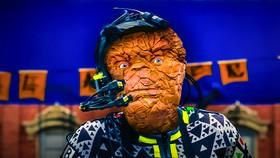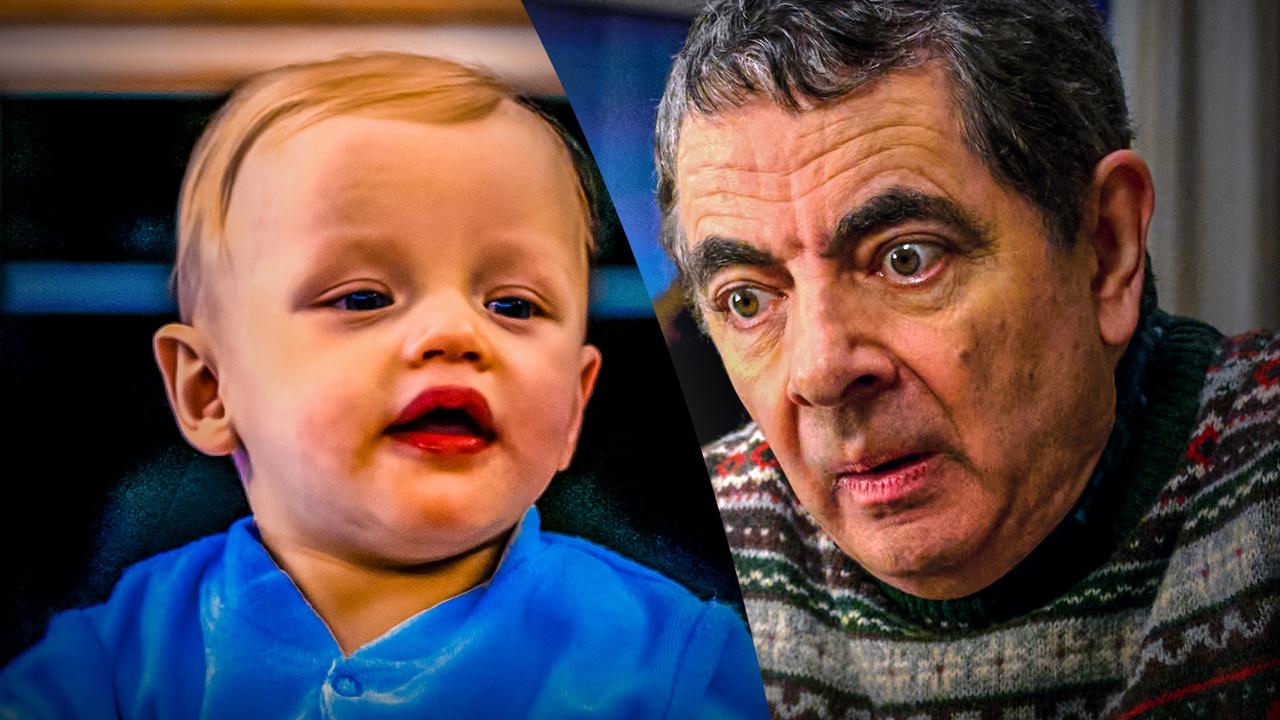
Man vs. Baby director David Kerr confirmed what fans suspected about the baby in the Netflix comedy series, and he has good reason to use CGI when filming scenes. Man vs. Baby serves as a follow-up to the Rowan Atkinson-led series, Man vs. Bee from 2022. The show's debut season utilized CGI for apparent reasons, as the co-star of Atkinson's Trevor Bingley was an animal, and some would argue that fans would have no problem with that. However, it was a different story altogether in 2025's Man vs. Baby because some fans believed that there was blatant use of AI when incorporating scenes with the titular baby. And now, the director has clarified these claims.
Man vs. Baby is a four-episode Christmas special that follows the return of Trevor Bingley after he received a significant financial offer to house-sit for millionaires during Christmas break, but it took a major turn after he was forced to take care of a lost baby at an unexpected time. The series stars Rowan Atkinson (who also appeared as part of Wonka's cast in 2023), Robert Bathurst, Nina Sosanya, and Susanna Fielding. All four episodes dropped on Netflix on December 11, 2025.
Is the Baby In 'Man Vs. Baby' AI?

Man vs. Baby highlighted a six-month-old baby as a significant character throughout the four episodes of the Netflix Christmas special. With the series relying on a real child actor for major sequences, some fans are curious about how Man vs. Baby managed to pull it off in a seamless manner.
Speaking with LBB to celebrate the release of Man vs. Baby on Netflix, director David Kerr explained that they utilized several techniques to showcase the smooth incorporation of the baby into the series, casting identical twin babies, "machine learning" to develop many of the babies' expressions, and CGI. The use of machine learning (ML) essentially confirms that the production utilized artificial intelligence (AI) for the show's baby, as ML is a subset of AI, but the baby is still partly human.
Kerr explained key reasons why they utilized these techniques, noting that a "six-month-old isn't going to take direction" and the scheduling only allowed the babies to be on set not more than two hours a day:
David Kerr: "It was WC Fields who said 'never work with children or animals.' Well, in 'Man Vs Bee' the co-star was an animal, albeit a CG one, and in 'Man Vs Bee', the co-star wasn’t just a child, it was a six-month-old baby. And a six-month-old isn’t going to take direction. Baby is going to do whatever baby wants to do at any given moment.
Now think about schedule. For very humane reasons, a baby isn’t allowed to be on set for more than two hours a day. But that’s not ideal when the baby appears in almost every scene."
Kerr continued to explain that production initially cast a pair of identical twins as the "hero babies" before adding a pair as backups, allowing them to shoot the backups and do "face replacement" in post. The director also confirmed the use of a lifelike and articulated latex moulded model of the hero babies:
"We cast a pair of identical twins as the hero babies. We cast an additional pair of identical twins as back-ups. The backup babies were a couple of months older, so more capable of crawling. But they were about the same size as the hero babies. So we could shoot with them and do face replacement in post. We also had a jelly baby, which is a very lifelike and articulated latex moulded model of the hero babies, which was very handy in rehearsal to get the action locked down before bringing the live babies onto set.
But, although it looked uncannily lifelike, it wasn’t quite good enough to stand close scrutiny on screen. So there are no shots in the show featuring the jelly baby. From the outset, I was hoping to get as much of the baby's performance in camera, on set. But I knew I couldn’t rely on that."
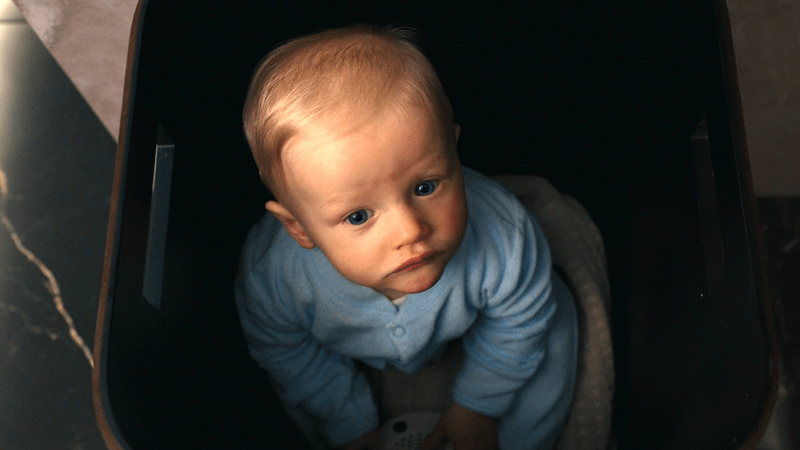
Kerr then explained the complex process of collaborating with his visual effects supervisor, using a performance capture session to capture almost all of the expressions of the babies involved:
"I began detailed discussions with our VFX supervisor, Rob Duncan of Framestore, because we’re at a moment where AI tools are being deployed in various ways but it’s still very new tech. And what we attempted to do is right at the cutting edge of what’s possible.
We wanted to have a full CGI baby that looked totally indistinguishable from the hero baby, but would have exactly the action or expression any specific scene demanded. So we started with a performance capture session. Essentially pointing five cameras at each of our hero babies for a couple of hours in the hope of capturing a full gamut of expressions, waking, sleeping…"
The director admitted that it was a "slow process" because the machine learning technique they used was important in "creating a library of expressions and actions" that they can use in filming and postproduction:
"Framestore then applied machine learning to the resulting footage, essentially creating a library of expressions and actions, with the potential to adapt what we’d captured into further options for expressions and actions that the babies hadn’t actually delivered. In post, we drew on our databank of baby expressions to build the performances. Despite the brilliance of Framestore’s VFX team and animators, it wasn’t a case of getting instant, effortless results. It was a slow process. Often, there’d be a detail that let a shot down: a mouth shape or an eye blink that didn’t look plausible. But we had a creative dialogue, a lively back and forth to develop the shots and I think we landed in a great place."
Ultimately, it ended in a favorable result. Kerr pointed out that "the most successful fully CG shots were [they] had a reference for the expression or action [they] wanted for the CG baby," noting that it generated more authentic facial expressions.
"One thing I learned was that the most successful fully CG shots are ones where we had a reference for the expression or action we wanted from the CG baby. Even if it was captured on a different set or different lighting conditions. The human eye is so adept at spotting the minutiae of facial expressions that the more authentic you can be, the better."
David Kerr's elaborate explanation of why the production chose to rely on these different techniques demonstrates the complexity of the process when incorporating a baby as one of the show's lead stars. While there may be scrutiny behind their process, it makes sense for production to utilize them due to the uncontrollable nature of their situation.

In a separate interview with the Manchester Evening News, lead star Rowan Atkinson emphasized that the babies they used were twins, pointing out that it is a perfect plan because "you can bring the other one in" if the other one "gets grizzly" during the filming:
"We should emphasise of course that the baby was twins, you always choose twins so if one gets grizzly you can bring the other one in. You can only have a baby on set for 45 minutes [a total of two hours a day] and a shoot day is eight or 10 hours so there are so many hours that you can't actually continue filming that scene. You have got to film a different scene, or a different shot, just looking the other way."
Atkinson also admitted that the laws for scheduling with baby actors are quite "tricky", which explains why the show utilized CGI in most of the sequences:
"The scheduling is tricky with babies. So we have identical twins, the hero babies, and then we had twin crawling babies because the hero babies couldn't crawl. So that's where the CGI comes in, when you implant the face of the hero baby into the crawling baby."
Man vs. Baby is one Netflix's biggest TV shows releasing in December 2025.
Why 'Man vs. Baby's Use of Machine Learning Is A Double-Edged Sword
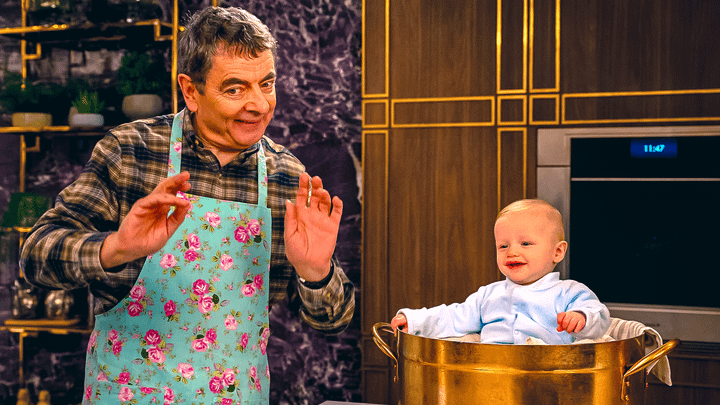
While the use of artificial intelligence has been frowned upon by a good chunk of the public, especially in the filmmaking industry, some would argue that using machine learning for Man vs. Baby is an essential tool to help make the series a success, considering that they have no control over a six-month-old baby's capabilities on set (this is on top of strict scheduling laws).
Despite their use of artificial intelligence tools like machine learning, the production still made an effort to utilize more techniques, such as relying on identical twins and using backup babies to ensure a smooth transition between scenes. If anything, the fact that director David Kerr was transparent enough to be honest about the techniques used is a win on their end.
Given that Man vs. Baby has a conclusive ending, with Trevor successfully reuniting the baby with the Schwarzenboch family, it's reasonable to assume that this four-part story won't be revisited, meaning that the use of AI tools like machine learning will be lessened in the future.