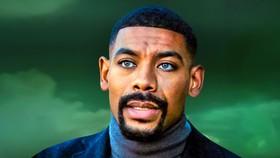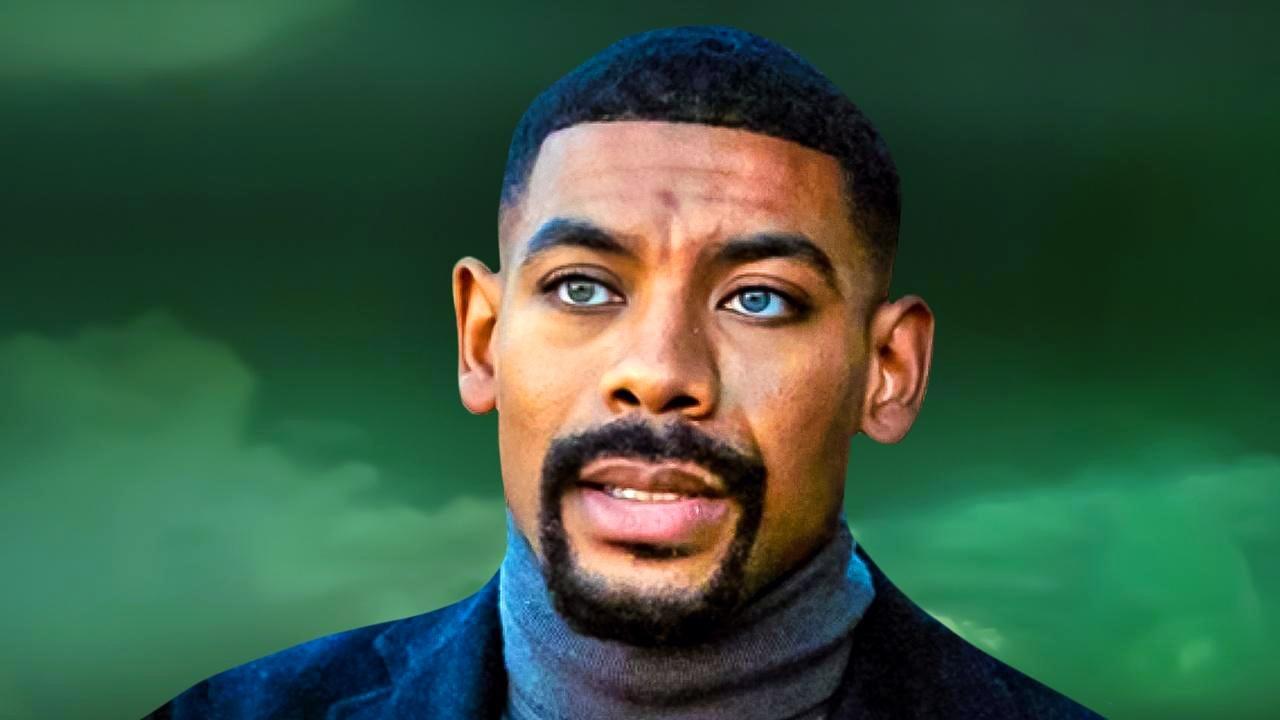
DC's Lanterns took its share of liberties with the Green Lantern IP, and one of its most divisive decisions was giving Aaron Pierre's John Stewart his own Green Lantern oath. The architect of the series has clarified that the intention was not to disrespect the lore behind the character but to go in a different direction while integrating him into the DCU. Lanterns aired on HBO and streamed on HBO Max from August 16 to October 4, and while its story direction was not everyone's cup of tea, the show ended its run as one of the summer's standout series.
Lanterns creator Chris Mundy, in a recent episode of The Midnight Boys podcast, opened up about the finale and the rationale behind some of its story decisions, specifically giving John his own oath. He explained how complicated it would have been for John to recite the traditional oath at that point, given his tumultuous relationship with the Guardians of the Universe. The showrunner said John coined his own oath because he "needed to want it on his own terms":
"It's funny. Justin always said, one of our writers, that it's like, ‘OK, we're not rewriting; we're just remixing it. John's whole path to it wasn't the same as anybody else's path. The ring didn't choose him. He got interviewed for it, but then he needed to choose that he wanted the job. He turned down the job and then came back and needed to want it on his own terms, not his parents, not just because of the Guardians. And we talked so much about fear, obviously because it's a big part of the mythology, and the canon, and we really landed on… There's a line in the finale. It's like, ‘Fear is actually just emotional intelligence. Show me a species without fear. I'll show you something on the extinction list.’ It's true. You can use it. You want to be fearless but want to be intelligent too."
Mundy further noted that the decision also came from a simpler impulse: "we just wanted John to be his own man":
"So we're like… All those things. We can't put him through this thing, and have him learn all this stuff, and then just say an oath to people that he's not entirely pledging allegiance to at the moment, in terms of the Guardians. So, we just want him to be his own man. But at the same time, it definitely nods toward the original… We don't want to disrespect it, but like we just wanted John to be his own man."
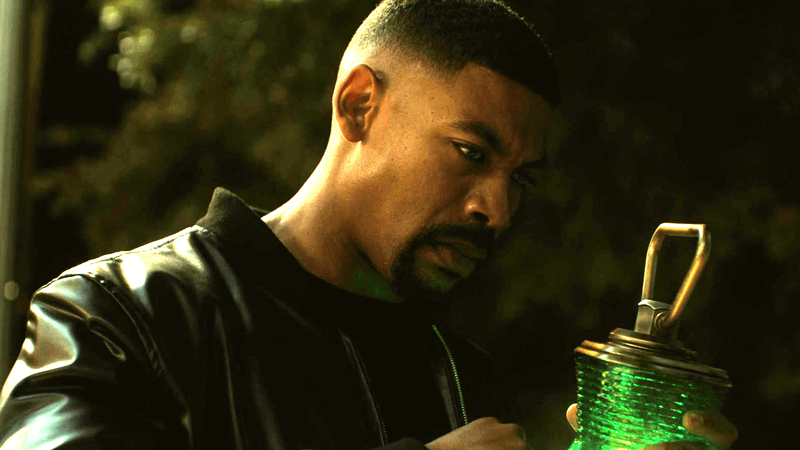
John Stewart rejected the Green Lantern ring in the first place because he was repulsed by the Guardians of the Universe and how they treated both him and Hal Jordan. Over the course of the season, as he investigated Hal's murder, John took up the very ring he had once been offered and refused. The trail ultimately led to Sinestro, who had forged a new power battery, a so-called Dark Lantern, on a dead planet saturated with fear.
Charging from it risked infecting John with fear, and it meant erasing Hal's stored consciousness for good. In the finale, John summoned Guy Gardner to relay a coded message to the Guardians, then charged the ring anyway and recited an oath entirely his own, one that pledged nothing to the Green Lantern Corps: "In brightest day, in darkest night. I embrace my fear, I'll do what's right. I choose this ring, I choose this fight, in service to this lantern's light."
Some fans were outraged by that direction, having expected John to become a core part of the Corps rather than an independent operator.
John Stewart's Oath Change Follows a Green Lantern Tradition From the Comics
An oath of his own in Lanterns isn't nearly as strange as the backlash suggests. On the contrary, DC Comics does this all the time. The classic oath first appeared in 1959's Showcase #22, written by John Broome, though science fiction writer Alfred Bester is also frequently credited as its author. In-universe, DC even gave the oath its own origin story in Green Lantern Vol. 2 #10, where Hal Jordan told his friend Tom "Pieface" Kalmaku that he composed it a week after becoming a Lantern.
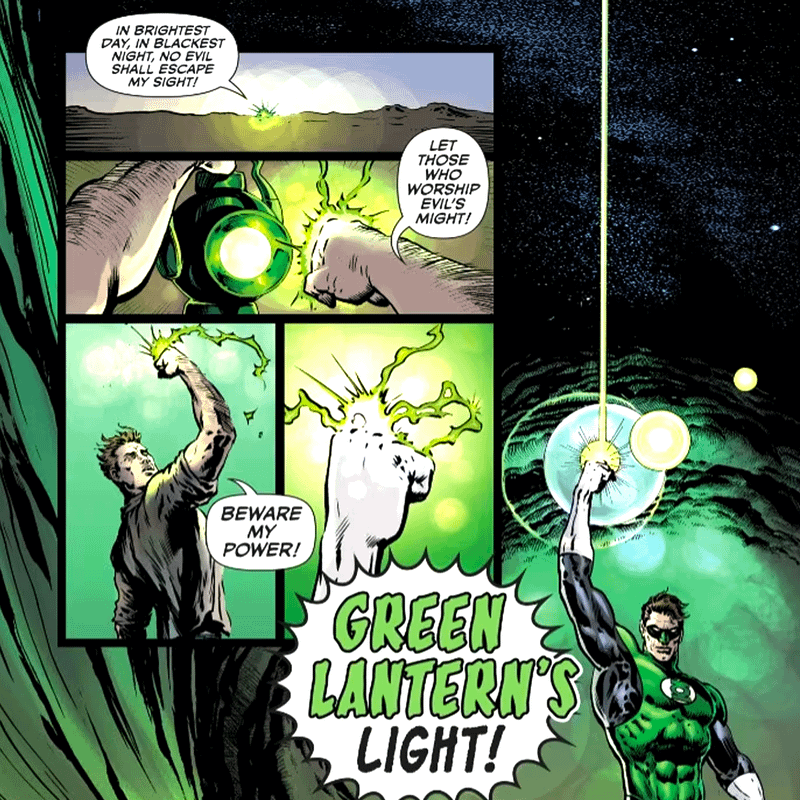
Each line referenced a real case from his early career, from a bank robbery involving a super-magnesium bomb to a payroll break-in at Ferris Aircraft. Jordan even admitted he tacked on the final two lines, "let those who worship evil's might, beware my power... Green Lantern's light," simply to make it rhyme.
Notably, the oath itself is not required for a power ring or battery to function. In DC lore, it works more like a personal ritual, a way for the wielder to time the recharge and steel their concentration. Because of that, plenty of Lanterns across DC history have chosen their own words.
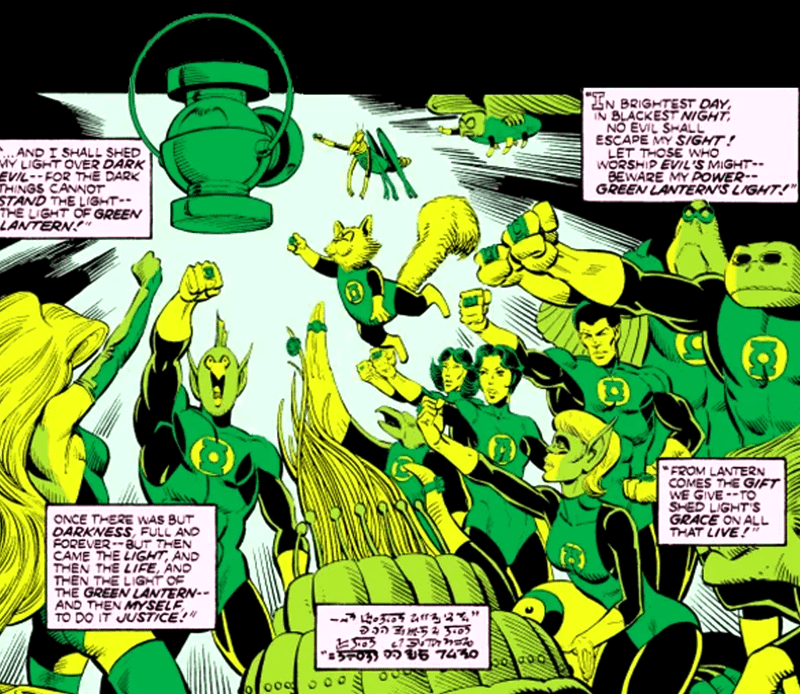
Alan Scott, the Golden Age Green Lantern, swore his own oath as far back as 1940's All-American Comics #16: "And I shall shed my light over dark evil, for the dark things cannot stand the light, the light of the Green Lantern!" Guy Gardner had his own version in 1968, vowing to "combat evil with all Green Lantern's might." Even Abin Sur, the Lantern whose death set Hal Jordan's origin in motion, had his own oath in Legends of the DC Universe #21, centered on illuminating darkness with "the light of justice."
Some of the most creative oaths came from Alan Moore's time on the franchise. Rot Lop Fan, a blind Lantern from a species with no concept of light, recited an oath built entirely around sound, ending with the memorable "beware my power: the F-Sharp Bell!" Medphyll, the plant-based Lantern, swore that "no blade of grass shall go unturned."
Even John Stewart's comic book family has ties to the practice. Katma Tui-Stewart of Korugar, John's wife, went years without reciting any oath at all, staying silent while her ring charged before eventually adopting a fellow Lantern's words. Other Lanterns, like Sodam Yat and Kho Kharhi, also personalized the tradition, proving the Corps always made room for individual voices.
And it isn't just the Green Lanterns. Every color on the emotional spectrum has an oath of its own. The Sinestro Corps, for instance, twisted Hal Jordan's oath into a threat: "In blackest day, in brightest night! Beware your fears made into light." The Red Lanterns speak of "blood and rage of crimson red," while the Blue Lanterns end theirs on hope: "Look to the stars, for hope burns bright!" The Star Sapphires declare that "love conquers all with violet light," and the Black Lantern Corps delivered one of the most chilling verses in DC history: "By my black hand — the dead shall rise!" Even Larfleeze, the one-man Orange Lantern Corps, has one, a hilariously greedy string of "What's mine is mine and mine and mine."
John doing the same in Lanterns is hardly the sacrilege some fans called it. He will return in James Gunn's Superman sequel, Man of Tomorrow, where he's likely to recite the new oath again. John being his own man, with his own oath, further positions him as the DCU's primary Green Lantern and a likely member of the Justice League whenever Gunn introduces the team.
Geraldo Amartey is a writer at The Direct. He joined the team in 2025, bringing with him four years of experience covering entertainment news, pop culture, and fan-favorite franchises for sites like YEN, Briefly and Tuko.