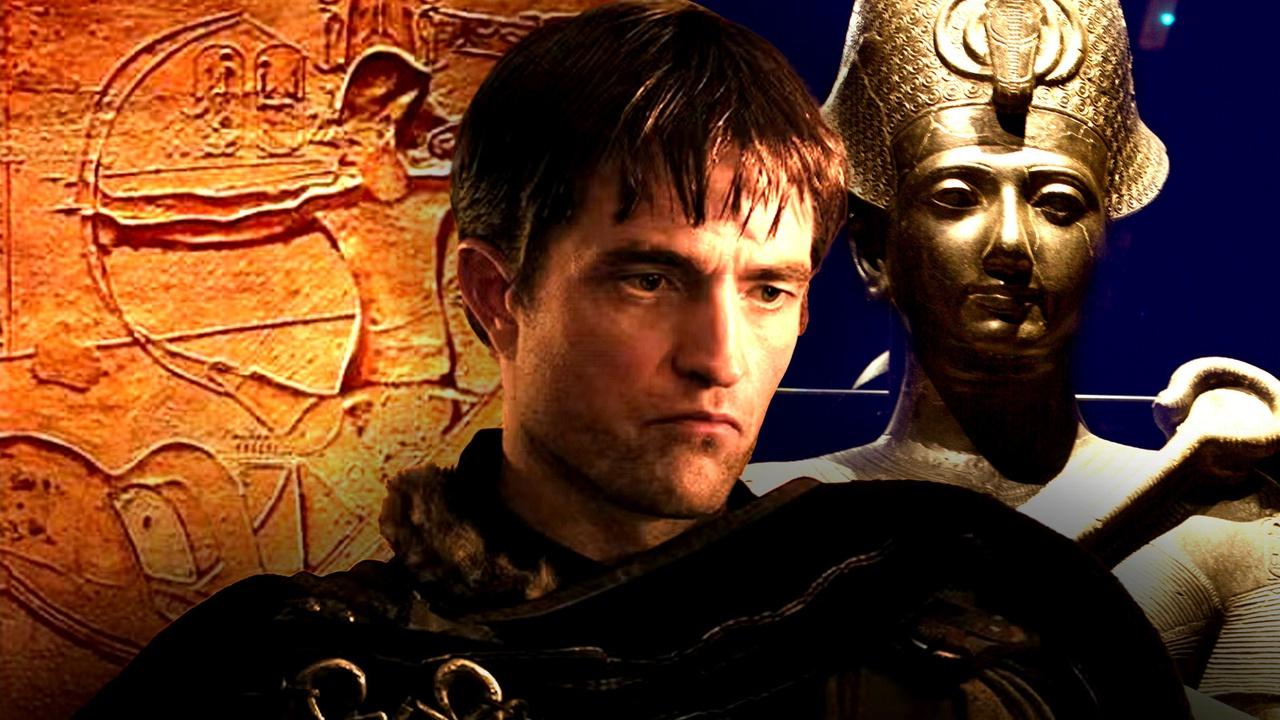
2026's The Odyssey includes multiple references to the "people from the sea", and their identity in Christopher Nolan's film adaptation bears huge relevance to the movie's plot. Nolan's latest epic is an adaptation of Homer's iconic poem, telling the story of Odysseus (Matt Damon) on his voyage home from winning the Trojan War. While the story blends history and mythology, some of the recontextualizations Nolan makes infuse the film with a relevant message.
Throughout The Odyssey, multiple characters refer to the "sea peoples" or "people from the sea," describing them as an almost apocalyptic force sweeping across Ancient Greece and its surroundings. Tales of the sea people have them raiding, pillaging, and destroying homes and landmarks across the Mediterranean, foreshadowing a coming downfall of civilization.
The Sea People's actions are in clear disregard for what is referred to in The Odyssey as "Zeus' Law." This law requires one to accept strangers into their home and treat them as they would want to be treated, in case the stranger might be a god in disguise, and in return, the stranger must treat the host with equal kindness. In The Odyssey, the mythological Greek gods like Zeus, Poseidon, and Athena are gospel, and gaining their favor or disdain can influence a person's fate.
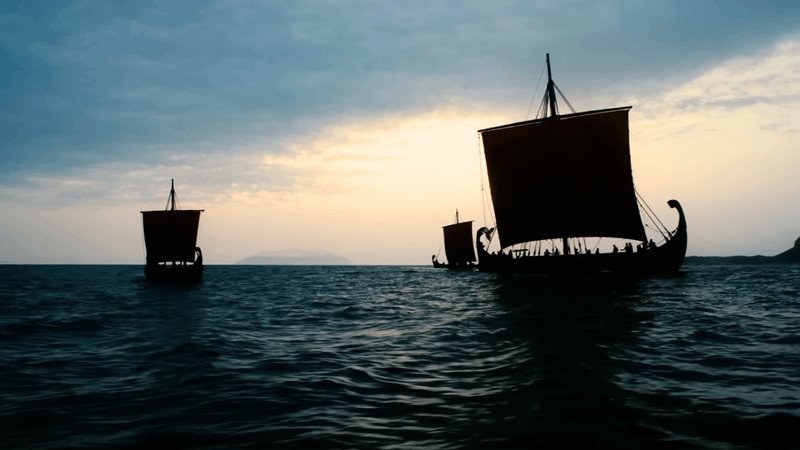
The word of the Sea People violating Zeus' law strikes fear in the hearts of those who hear their tales, including in Ithaca, where Odysseus' wife, Penelope (Anne Hathaway), and son, Telemachus (Tom Holland), are waiting and continue to uphold the tradition of Zeus' Law.
The Sea People, as referenced in The Odyssey, do have a basis in history. As reported by The Conversation, the Sea Peoples are linked to the demise of Bronze Age civilization and are blamed in historical writings for the destruction of some of the great palaces in the Mediterranean, including Mycenae, Pylos, and Cyprus. They are believed to have ushered in a dark age for society.
While exactly who the Sea Peoples were in history has never really been identified, Nolan draws a clear connection in The Odyssey.
The Odyssey Has a Twist on the Sea People's Identity
Warning - The rest of this article contains spoilers for 2026's The Odyssey.
After finally making it home after almost 20 years, Odysseus enters his own palace at Ithaca under the guise of a stranger, utilizing Zeus' Law in order to scope out the situation while he's been away. Once he's reunited with his wife, Penelope, under this disguise, he begins to ruminate to her the truths he's learned about himself and the society around him.
Odysseus reveals that he carries immense guilt for devising the Trojan Horse plan at Troy, which saw him and his army hide within the belly of the wooden structure, posing it as a gift which the Trojans accepted into their home, only for the Greeks to use it to unleash chaos and sack the city from within its walls.

Odysseus relives this event, watching as a decade of pent-up rage from his soldiers, who spent 10 years on the beach outside Troy, is unleashed on the city, and both enemies and innocents are caught in the crossfire. The Greeks completely destroy Troy, killing its people and burning its structures to the ground.
It's in this moment that Odysseus realizes his decision to break Zeus' Law in such a significant way has been instrumental in shifting humanity's mindset, and it's the reason the Gods saw fit to punish him with a torturous voyage home.
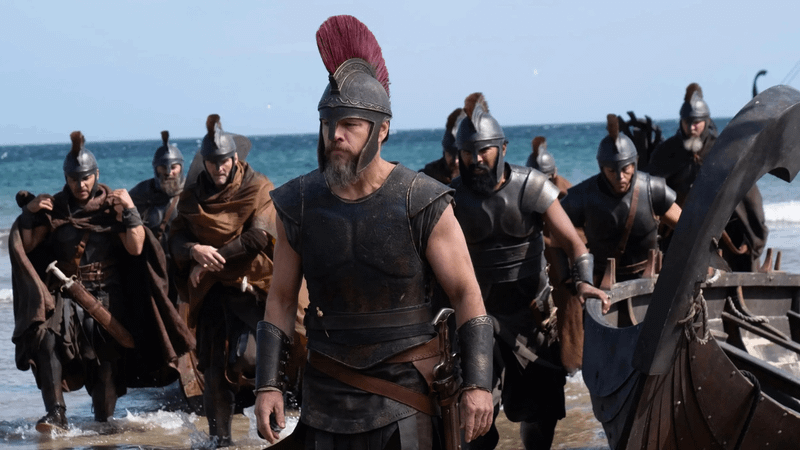
Odysseus immediately sees the results of this violation as he and his soldiers begin their trek home. After arriving on the shores of a village to gather food and supplies, Odysseus' soldiers burn it to the ground and pillage it, rather than relying on Zeus' Law to ask for hospitality from their hosts.

In the decade after the Trojan War, the ramifications of Odysseus' decision at Troy begins to spread, as more and more people begin to break Zeus' Law, setting in motion the legends of the Sea Peoples.
Even back home at Ithaca, the results are clear as hundreds of suitors feast in Odysseus' home, eyeing off his wife, and rejecting the idea of Zeus' Law. While Penelope and Telemachus maintain it must be upheld, their voices are increasingly drowned out by suitors like Antinous (Robert Pattinson).
As Odysseus admits his actions to his wife in the final act, the revelation is that it is he and his men, and perhaps all the Greeks from the Trojan War, who are known as the Sea People. His permission to blatantly disregard Zeus' Law at Troy had a ripple effect, enabling anyone to break the rule, and now that decision has changed society in a way that cannot be undone.