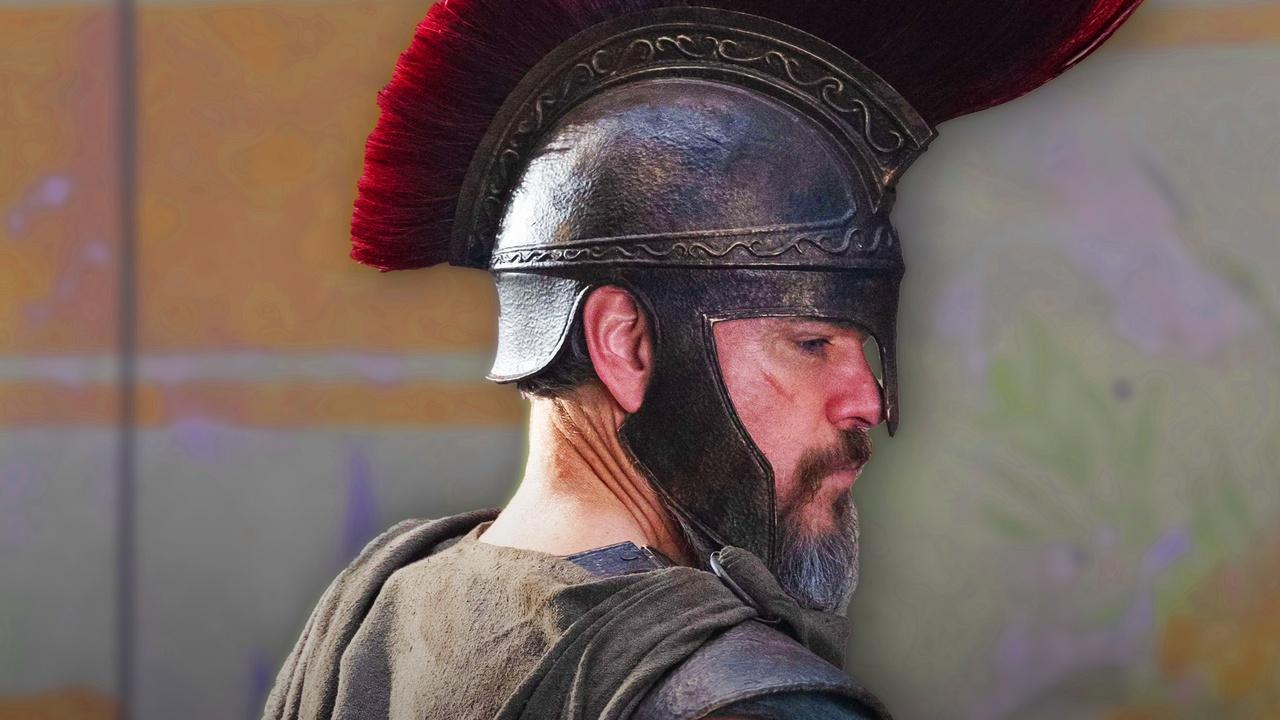
Christopher Nolan's The Odyssey is an atypical choice for the British filmmaker's oeuvre. Adept at grounded cinema (even when it's wildly high-concept), following his Oscar-winning Oppenheimer with a classic work of Ancient Greek folklore may be the absolute last thing a fan of his filmography would expect.
Nolan has tackled noir thrillers (Following, Memento, Insomnia), street-level superhero epics (The Dark Knight trilogy), historical dramas (Dunkirk, Oppenheimer), and high-concept science fiction (The Prestige, Inception, Interstellar, Tenet) alike. Each time, Nolan leans heavily into grounded interpretations of these worlds.
There's no hint in The Dark Knight trilogy of metahumans or alien gods, and even Nolan's largest sci-fi worlds are grounded in scientific principle (accuracy notwithstanding). Were he to take that trajectory into The Odyssey, one would expect an adaptation that's a little more Troy than, well, The Odyssey.
Surprisingly, Nolan continues to reach new heights, well beyond what he's done before. He adapts the material with a commitment to its scale, creatures, and magic, backed by practical effects and serious consequences that immerse us in the heritages of ancient cultures. Matt Damon, Tom Holland, Robert Pattinson, and more deliver committed performances that anchor a grand-scale masterpiece of impressive vision.
Strong Performances Anchor a World-Class Tale
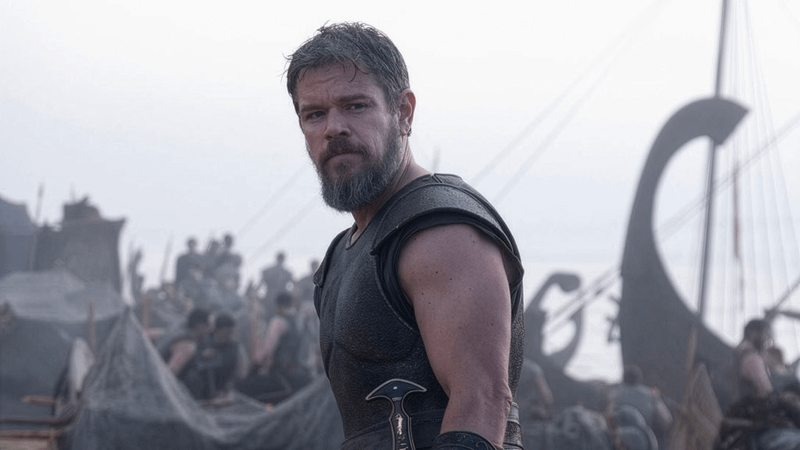
Based on the Ancient Greek epic poem, The Odyssey follows the long and treacherous journey of Odysseus (Matt Damon), the king of Ithaca, home with his soldiers following the Trojan War. This journey involves numerous perils, including encounters with giant cannibal tribes, a huge Cyclops, Sirens, sea monsters, the Nymph Calypso, and magical Circe.
Viewers also follow what has happened to Ithaca while the King has been lost at sea for so long, as son Telemachus (Tom Holland) and his wife Penelope (Anne Hathaway) fend off a perpetual feast full of suitors for her hand in marriage and Ithaca's throne with it. The infinite party is a result of the family forced to follow Zeus' code of hospitality, requiring that one always be a gracious host since one never knows when a 'guest' is Zeus in disguise.
Damon is solid overall as the war-worn, brilliant warrior king, here contending with a yearning to be home, regrets over the Trojan War's aftermath, and a host of troubles. There are moments when a little more emotion would befit the character's situation, but that's largely a result of the script. Damon adds a lot of subtle depth to the role. He shines most in moments of leadership and in a stunning combat scene in the film's finale.
Holland shines as the besieged son, Telemachus, who barely knows his father due to the length of the war and the journey, but whose legacy is threatened by an endless parade of suitors. He goes on his own perilous trek to find what happened to Odysseus, in part because of his desperation against a horde of larger warriors he cannot eject alone. It's a complex yet still charismatic role.
The remainder of The Odyssey's supporting cast all bring meaty layers to their roles, whether as pivotal as Hathaway's shrewd and patient Penelope or as brief but unforgettable as Samantha Morton's Circe or Jon Bernthal's Menelaus.
Nolan Magnificently Captures The Odyssey's Scale

Nolan's worldbuilding in The Odyssey is exceptional, with brilliant fight choreography, immaculately constructed sets, and believably crafted (predominantly practical) monsters and magical effects that add scale to the tale.
Standout effects include the massive, constructed Cyclops Polyphemus and Circe's deadly, practically accomplished magics. It's a testament to Nolan's filmmaking prowess to avoid the easy route of leaning heavily on VFX and digital tools, and the end results are stunning.
The narrative of The Odyssey is, of course, one of the most influential and enduring in the Western canon, and Nolan demonstrates a strong command of its details. It's told in a loosely linear fashion, bouncing often between Odysseus' tale and Ithaca, sliding between past and present, but it's done skillfully.
Nolan treats these supernatural threats through a naturalistic lens that echoes the ancient Greeks' perspective, who believed these phenomena were part of the natural world, and it's a wise choice that adds gravitas and intensity to the film's survival journeys.
There are a few missed opportunities for emotion or additional drama. The film packs so much into the three-hour runtime that the possible impact of some of its more powerful moments is shortchanged. For example, it makes sense for Odysseus to move forward in the face of danger rather than mourn his fallen men, but it's just one example among many that diminishes the emotional impact of the film's events. There are also moments of dialogue that read clunkily or are overly laden with exposition.
The Odyssey is a masterpiece that fits the scale of its canon-defining material. Nolan doesn't pull punches on his commitment to a faithful adaptation, and the experience is breathtaking at times. Matt Damon's a strong lead, and Tom Holland, Robert Pattinson, and a host of contributing players feel fully immersed in their roles. It's altogether an incredible showcase of filmmaking prowess, for one of the most epic films in decades and a particularly bright spot in Nolan's oeuvre.
Final Rating: 9/10
The Odyssey premieres in theaters on Friday, July 17.