
While the premise of The Great Flood primarily revolves around an apocalyptic flood, Netflix's latest South Korean movie eventually introduces numerous twists and turns that alter the narrative's meaning.
The Great Flood is one of the final disaster movies under the Netflix umbrella in 2025, following the story of An-Na and her son, Ja-in, as they encounter a world-ending flood in Seoul. An-Na is a researcher working at an artificial intelligence (AI) development lab tasked with creating a new batch of humans for the end of times. At the same time, another character, Hee-jo, is her colleague and a corporate security officer from her company. The movie's central trio: An-Na, Hee-jo, and Ja-in, experienced a different kind of apocalyptic event that would only be defeated by human emotions.
Directed by Kim Byung-woo, the film stars Kim Da-mi and Squid Game Season 1 actor Park Hae-soo. The Great Flood premiered on Netflix on December 18, 2025.
The Great Flood Netflix Movie Plot Summary Is A Bit Complicated
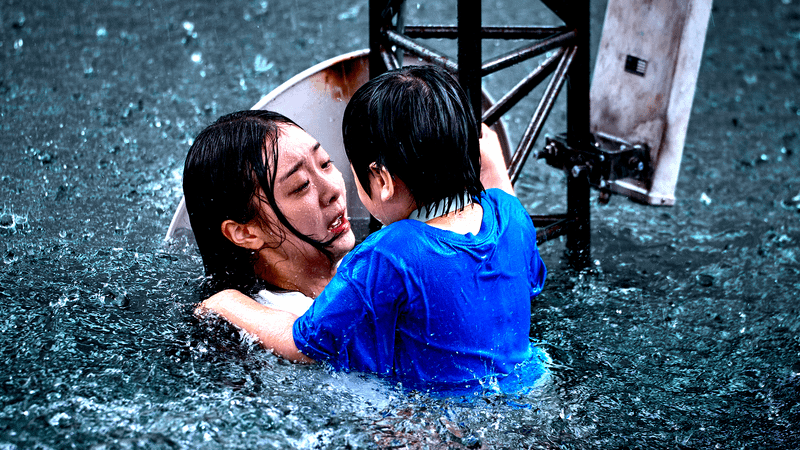
Right off the bat, The Great Flood begins with An-na realizing that her and Ja-in's lives are in danger due to an otherworldly flood that hit Seoul, Korea. Hee-jo told An-na that an asteroid had landed in Antarctica, causing a domino effect that led to rising water levels worldwide, bringing the Earth to the brink of apocalypse.
As one of the two researchers who developed a so-called Emotion Engine in the world, An-na was vital to humanity's salvation because the plan was to build synthetic babies to replace humans after the world ended and incorporate emotions into them via the machine she made. This explained why Hee-jo was hellbent on saving her in the first place, because she was deemed humanity's last hope. However, the helicopter that was supposed to transport An-na to the facility only has room for her, meaning that her son, Ja-in, had to be left behind.
This was the ultimate choice that An-na had to make: save her son and completely abandon humanity, or choose to go to her company and save everyone. However, the big twist was eventually revealed in the movie's second half, as the disaster that had already occurred was being relived through an endless loop of simulation tied to the Emotion Engine.

Hee-jo served as the antagonistic force trying to separate An-na and Ja-in, believing that An-na was the top priority to keep alive, and not the young boy, to save humanity. What made it more heartbreaking was the truth behind Ja-in. As it turned out, Ja-in was not real at all since he was an AI synthetic baby created by An-na's company as a way to recreate humanity after the world ends. An-na "created" Ja-in to fill the gap of losing her own son, but she was eventually attached to him as if he were a real boy.

Another twist is that An-na had already died in the real world, and she was reliving what happened during her last day on Earth. What really occurred was that the company wanted An-na and her expertise, and the guards did not hesitate to kill Hee-jo because he was simply a liability. While the guards succeeded in retrieving An-na, Ja-in was left behind.
As a result, An-na proposed to create a motherly figure for future synthetic babies that will be based on her life experience. An-na created the test simulation in the first place, and the main crux of it was searching for Ja-in until she succeeded, which will put an end to the simulation. By being both the creator and the test subject, An-na had to die because her brain was needed to fulfill the simulation.
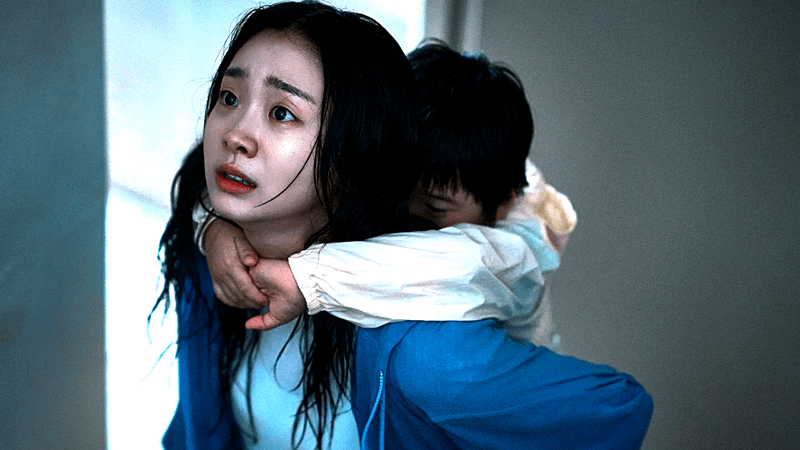
An added challenge to the simulation was that An-na had no memories of her past life, making it a more complex journey for the character. While the real events that transpired saw An-na leaving Ja-in behind, she was ultimately able to find the strength needed to free herself from the final obstacle (the guards holding her captive) and swim toward her drowning son.
Doing so effectively completed the emotional engine test. It allowed her to escape the time loop, meaning that the remaining scientists were able to utilize the data to finally incorporate the human emotions into the AI mother and babies (read more about the deeper meaning of The Great Flood ending here).
The ending revealed that An-na and Ja-in were reborn with new bodies and the same memories. An-na ultimately redeemed herself from abandoning Ja-in and losing her real son. Before losing Ja-in in the real world, she promised him that she would come back and find him. By mustering the power to find Ja-in in the simulation, she fulfilled her promise, cementing the idea that a mother's love knows no bounds.
What The Great Flood Movie Plot Is Actually About

The story of The Great Flood is somewhat complicated due to its multifaceted nature. The characters face an impossible task of escaping the loop because they are trapped in a catastrophic situation. The narrative then shifted into science fiction territory, exploring the use of artificial intelligence as a means to prevent humanity's extinction.
What The Great Flood was really about is the revelation that AI couldn't stand on its own. While AI can make lives easier for humans, the movie proved that it can never replace humans entirely because it lacks one thing: emotions. To survive, AI and human emotions must work in tandem to recreate humanity.
The simulation that An-na went through also showcased why emotions were needed to fulfill the mission. Aside from trying to find Ja-in, An-na realized that she also needed to help others around him, such as a stuck child trying to find her mother and assisting a pregnant woman in labor. All of these obstacles were necessary to create the basic emotions (anchored by kindness and love) that would be implanted into the AI bodies and restart humanity after the extinction-level event.
The Great Flood essentially utilized its apocalyptic disaster plot to reveal that humans' emotions still reign supreme, proving that genuine emotion cannot be programmed by artificial intelligence. If anything, the movie showed that motherhood is a sacred and unbeatable force due to its pure and profound nature. Without it, there was no hope for humanity, which also explains why motherhood was the steadfast anchor of the Emotion Engine in the first place.