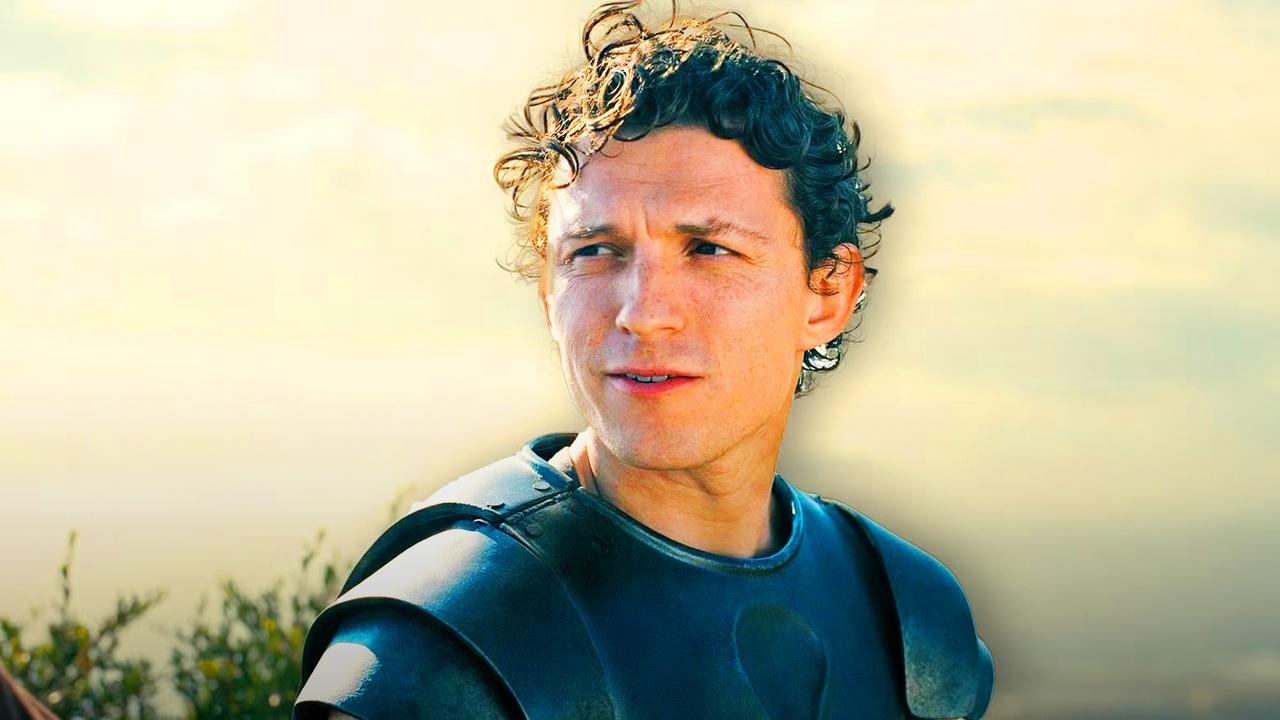
The Odyssey's cathartic ending gave Tom Holland's Telemachus a much-needed resolution as he became king of Ithaca, while also elevating his story and the film's overall arc with compelling thematic depth. The Odyssey introduced Telemachus as an overlooked prince, the son of a long-absent king, desperate to prove himself worthy of the legacy his father, Odysseus, left behind.
A good chunk of the Christopher Nolan-directed movie showed Holland's Telemachus fighting his mother's suitors, led by Robert Pattinson's Antinous, who plan to take the throne from him, while also trying to prove that his father is still alive. By the time the finale arrived, his journey had culminated in such a powerful fashion.
Telemachus' Fate In The Odyssey's Ending Signals a New Generation's Hope

Following Odysseus' grand return to stave off the threat of the suitors and "save" Ithaca, The Odyssey ended not with the triumphant restoration of the old king, but with a quiet, forward-looking handover as it showed Tom Holland's Telemachus becoming the crowned ruler of the city while Odysseus and Penelope sail into the horizon toward self-exile and atonement.
This unexpected succession served as the film's emotional climax. What began as a classic homecoming tale evolved into something richer. By choosing to pass the throne to his son, Telemachus, Odysseus is not abdicating out of weakness but offering him the chance to build a better Ithaca, free from the heavy shadows of what they did in Troy and the cycle of violence that defined his own life.
Telemachus had spent the entire film yearning to be seen as the capable leader his father was rumored to be, and finally stepping into that role gave him the chance to become the hopeful embodiment of the next generation. Telemachus seems to have earned the throne not through inheritance alone, but through the action and growth he showcased throughout the story.
It served as a cathartic, bittersweet resolution that gives The Odyssey's ending profound resonance, allowing the heroes of the old world to make way so the future can begin.
In the film, the Trojan Horse sequence (and the broader war in Troy) was portrayed as a catastrophic violation of Zeus' law and the sacred norms of hospitality established during this era. Odysseus' victory didn't just win the war; instead, it unleashed chaos that doomed his men, scarred his soul, and metaphorically collapsed the old order.

The Odyssey even referenced the "age of bronze" ending, evoking Hesiod's metallic ages and the historical Late Bronze Age Collapse, with its fallen empires, disrupted trades, and descent into a darker time.
Christopher Nolan subtly layered this with real historical resonance. The Late Bronze Age Collapse around 1200 BCE was triggered by a perfect storm of crises, including mysterious invasions by the so-called Sea People. These waves of raiders and migrants contributed to the fall of once-mighty empires and the end of the glittering Bronze Age palace societies.
Doing this positioned Odysseus' generation as the last of the old heroic order. Their wars, clever tactics, and brutalities helped usher in the chaos. Telemachus, meanwhile, represented the fragile hope of the post-collapse world and, as a leader, might help rebuild something more stable from the ashes.
With his decision to allow Telemachus to become King, Odysseus was explicitly trying to break the cycle, and his sailing off to right his wrongs signals his act of atonement. This was not a defeat for Odysseus; instead, it was an act of accountability. He knew he couldn't simply resume kingship without inviting more cycles of violence from the suitors' powerful families.
Odysseus is passing the torch to the next generation, hoping that his son (as the representation of the future) can do better than he did. More so, Telemachus represents a fresh start, less burdened by the direct crimes of Troy, raised by the steadier influences of Ithaca and Penelope, and shown to be growing into leadership through loyalty and resolve rather than pure rage.
Why Odysseus' Last Sacrifice Becomes Telemachus' Silver Lining
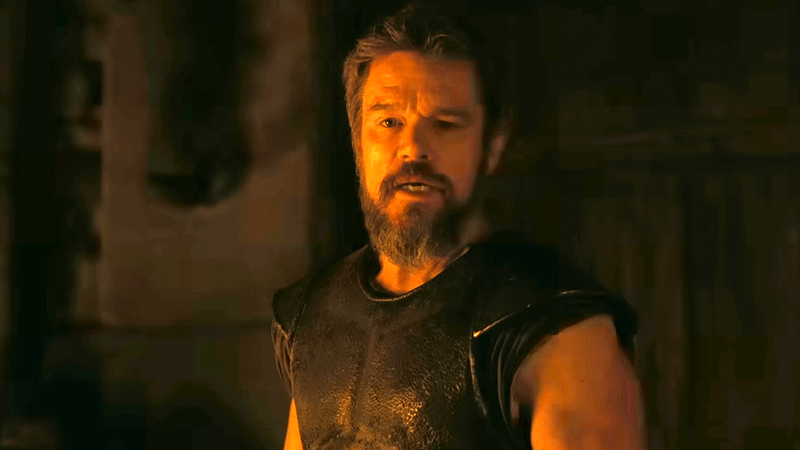
With Odysseus choosing self-exile with Penelope, this final act is perhaps his greatest sacrifice. For Telemachus, this departure becomes the silver lining he has unconsciously been fighting for throughout the story because he is no longer forced to live in the overwhelming shadow of his highly respected father.
Telemachus was actually granted something rare at the end of The Odyssey, which was the freedom to define his own reign. The throne is no longer a prize stained by his father's bloodshed and divine grudges. Instead, it is a blank slate filled with endless potential.
What makes this even more compelling is how The Odyssey director Christopher Nolan framed the final sequence. As the ship carrying Odysseus and Penelope disappeared against the sunset, the camera lingers on a young King Telemachus standing on the shores of Ithaca.
In that wordless silence, The Odyssey achieved a poetic transition from one era to the next as the old hero sails into the myth, while the next generation remains grounded on solid Earth, ready to carve a new beginning.
In the end, Telemachus' silver lining is not the crown he earned, but the peace of mind that comes with it. It is the knowledge that his father chose him over mighty power and trusted him to lead Ithaca into whatever future lies beyond the Bronze Age's uncertain shadow.