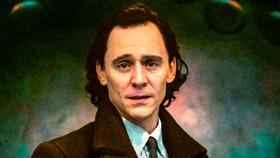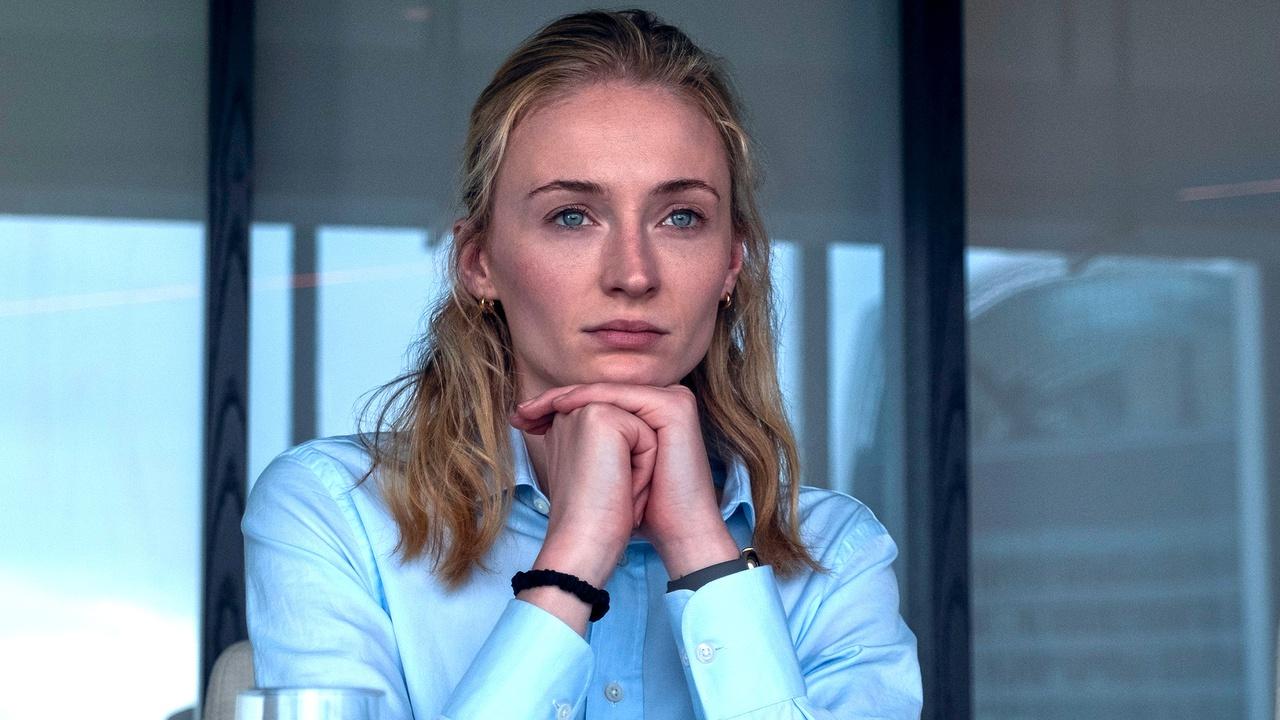
Amazon Studios' Prime Video has a brand-new, thrilling show on the way with Steal, which follows the story of a massive heist of a prominent company that constantly has money flowing through its system. The show stars Sophie Turner and Archie Madekwe as Zara and Luke, two office workers who find themselves in the middle of the heist—and that vital experience is only the start of their story.
What makes Zara and Luke so different from each other is how they handle pressure, which is at the core of their stories throughout the show. The Direct sat down with Sophie Turner (of Game of Thrones fame) and Archie Madekwe to discuss how their onscreen counterparts handle extreme stress.
Turner explained that Zara handles stress in a way of "let's fix it, let's focus, let's maintain, let's try and placate." This reaction "can be helpful and a hindrance all at once," and it's something she got "from growing up with an alcoholic mother and an abusive mother," leading her to be "constantly in a state of instability."
As for Madekwe, he noted, "Luke is definitely the opposite of [Zara]" and is in "survival mode the whole time." Luke is "just trying to stay afloat," which often leads him "to make terrible decisions and not really think with his head."
We also spoke with executive producers Rebecca De Souza and Greg Brennan, alongside Steal creator and writer Sotiris Nikias. All of the interviews can be seen below.
Steal premieres on Amazon Studios' Prime Video (which is currently crushing with Fallout Season 2) on Wednesday, January 21, 2026.
How the Leading Characters of Steal Handle Pressure

Zara and Luke Are Polar Opposites.
- The Direct: "I want to talk about how both of your characters handle pressure, as they have polar opposites in that realm. Why do they handle stress in the way that they do?"
Sophie Turner: Great question. Well, for Zara, I think she handles stress in a way of, let's fix it, let's focus, let's maintain, let's try and placate. And for her, I think that comes from growing up with an alcoholic mother and an abusive mother, and how she's constantly in a state of instability, and she's always had to kind of placate her mother and calm her and rectify the situation to ensure that it doesn't spin any further out of control. So, I think that's why she reacts in the way that she does, which can be helpful and a hindrance all at once.
Archie Madekwe: Luke is definitely the opposite of [Zara]. He is in survival mode the whole time. He's just trying to stay afloat and trying, grasping desperately at the beginning for a better life for himself, and then just grasping at straws to escape, to keep going to survive, really. And so he is in panic mode, in a kind of hyper-stimulated overdrive. And that often [leads him] to make terrible decisions and not really think with his head, but just move with his gut. And we often see that not working out in his favor, and you realize why he really thought he could handle all of this stuff on his own when he needs somebody.
What Sophie Turner and Archie Madekwe Added to Their Characters

"As Actors, You Create Your Own Little Secrets and Your Own False Memories."
- The Direct: "What is something that you guys both feel that you added to your characters that maybe wasn't originally on the page, but you just found through your performance and an understanding of who that person is?"
Sophie Turner: As actors, you create your own little secrets and your own false memories that you've created for your characters that you don't let anyone into or onto. And I always start with a full backstory, all the pivotal moments in their lives leading up to that point, and then I just kind of hold it and hope it comes through subtly in whatever way, in the performance. And maybe it does, and maybe it doesn't, but it helps me feel like I'm there.
Archie Madekwe: When you're creating a character on that kind of a journey, you end up creating so many moments. It almost feels wrong to be like [I invented this or that]... It's a group effort. And also, it all gets thrown into the pot. And on a really healthy set, it's like, not the idea wins, but the best idea, and it's like, whoever has the best thing, it's like, Great, let's use that... By nature, that ends up being the entire collaborative process. There are so many moments like that that consistently get thrown in. It's a group effort.
Steal EPs on the Logistics of a Heist and If There Are Future Season Hopes

The Entire Story of 'Steal' Was Based on Personal Experience.
- The Direct: "Can you talk about the research that you guys did to figure out how this could even go down in today's world with the technology that exists?"
Sotiris Nikias: So my old day job was in the company that gets heisted in Episode 1. It's sort of based on personal experience, so that, hopefully, there's an authenticity there. So, the research was basically just remembering how my old company worked, and then figuring out what all the hurdles would be, what the hoops everyone would have to jump through, and then figuring out how some sort of determined criminals would sort of go through all that.
I think it is quite authentic. I mean, hopefully it's authentic. The weird sort of circular logic to it is that these financial services companies have huge amounts of money flowing through them every day. They're sort of transferring billions all over the planet, but there's kind of like zero security in these places.
There's more security at the average high street bank, which has a lot less money to be stolen. So it's kind of like a weak spot. It's just something that no one is sort of like a black swan thing, of like, no one thinks this is possible, therefore no one plans for it, therefore that's what makes it possible. And it was just working through the logic of that.
- The Direct: "The show puts a lot of focus on how people handle extreme pressure. Can you talk about how you guys balanced that throughout the wider roster of the show, and how you had characters reacting in wildly different ways, and why they did that?"
Rebecca De Souza: We love delving into character and how people respond and why and who they are. So, there's all of the storytelling that Sotiris works out, all those roadblocks he overcomes, all of the clues, all of that, and as well as that, that's dealing with those human beings who are in these extraordinary situations.
Zara, she's just at work one day. So is Luke, and this happens to them. How are they going to respond? Luke responds, to my eyes, almost so charmingly, because he's so scared he doesn't know what to do. He's this big, tall guy who's full of everything. And then he, when it comes down to it, you want to reach in and hug him, because he looks so frightened.
And you know, Zara, who's quite sort of hapless and not really doing that much in her life, she sort of grows and is able to deal with it and help her friend out of that situation. All of these things are, it's just shining the beam of character. How would they react? That's just as important as all the twists and turns, and you've melded those two together. You hope that you've got a really rich thing.
- The Direct: "Have you guys had any conversations about what hypothetical long-term plans are for this show?"
Greg Brennan: We had lots of conversations about where it could go. I think at the moment, we're just enjoying it having a finite ending and a limited series appeal, but we have fantasized about what might happen to Zara and other characters in different situations.
The full video interview can be viewed below: