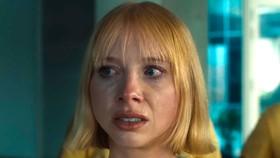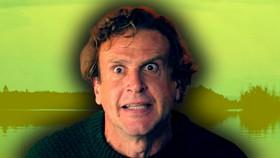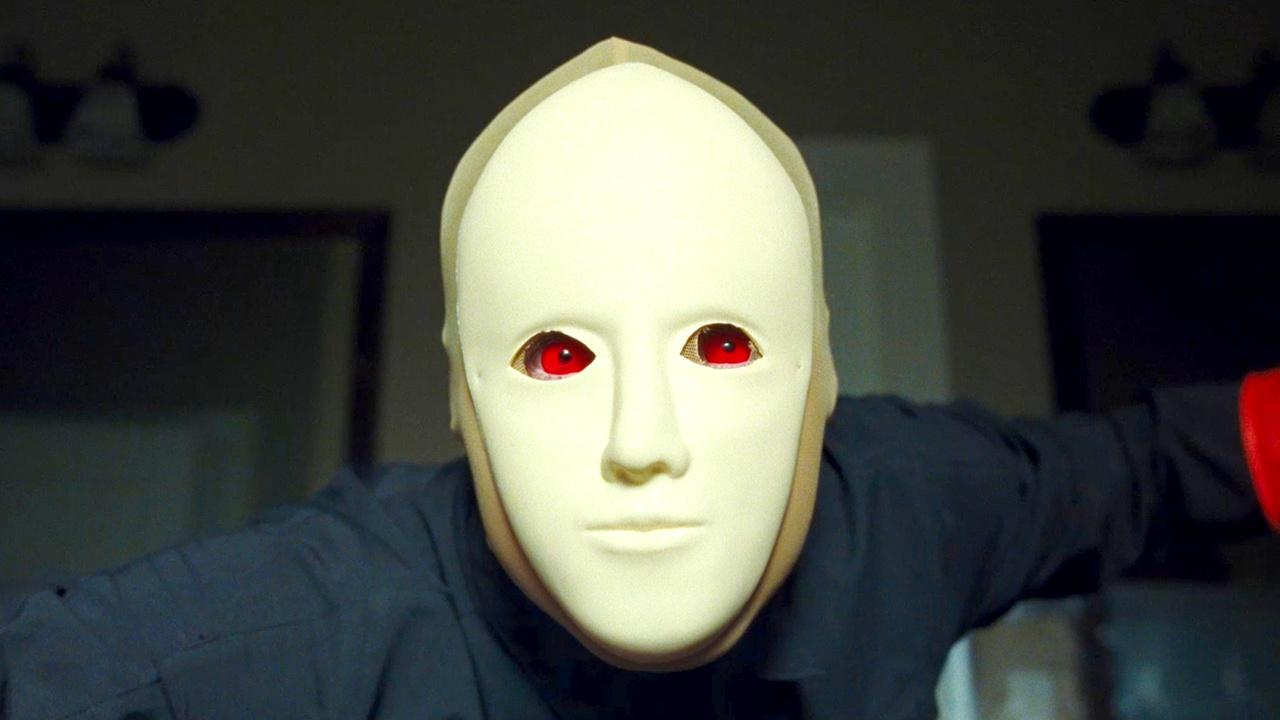
Horror fans will soon see the unexpected reboot of one of the most infamous genre films of all time: Faces of Death. Releasing on Friday, April 10, this new movie, starring Barbie Ferreira (Euphoria) and Dacre Montgomery (Dead Man's Wire), creates a unique new meta-angled narrative.
The original Faces of Death was banned in over 40 countries after its 1978 release. The movie followed a pathologist, played by an actor who served as the film's narrator, who showed audiences videos of gruesome deaths. While a chunk of these clips were real, some of the more intimate ones were fake—though that didn't stop many from believing otherwise.
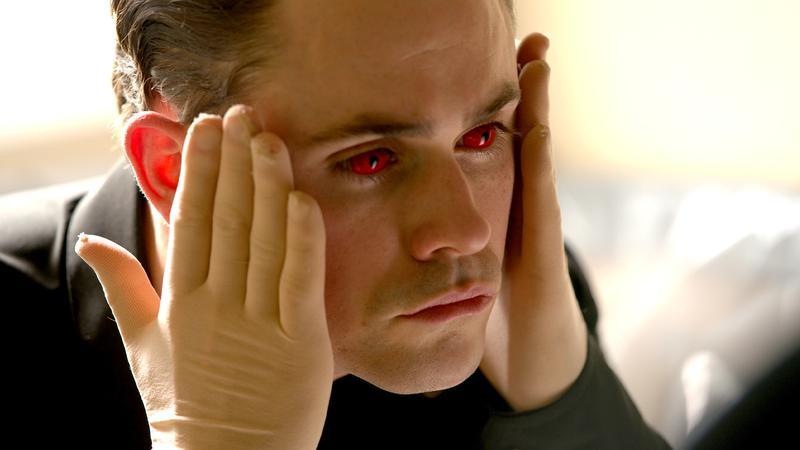
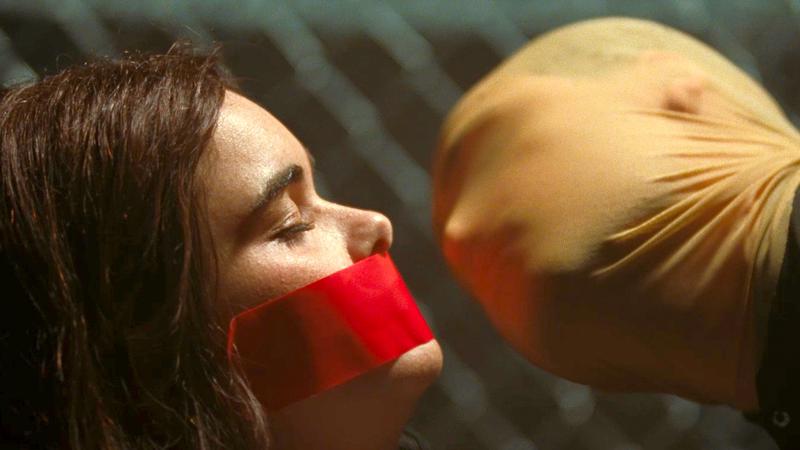
It's the last thing you'd expect to get a reboot. However, it does certainly offer a twist. 2026's horror flick Faces of Death sees Montgomery embody a serial killer and reenact scenes from the original movie. This is something Ferreira's Margot soon catches on to, thanks to her content moderation job at a massive social media company.
The Direct caught up with the cast and filmmakers behind Faces of Death to discuss how the film comments on today's social media obsession and their desire for the movie to spark controversy.
Star Josie Totah noted that they already had their trailer "taken down from YouTube," which was okay, because they "weren't trying to make a movie that made people comfortable."
"The controversy about our movie has actually nothing to do with the amount of real death in our movie," co-writer and producer Isa Mazzei revealed, even though this reboot "has more real death in it than the original, like real snuff."
Stranger Things star Dacre Montgomery elaborated on how horror is his favorite genre because "[It's] masking it in this entertainment thing, but [also] having a really difficult, complex conversation that society is not really at the point that they're able to have.
The list of talent we spoke to at the film's red carpet premiere includes Dacre Montgomery (Arthur), Josie Totah (Samantha), Aaron Holliday (Ryan), Daniel Goldhaber (director and co-writer), Isa Mazzei (co-writer & producer), and Gavin Brivik (composer).
Faces of Death Wants Your Controversy
"We Weren't Trying to Make a Movie that Made People Feel Comfortable."
- The Direct: "The original film was met with a lot of controversy. Do you think this one will be too?"
Josie Totah: I think that we were taken down from YouTube when our trailer was posted... I think that we weren't trying to make a movie that made people feel comfortable.
Daniel Goldhaber: Yeah, it already has... Our trailer got banned. Our posters were banned... The movie's like, why make a movie about 'Faces of Death?' That's weird. You know what I mean? I think something that's weird about our culture [is] this kind of incessant need to chew up anything that we experienced as a child and then spit it back out for something that you're supposed to buy tickets for. And I think that's also something the movie's like, why did we make a slasher about 'Faces of Death?' Like, there's a weird aspect to that we want the audience leaving a little bit unclean after.
Isa Mazzei: What I think is really interesting, though, is that the original was controversial because it showed real death, which it does. It's not all fake in that movie. And I think what's so funny is that the controversy about our movie has actually nothing to do with the amount of real death in our movie, despite the fact that our movie actually has more real death in it than the original, like real snuff. But now I think it just shows how used we are to seeing those types of images online that no one's even batting an eye at that content. It's our actual other violence in the movie that people take issue with.
Gavin Brivik: I sure hope so... I think it's important to have a conversation. And Daniel [Goldhaber's] movies, I've worked on all of them. He has such a great way of starting intense conversations that open up things that we need to discuss about society. Like, I don't think that every film should just have an answer, but it's the idea that it opens a conversation and points, you know, this sort of conversation topic for us, but I definitely think this movie will have some sort of controversy, or I hope so.
How Faces of Death Comments on Social Media's Obsession with the Worst of Humanity
"90% of the Audiences Is Going to Watch for Shock, Violent Value..."
- The Direct: "Social media is so obsessed with kind of showing the worst of humanity. What do you think this movie is saying about that?"
Dacre Montgomery: It's a really good question. I haven't been asked this. I think it's saying a lot. I think the whole movie is about that in many ways. And I think that's the irony of it, is kind of going to a horror movie. 90% of the audience is going to watch for shock, violent value, but really, there's a message in it...
Horror is one of my favorite genres, and [it's] really good at getting people in the door based on entertainment value, and then when people leave, really being the best genre of any film genre to subvert your expectations and actually talk about a really difficult issue.
And I [bring] up the Philippou Brothers' second film, 'Bring her Back,' as a great example of, like, if I told you right now, I want to get 400 people into a cinema to talk about the foster care system, I can guarantee you the cinema wouldn't fill up in the same way as a horror film. But if you get the same 400 people in the cinema to 'Bring her Back,' which is really talking about the foster care system...
[It's] masking it in this entertainment thing, but [also] having a really difficult, complex conversation that society is not really at the point that they're able to have. That's the power of horror, and that's what I hope that this does.
Josie Totah: It's showing that there are really dark ways that the new improvements to society can benefit us, but also like, inhibit us, and can ruin us as people.
Daniel Goldhaber: It's not social media that's obsessed. It's the companies that run social media platforms that have created the circumstances to poison us against each other and poison our culture. I think that we pretend that what we see on social media is somehow organic...
Yeah, it's people posting stuff—I mean, half the time now, it's not even people posting, it's just stuff that exists on the internet that's delivered by a robot to us, and that robot's goal is to addict us to participating in its existence. And I think that's really a reality that we just want to kind of articulate with the movie.
Gavin Brivik: I truly think the answer is that we've been so desensitized... If you think about globalization, as a human species, we would never have seen these catastrophic things happening all over the world until social media.
Think about the idea of seeing horrific genocide, or seeing car accidents, or seeing, I mean, with all the horrible things, you're also seeing funny, weird stuff, and then prank culture, it's caused an extreme, visceral reaction. We're just seeing the most extreme of extremes in every direction. And like, what will people do to become famous online?...
[We've] seen extreme examples of that, and we've also just seen, like, it's kind of crazy that we can watch like something so visceral, like an assassination or a car accident, and then just go about our day... It's horrific.
And I think the movie is truly commenting on how far we've lost so much of ourselves through the internet. And I think that was a big theme for all of the departments, like, how can we represent that in our art form?
Aaron Holliday: I think there's a sort of warning of a use. You watch something enough times, you're surrounded by something enough times, you're giving yourself to this thing. You might just turn into the thing, right? Like the idea of looking at friends around you, and you can tell who that person is. So I think it sort of flips the script on, like, be careful what social media can do to you, because you might just become that thing that you despise... I think it's a cautionary tale. It's also a piece of trash horror, like an incredible extravaganza. So with that sort of incredible twist on it, right? It's fun to see somebody have the most insane breakdown of their life, but it's still a cautionary tale.
The entirety of our discussions with the cast and filmmakers behind Faces of Death can be viewed below: