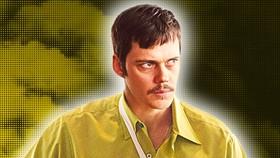
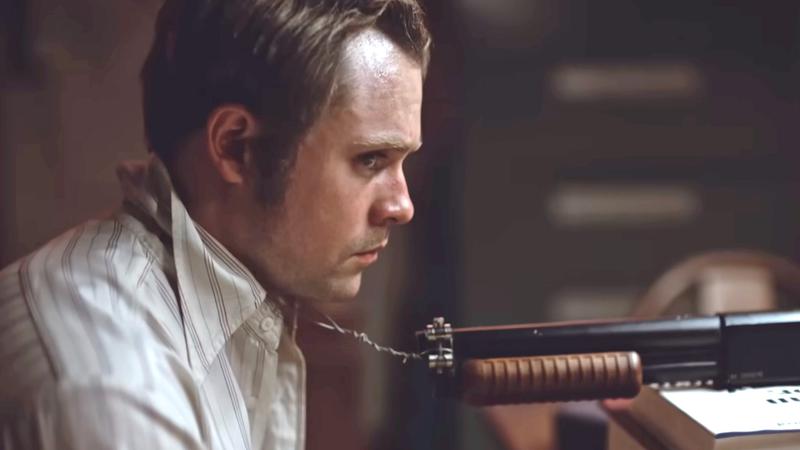
The upcoming film Dead Man's Wire is a true story following the events that occurred on February 8, 1977, when a man named Tony Kiritsis took Meridian Mortgage Company executive Richard 'Dick' Hall hostage after feeling like he was extremely wronged. To do this, Tony used a sawed-off shotgun with a wire strapped to Richard, which, if anything happened to Tony, would go off and end the life of his hostage as well.
The details of the story are notably hard to believe, which is probably what drew legendary director Gus Van Sant to the project. The movie also stars Bill Skarsgård, Dacre Montgomery, Colman Domingo, Cary Elwes (who recently voiced his thoughts on returning to the Saw franchise), and more.
The Direct sat down with Colman Domingo and Dacre Montgomery to discuss the process of bringing this story to life on the big screen.
Domingo, a man with high aspirations to play a massive villain in the MCU, plays the opposite in Dead Man's Wire: Fred Temple, a popular radio host who is an idol to Bill Skarsgård's Tony Kiritsis. Fred goes on to be one of the only people Tony will speak to and is instrumental in the situation's resolution.
Funny enough, during those phone calls on screen, Domingo revealed that he "never had Bill [Skarsgård] reading that part," as they weren't on set together. Thankfully, the two have already worked together, so Skarsgård's cadence was familiar. Domingo explained that due to their history, he "had a true understanding [of] how he would say [these] line[s] to me."
Dacre Montgomery brings Richard 'Dick' Hall to life, Tony's hostage. Given that this is movie-making magic, one might assume that Montgomery was never truly connected and stuck with Skarsgård on the day, but that would be an incorrect assumption.
"We were really connected the whole time," the actor confirmed, calling the process quite "intense." The whole contraption was also "pretty hard to de-rig," which kept him in it for longer stretches of time.
While that might sound like a miserable experience, Montgomery explained that "it kind of made [him] really delirious and fatigued," which "brought a lot of kind of odd couple, darkly funny, kind of dynamic, which [he] think[s] is spread across the film."
The entire interview with both stars Colman Domingo and Dacre Montgomery can be read and viewed below. Dead Man's Wire hits select theaters on January 9, 2026, and then expands nationwide on January 16.
Colman Domingo on Being the Perfect Radio Host In Fred Temple
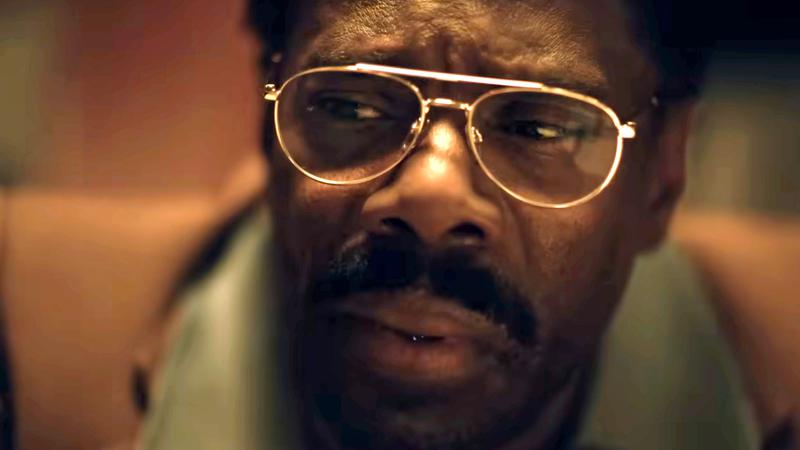
"He's the Voice of the People..."
- The Direct: "Your character [Fred Temple] is at least partially based on the real-life journalist Fred Heckman... In terms of Fred Temple himself, how much of that character did you pull from the real-life figure, and then how much did you inject from yourself and what the movie needed?"
Colman Domingo: Literally, that was one of my first questions as I started to research Fred Heckman. And I thought, 'Oh, okay, because, you know, Fred Heckman clearly does not look like me. He's a white man. And I thought, well, what are we going to do?' And now that you were going to engage with me, and he's like, you know, 'There's some other [ideas]...'
He's the voice of the people. I said, 'I think so, that's what's important to Gus,' and to find that within me, and find out how I navigate that. He's a very different kind of radio DJ. And I thought, 'Oh, well, this is interesting. This dude listened to me every day and listened to my tones every day.' And I said, I have to find those examples of people who feel like, 'Oh, this is my man. That's my man. He understands me.' He plays my music, he recites poetry, he gets finger snaps I can agree with. And he said, 'Oh, cool. I'm in with this good dude.'
So for me, there are a few DJs, one name, I think William Rousted, Gus Van Sant was very intrigued by when he was a kid. And then another one, Georgie Woods from WDA SFM in Philadelphia, that I listened to when I was a kid. So for me, that conjured up warm feelings. Georgie was just cool. He was this, the man that everybody loved and knew, and I think he had a night at a club that my parents would go to, and stuff like that. But you knew that was your boy.
And so literally, when Tony Karitsis is in trouble, he's like the only person who listened to me. That is my boy, my radio DJ. So that's how Fred gets involved. So with those skills, he can help negotiate and navigate with this person, because he's like this person. I'm the only person that this guy trusts right now. So I think that he takes that on, not that he wanted to, but he knew he had to.
- The Direct: "You are so incredible in this movie, and it made me think, are you sure that you weren't meant to be a radio host in an alternate timeline?"
Colman Domingo: The funny thing is, people always comment on my voice, and they say, 'Have you always had that voice?' And I don't think I always had it. I think the more I sort of got to know myself and dropped into my voice, I think my voice sort of, my resonator, started to, I don't know, shine a bit more in my 40s. I don't know if I have this voice in my 30s, to be honest, but I feel like it's a voice of being more adult, and settled, and trusting what I have to say. Where I feel like that's where I sort of found that. I sort of found my own radio DJ for myself, you know that I live with now.
- The Direct: "You and Bill Skarsgård don't really share the screen together much at all in the film, but you guys talk on the phone. Did you ever have Bill actually reading that part, or was it always someone else and you just had to play off of something else entirely?"
Colman Domingo: I never had Bill reading that part, but I'll backtrack. I know Bill because we did 'Assassination Nation' with Sam Levinson together. So I know his cadence, and I feel like I just had a true understanding [of] how he would say [these] line[s] to me, and how we would negotiate this together.
But the blessing is my day one was actually the scene where we're all in there at the press conference, and he's got the gun to the guy's head and all that. So that was my first scene... We shot that first, which was a blessing for me. So I had a full-on view of the way he was negotiating, his personality, and his language.
And so I was able to download that and keep that with me. So, when I went into the scene where I'm just on the radio, and we're just talking to him on the phone, I have a little bit of his cadence with me.
The entire video interview with Colman Domingo and The Direct can be seen below:
Dacre Montgomery Talks About Being Hooked Up to The Dead Man's Wire
"We Were Really Connected the Whole Time..."
- The Direct: "Did you spend any time with people who actually knew the real Dick Hall?"
Dacre Montgomery: No, I didn't... I searched desperately for his extended family. He's passed away. So is Tony Kritsis', Bill [Skarsgård's] character, but I couldn't find anything.
The only member of the cast who was able to find their character or their character's family was Cary Elwes, who plays Mike Grable. And he was able to find that family. And they actually ended up coming to set one day. They ended up coming down from Indianapolis to Louisville, Kentucky.
So, yeah, it was difficult. I don't think his descendants want to be found in connection with the story. I think it's obviously a very dark cloud, a lot of really tragic stuff happened in my character after the hostage situation, which he talks a lot about in his book that he wrote, sort of like after it all happened.
- The Direct: "Bill Skarsgård is fantastic as well, and the two of you together, it's such an intriguing dynamic. Can you talk about developing that dynamic between you two, and what you guys might have done to kind of establish how you guys play opposite each other?"
Dacre Montgomery: Honestly, I think the biggest help, other than just building an amazing same partner, was the fact that the wire and the gun bound us together. We had to be basically conjoined for the entire duration of the shoot, which was a really unusual physical dynamic that bled into an emotional dynamic. It kind of made me really delirious and fatigued, and that brought a lot of kind of odd couple, darkly funny, kind of dynamic, which I think is spread across the film. The film is funnier than I think people will expect, not from a Gus Van Sant film, but I think that people will expect given the subject.
- The Direct: "That dynamic between you and Bill's character develops greatly throughout the film, and it really changes. Can you talk about how it develops and where it ends up towards the end of the movie?
Dacre Montgomery: At the start, you're looking at two people who are on either ends of the spectrum in terms of their socio economic standing, their plight in life, and by the end of the film... they actually have this weird kind of connection between each other... two of these guys who I think the audience meets and goes, that's this dude, and I know this guy.
And by the end, I think they learn something more about each other. And I think ultimately, Dick, my character, has empathy for Tony, and Tony has empathy for Dick. And I think that's a really interesting thing, because I see a lot of movies that function on either end of the spectrum. It's nicer to me to see a movie that has discourse about the gray space in between.
- The Direct: "I did want to talk about that, the actual Dead Man's [Wire] trigger contraption. What was that like on set? Was it exactly what we saw? Could you separate, or were you really connected the whole time?"
Dacre Montgomery: We were really connected the whole time. Like, when the gun was attached, it was attached properly, and it was pretty hard to de-rig. We had an amazing head of props master. And I was geeking out because he worked on the original Edgar Wright films like 'Hot Fuzz' and 'Shaun of the Dead' and whatever else. He was a really lovely guy.
But the wire itself was real. It was around my neck. It was intense. The gun had real weight to it. It was connected to the gun. Took a bit of time to uncoil it from the end of the contraption. It was, I mean, the whole thing is obviously based on the real mechanisms. They tried to build it as real as possible.
And then I like to take one prop from every film I do and get them framed at home. So I was really lucky. I got to keep the dead man's wire, which is obviously the namesake of the film.
- The Direct: "Tony Kirtsis obviously believes Richard to be this terrible person, kind of just like his father... How much do you feel Dick is like this father?"
Dacre Montgomery: Yeah, I don't think a lot. I think he's been forced into this kind of role in this dynamic. I read a lot in his book about how his father got all of the siblings to work for his company, running different departments, and how the dynamic was.
And it is a bit like 'Succession' in some respects. And I definitely looked at it like that. Like Al Pacino is Brian Cox's character, you know. And the other kids are kind of all gunning for the throne, but there's a really, really complicated dynamic between the Halls in the sense that I don't think Dick is gunning for the throne in the same way. So it's an interesting kind of like lineage, study in power. Like, what does the dynamic on the surface represent?
And I think it represents, well, he must be like his dad. He must be like all other rich people, but I think that's the really great insight about this movie, is that that's not who Dick was... [or] who he is in the timeline of the story. And I think that's what's really nice to get to see about him, and he kind of humanizes the antagonist, or the perceived antagonist, in a way.
The entire video interview with The Direct's Russ Milheim and Dacre Montgomery can be seen below: