
Lupita Nyong'o's Helen of Troy arrives in The Odyssey with a facial scar that has a tragic meaning. Helen's casting has been a subject of debate leading up to The Odyssey, due to Nolan's choice of Black Panther actor Lupita Nyong'o. Many have declared the Black actress' casting a "woke" race swap in a rather ridiculous notion, given that Helen is a mythological figure and the daughter of the Greek thunder god Zeus, whose ethnicity is never truly clarified in the ancient texts.
Those familiar with Greek mythology and its portrayal of the Trojan War will be aware that it all began with Helen of Troy, aka Helen of Sparta. The ancient mythology paints a picture of Helen's immense, mesmerizing beauty and equally high intelligence, along with her marriage to Menelaus, the King of Sparta and brother of Agamemnon, who commanded the united Greek forces.
What Happened to Helen of Troy's Face in The Odyssey Movie?
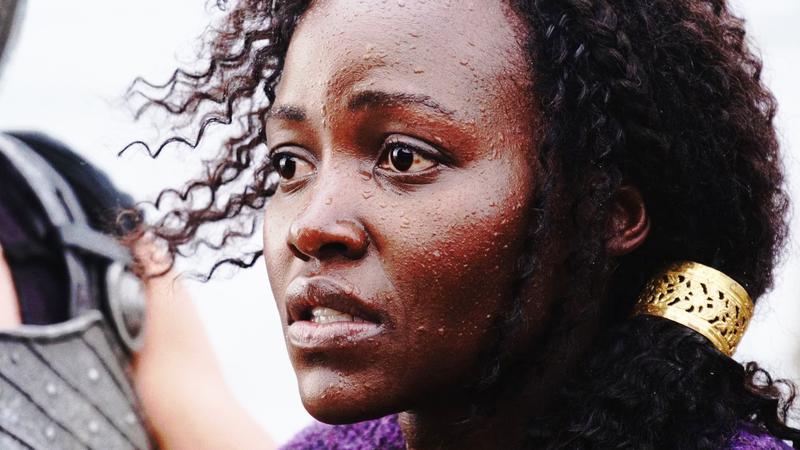
Years before The Odyssey, in an event that would launch the Trojan War, Helen fled to Troy with Paris, a Trojan prince, beginning a 10-year period in which they lived like husband and wife (although not officially married) and a devastating decade-long war. Homer's works leave it up for debate whether Helen was abducted or left by choice, but regardless, the outcome was Menelaus rallying his brother and other Greek forces to war with Troy (a Turkish city) to get her back.
Many literary sources on Greek mythology state that Menelaus sought to kill Helen upon ransacking Troy out of anger and revenge, but ultimately chose to forgive her when he was instantly struck by her famously irresistible beauty on their reunion. While their relationship was certainly rekindled (with clear animosity) by the time of Christopher Nolan's The Odyssey, it appears Menelaus wasn't quite as forgiving.
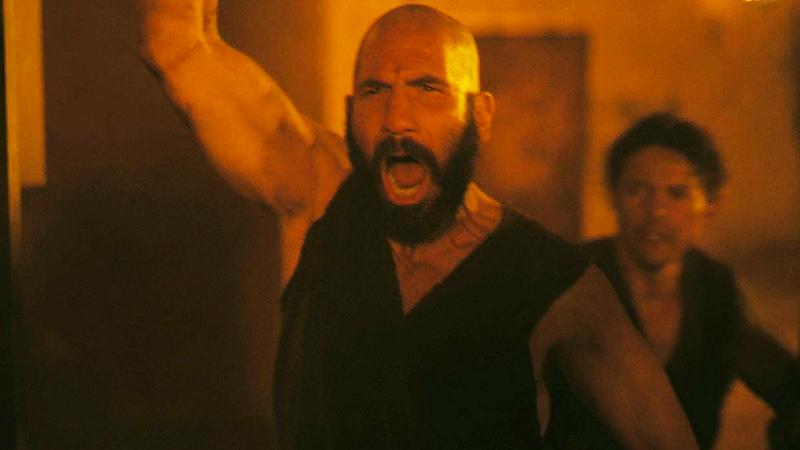
Nolan's The Odyssey doesn't provide masses of context about Helen's life before the movie, as she only has a few minutes of screentime. While Helen has regained her royal status beside Menelaus (Jon Bernthal), she now carries a large scar on the right side of her face, which her husband even jests about, "The face that launched 1000 ships, or make that 500."
Neither Homer's The Odyssey nor Greek mythology gives any inkling that Helen's beauty was diminished with any facial mutilation during her life, meaning that this was an original detail created by Nolan for his adaptation. The implication appears to be that Bernthal's Menelaus wasn't so quick to forgive Helen, perhaps scarring her as punishment or to deter any more potential suitors after Paris.
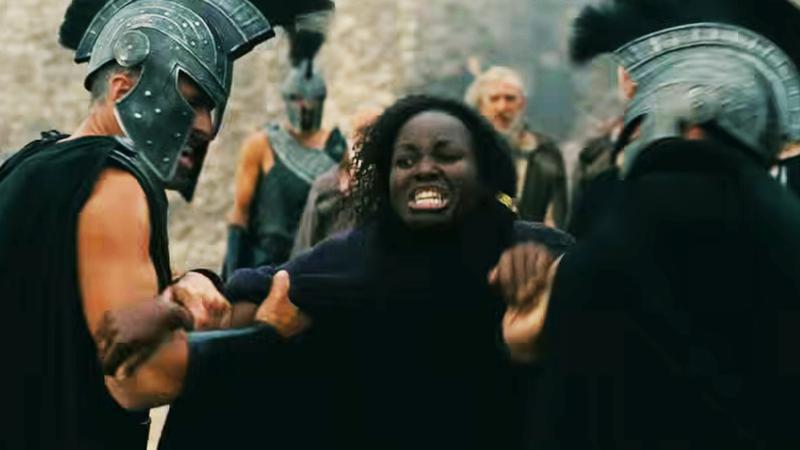
One also has to wonder if Menelaus may have scarred his wife's face as a twisted means of revenge for his brother, Agamemnon (Benny Safdie), who was killed by his own bride and Helen's sister, Clytemnestra (also played by Lupita Nyong'o). She murdered her husband, the King of Mycenae, as revenge for killing their daughter, Iphigenia, as a sacrifice to the gods to safeguard their journey home.
Find out how Elliot Page's Sinon replaced the legendary Achilles in The Odyssey.