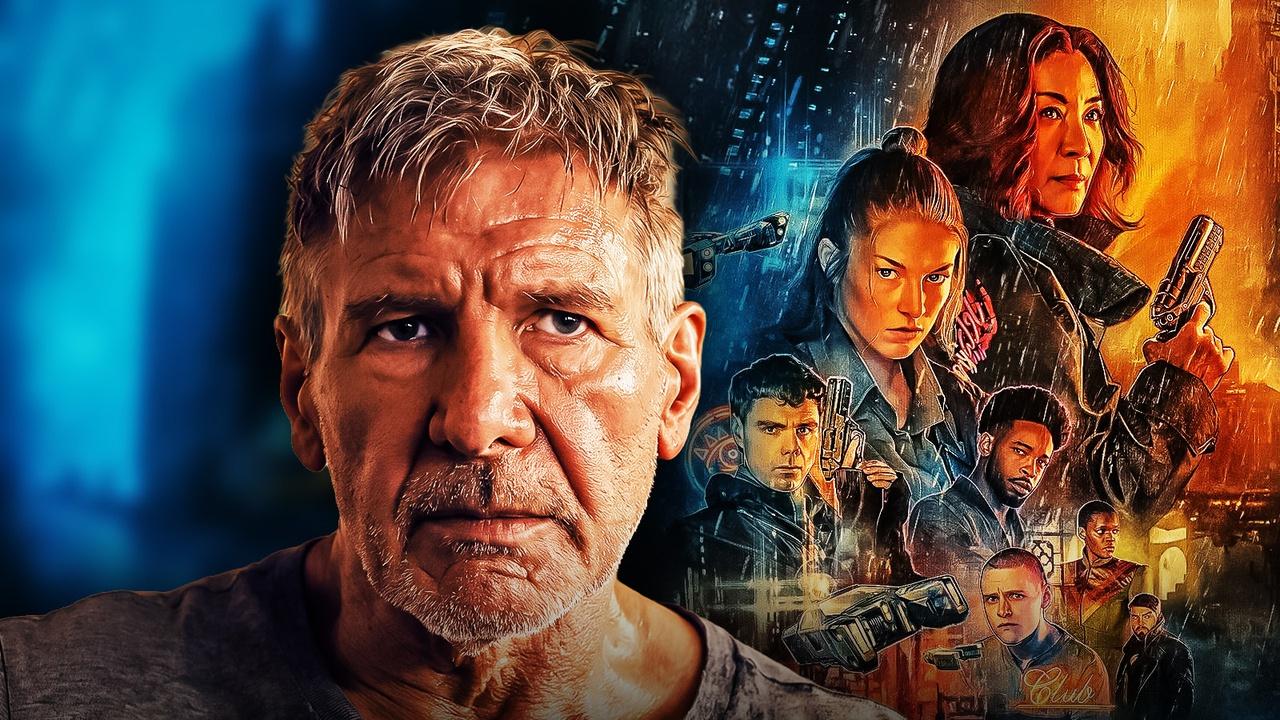
The new Blade Runner sequel series will leave one of the franchise's biggest questions unanswered. Prime Video's upcoming series Blade Runner 2099 takes place 50 years after Blade Runner 2049 and 80 years after Ridley Scott's original Blade Runner film adaptation of Philip K. Dick's sci-fi novel. Throughout the franchise's history, audiences have always wondered whether Harrison Ford's police officer, Rick Deckard, was truly a human or a replicant in disguise.
Those hoping that Blade Runner 2099 might provide some answers to this age-old question will be disappointed, as the series' showrunner, Silka Luisa, has confirmed the show will avoid commenting on Deckard's status. In an interview for Empire's latest magazine issue, Luisa confirmed that the script contains zero mention of Deckard, teasing, "Why would you ask?"
The showrunner continued that the question of who might be a human and who is a replicant is intentionally built into the Blade Runner world, adding, "Not knowing is part of what makes the world so disorienting."
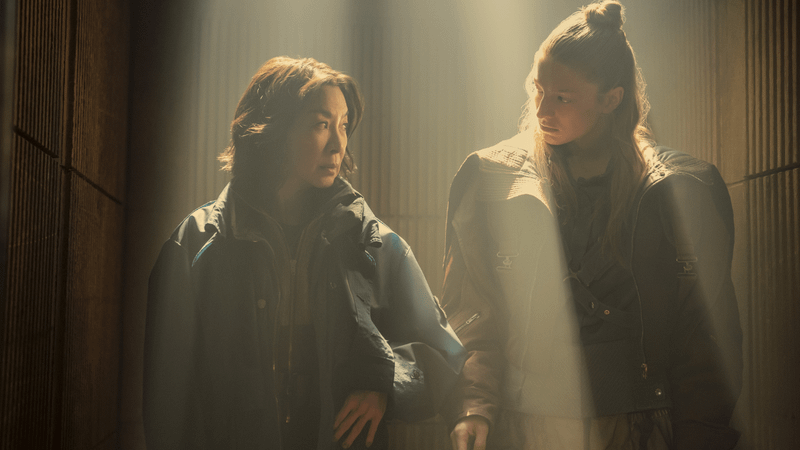
Blade Runner 2099 flips the script on the franchise, set after the human vs. replicant war has been resolved, with replicants now the dominant species. In this world, humans have to live in hiding for fear of persecution, which puts pressure on Hunter Schafer's human, Cora, who has to go undercover among replicants and work alongside Michelle Yeoh's Blade Runner, Olwen.
With Blade Runner 2099 being set so far into the future, it was never a given that Ford's Deckard would be included or referenced in the show. But the question of the character's true identity has remained one of the biggest debates in cinema.

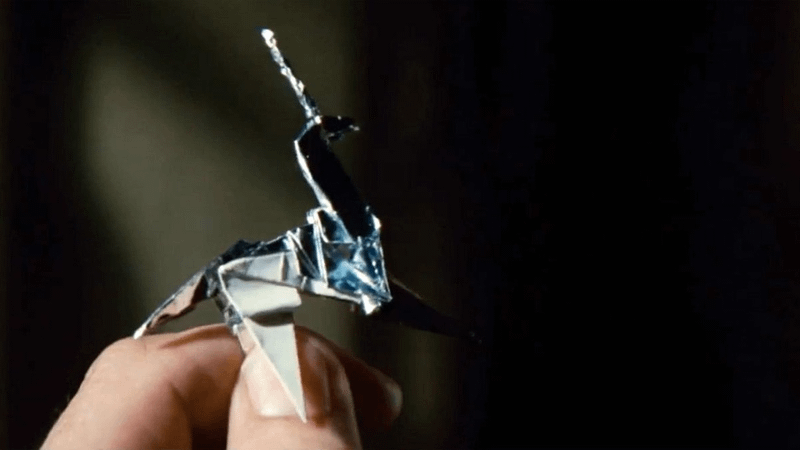
When Ridley Scott released the director's cut of Blade Runner, it came with a few additional scenes that had once been omitted from the theatrical release, including Deckard daydreaming of a unicorn. Scott has remained adamant that this scene was meant to imply that Deckard was a replicant, as Deckard's LAPD mentor, Gaff, leaves an origami unicorn on his desk at the end of the film, hinting that he knows of Deckard's dreams and that they were implanted.
Scott explained his reasoning to Wired back in 2007, saying Gaff's knowledge of Deckard's daydream was to show "Deckard has imagination and even history implanted in his head:"
Gaff, at the very end, leaves an origami, which is a piece of silver paper you might find in a cigarette packet, and it's a unicorn. Now, the unicorn in Deckard's daydream tells me that Deckard wouldn't normally talk about such a thing to anyone. If Gaff knew about that, it's Gaff's message to say, 'I've read your file, mate.' That relates to Deckard's first speech to Rachael when he says, 'That's not your imagination, that's Tyrell's niece's daydream.' And he describes a little spider on a bush outside the window. The spider is an implanted piece of imagination. And therefore Deckard, too, has imagination and even history implanted in his head.
Harrison Ford famously clashed with Scott over the idea, with the actor believing his character was human. When it came to the sequel, Blade Runner 2049, director Denis Villeneuve was careful never to comment on Deckard's true identity. Blade Runner 2049 ended with Officer K (Ryan Gosling) helping Deckard fake his death, ensuring he could flee and start a new life with his daughter.
This left the plot point a longstanding mystery that will remain unanswered, now that Blade Runner 2099 has been confirmed to avoid mentioning Deckard entirely.
Blade Runner 2099 is scheduled for release on Prime Video on November 25. The cast includes Michelle Yeoh, Hunter Schafer, Lewis Gribben, Dimitri Abold, Matthew Needham, and Daniel Rigby.
Blade Runner 2099 Ditches Deckard
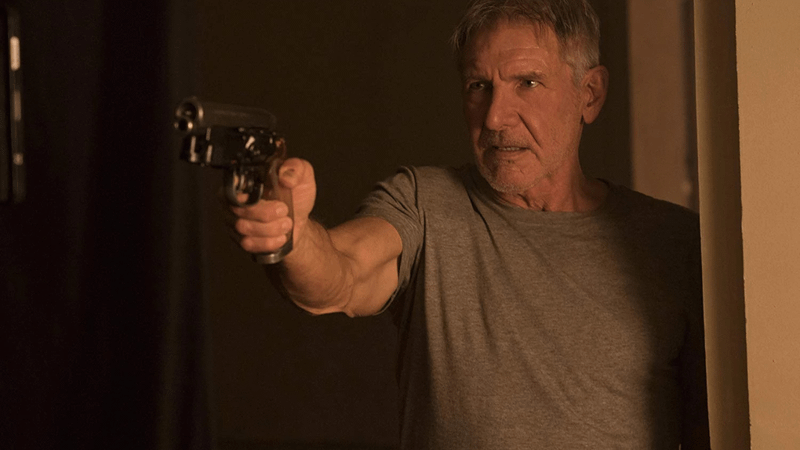
For as long as the Blade Runner franchise has existed, Deckard has been a core part of it. Ford's famously brought Philip K. Dick's character to life in the 1982 film, before he reprised his role 35 years later for Blade Runner 2049.
While the sequel expanded on the world of the original, bringing in Ryan Gosling as a lead, the story remained deeply tied to Deckard as Blade Runner 2049 explored the possibilities of biological reproduction among replicants. Blade Runner 2099's decision not to include Deckard at all will be the first time the franchise hasn't featured the character, but there's a good reason.
With Deckard's death faked at the end of Blade Runner 2049, it makes sense that the character would have dropped off the map by the time Blade Runner 2099 comes around 50 years later. If Deckard is indeed human, as Ford believed, the character would be long dead by now; but if he were seen alive in Blade Runner 2099, that would ultimately confirm the theory that he was a replicant all along.
Seeing as this is one of the greatest debates in the franchise, it makes sense that Blade Runner 2099 would want to omit Deckard completely in order to avoid commenting one way or another on this long-running mystery.