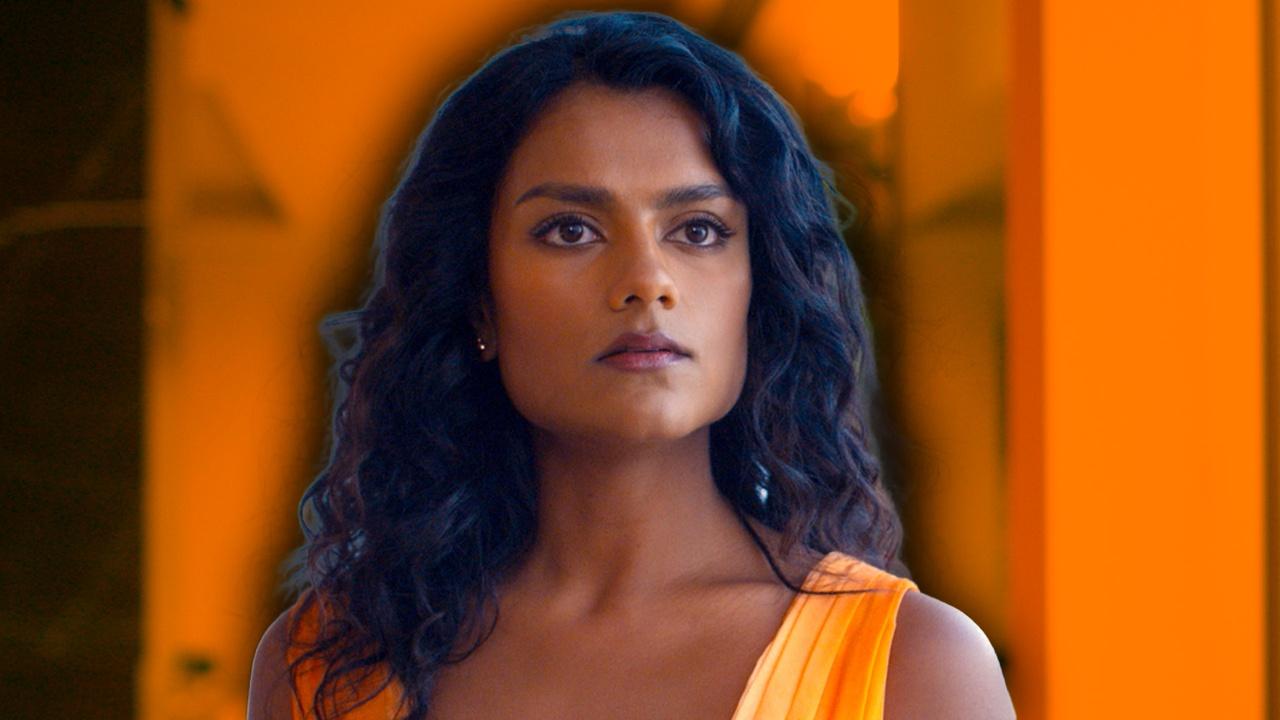
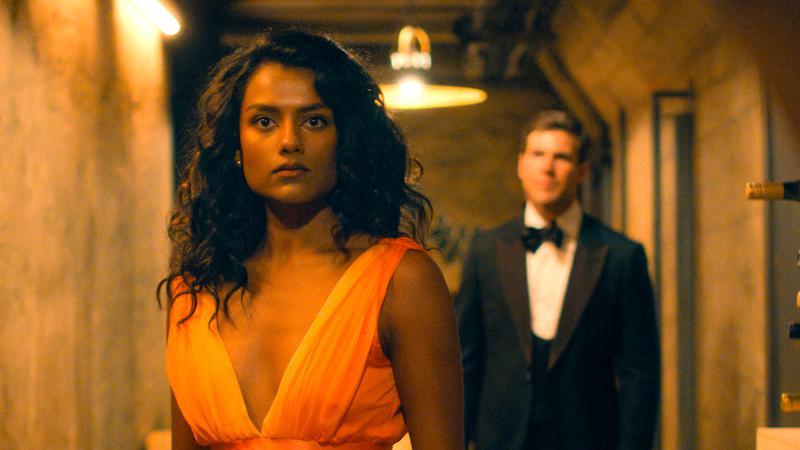
A new paranoia-fueled thriller dropping on June 12 is just around the corner with This Tempting Madness. The film follows Mia, played by Bridgerton's Simone Ashley, a woman involved in a violent incident that leaves her in a coma with serious injuries. When she awakes, Mia is confronted with memory gaps, leaving her unsure of what happened and clueless as to why her husband, Jake (Austin Stowell), was arrested. As she works to figure out the truth, it leads to nasty realizations and endless doubts about what is real around her.
The movie is directed by Jennifer E. Montgomery and also stars Suraj Sharma (Ajay), Mojean Aria (Tony), Amol Shah (Raj), Ms. Marvel's Zenobia Shroff (Lakshmi), and more. In an exclusive interview, The Direct sat down with Montgomery, where she revealed the true story behind This Tempting Madness.
This Tempting Madness' Tragic True Story
"This Is Inspired By a True Story that Happened to a Very Close Friend of Mine..."
- The Direct: "What is just that core element that really connects and drives everything? If you could narrow it down to like one thing, what do you think is powering everything?"
Jennifer E. Montgomery: I think it's the disconnect between what you want to believe and what the truth.
- The Direct: "That definitely fits in pretty much with every minute of the film, so well, what led you?"
Montgomery: So this is inspired by a true story that happened to a very close friend of mine, at the very beginning of the film, she gets traumatic brain injury, and so from there we're always coming back from her trying to rebuild her memory, and not just to rebuild her ability to create new memories, which took a long time, because she didn't have short term memory for a long time, but also just to remember the events that led up to what got her there, and trying to remember that when you have amnesia is so difficult, and then, depending on what it is that happened and got you there, it can become all the more difficult, and it becomes very easy to paint the narrative you want versus the narrative that's real, versus, you know, maybe a narrative that doesn't make you feel so good, and you wish it did.
The filmmaker opened up about the struggles she faced recounting the story with her friend due to the memory issues they were having as a result of the incident:
Montgomery: For me, I know it was such a struggle because I would have conversations with her twice daily. I would talk to her in the morning for an hour at a time, and it took a while before she could have a conversation for a full hour, because at first, it would be just, we'd have the same conversation over and over again for an hour, where she could only have 60 minutes of memory, like 60 minutes, sorry, 60 seconds of memory. So, we were just having it over and over and over, and then I call her in the evening, and it would be the same thing over and over and over, and then eventually she got to the point where we could talk for a full hour, but then she'd forget by the evening, and so in that process, then once she finally came to learn pieces about what had happened and what was going on, it's a really hard reality to be faced with, to be, to try to understand how you got there, to understand how to move on, to have the strength to rebuild both your brain and your body after that, because she had other physical ailments as well that are shown in the film.
- The Direct: "Did they ever push back and kind of get really hesitant, and how long was that process in which everyone felt comfortable with the information being exchanged and felt comfortable with the idea of putting this into a film for the world to see?"
Montgomery: I think first, obviously, [they] had to come to the point with everybody getting comfortable with her having the information of everything that happened, because, as I said, it took a long time for her to be able to retain information, so that we weren't having the same conversation day after day. So there's that moment where you have to decide, is she even ready to know what happened, because what you don't want to do is tell her this happened, and then she forgets, and you have to tell her again, and so it's the thing of not knowing how long, or if she's ever going to grip more.
"There was thankfully a point where she was able to start rebuilding her mind," Montgomery revealed, adding how her friend assumed she wanted to write a movie about it:
Montgomery: There was thankfully a point where she was able to start rebuilding her mind, and I remember I had encouraged her to keep a journal, and in doing that, I said, look, like it can just help you grip on the thoughts, and then you know, if you start to forget them tomorrow, you can reread, and she, at first, she didn't want to do it, she's a really giving person, she's like, I don't need to do that kind of stuff, it's fine, I'm fine, I'm like, No, it'll be really good for you,' and she's like, 'Oh, do you want me to do it? Do you want to write a movie on it or something?' And I was like, 'Uh, sure, yeah, yeah, make a journal over that.
Montgomery clarified that at the time, she "had no ambition to make it into a film," though that changed:
Montgomery: And I had no ambition to make it into a film. I'm a filmmaker, obviously. This was not something that I had a desire to relive in that way. It was not something that I even wanted to be part of the conversation, as she's getting better. But ultimately it became the thing that gave her the motivation to actually start writing stuff down, and so she did, and it was, you know, over the course of probably about nine months to a year that she kept this journal, and finally was like building her brain back, and she got to a point when I was visiting with her, and she was like, 'So, when are you going to write it?' I was like, 'What?' She was like, 'I mean, aren't you going to do it? That's why I kept the journal, right?'
At the end of the day, the decision to turn her friend's life story into a film became a cathartic way for both of them to heal.
Montgomery: And you know, then we had some more conversations about it, and it became clear. Okay, well, maybe, maybe this will be cathartic, maybe it will be a comforting process to do. And so, you know, the rest is sort of history. We wrote it, my husband and I wrote it together, and you know, talked to her about if she was comfortable with us sharing, and she was like, yeah, no, I want you to have freedom with it, and so we went out in the world with it, and we're able to get financing, and here we are,