Lucasfilm released an official statement addressing the ongoing struggle to maintain and grow its television audience. Since 2019, Star Wars has invested heavily in both animated and live-action series, though viewership across its ongoing seasons has trended downward. Despite this, Disney and Lucasfilm are on the defensive, presenting new data as a major win, which it is, but have little interest in painting a full picture.
A Lucasfilm statement from April 2026 is, at its core, a carefully curated piece of public relations. Announcing that Maul - Shadow Lord had claimed a rare perfect 100% score on Rotten Tomatoes, hit 4.1 million global views in its first seven days on Disney+, and was ranking as the #1 trending series in the United States, Lucasfilm was doing something it hadn't been able to do for quite some time: declaring victory. What the statement doesn't do, however, is provide comparative context, and in that omission lies the entire streaming story.
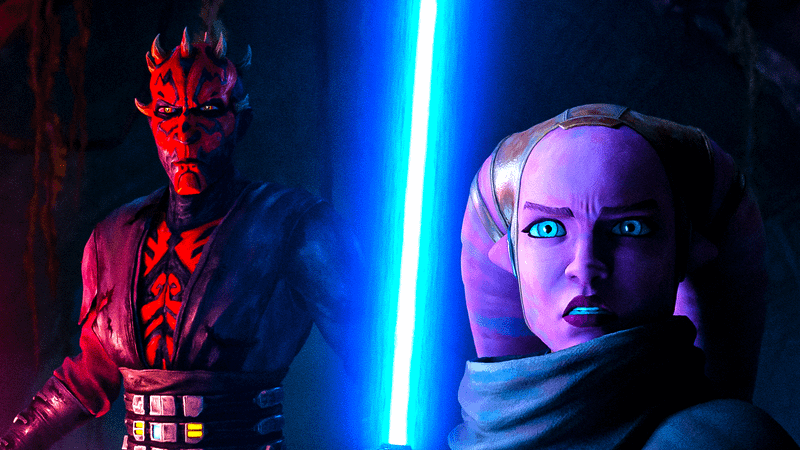
The 2020s Star Wars TV era has been fighting a slow bleed in viewership since its Disney+ peak, and the numbers from third-party analytics firms like Nielsen and Luminate make that trend impossible to ignore. This is not to take away from the success of Maul - Shadow Lord, which is getting a Season 2, but to understand why Lucasfilm is hoping to communicate success when recent statistics haven't been the best.
However, in 2019, the ceiling was set immediately. When The Mandalorian launched on Disney+, it became the platform's flagship series and one of the most-watched streaming programs in the world. It instantly made Disney a streaming juggernaut and minted TV's newest star, Baby Yoda (later known as Grogu). By Season 2, the show was averaging roughly a billion minutes watched per week on Nielsen's charts, with the Season 2 premiere recording 1.032 billion minutes (per Luminate Data).
It's also important to keep in mind that all the data surrounding minutes watched, the episode runtime is also a factor, but the stats are still telling.
Mark Hamill's CGI return as Luke Skywalker in the Season 2 finale set an all-time high for the series at 1.336 billion minutes.
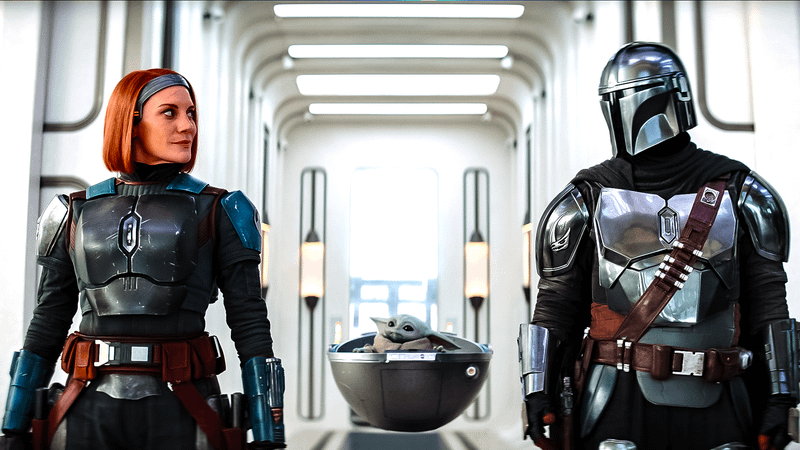
Everything that followed (Season 2 ended nearly six years ago) has struggled to reach those heights.
When Season 3 arrived, its premiere drew 823 million minutes, the lowest Nielsen figure for any Mandalorian episode on record, coming in at roughly 20% below the Season 2 premiere in raw minutes (via Jedi Temple Archives). By the Season 3 finale, viewing minutes had dropped to 1.012 billion, down 14.3% from the Season 2 finale's 1.336 billion.
The other live-action shows that followed The Mandalorian never replicated its numbers. Obi-Wan Kenobi launched with 7.52 million views for its premiere in its first two days (a massive opening, to be fair) but dropped to 4.74 million for Episode 3, a 37% decrease. By its finale, the show was down to 3.91 million views.
The Acolyte, one of the worst-received Star Wars projects this decade, had an even more troubling trajectory. Its two-episode premiere was the biggest for Disney+ in 2024, pulling 2.94 million views in its first two days, but it suffered a steep 22% drop with its third episode, followed by another 9% decline for Episode 4.
Then came Skeleton Crew, and things reached a new low. The two-episode December 2024 premiere had less than 382 million minutes watched between both episodes, the lowest premiere numbers for any Star Wars Disney+ show to date.
From a critical and viewership standpoint, Andor has always been an outlier in the Star Wars TV portfolio. While it trailed other Star Wars shows in raw numbers, possibly due to its more adult-themed nature, it maintained a consistent core audience throughout its run.
In 2025, Andor Season 2 logged 721 million minutes in its premiere week, a new weekly series high ranking as the No. 5 most-watched streaming original (per The Wrap). When the finale dropped in May of last year, Andor topped the Nielsen overall streaming chart with 931 million minutes, marking the show's highest weekly viewership.
It's safe to say the story behind Star Wars' recent streaming success (or lack thereof) is complicated, and it's not a clear message from Lucasfilm in the wake of Shadow Lord's positive results.
Star Wars' Big Disney+ Mistake
For animated Star Wars stories, there's no denying that streaming TV series is the best route for storytelling. Longtime fans are used to the format and loved sinking their teeth into the rich stories of The Clone Wars and Rebels, the two shows that inspired much of what's been produced lately.
However, unloading a massive slate of live-action series hasn't been particularly fruitful, especially with The Acolyte, The Book of Boba Fett, and Obi-Wan Kenobi. Some would even argue projects like Ahsoka and The Mandalorian Season 3 would have been better off never happening.
After The Rise of Skywalker hit theaters in 2019, Lucasfilm's Star Wars stories have been focused solely on Disney+, and the long-term effects may be detrimental to the nearly 50-year-old franchise.
A Star Wars film is currently playing in theaters, The Mandalorian and Grogu, a direct spin-off of the successful TV series. However, the results are in, and by Star Wars standards, Lucasfilm's relaunch into theaters is underwhelming at best.
The Mandalorian and Grogu passed Marvel's biggest failure, but it won't be able to say the same for its own franchise. It is tracking to become the lowest-earning Star Wars film ever at the domestic box office. From a global perspective, it will likely earn less than Solo: A Star Wars Story, making it the greatest theatrical failure since Disney bought the studio.