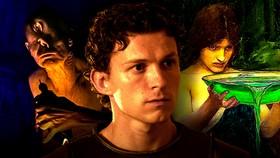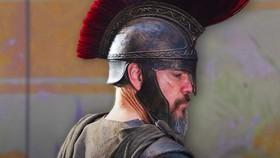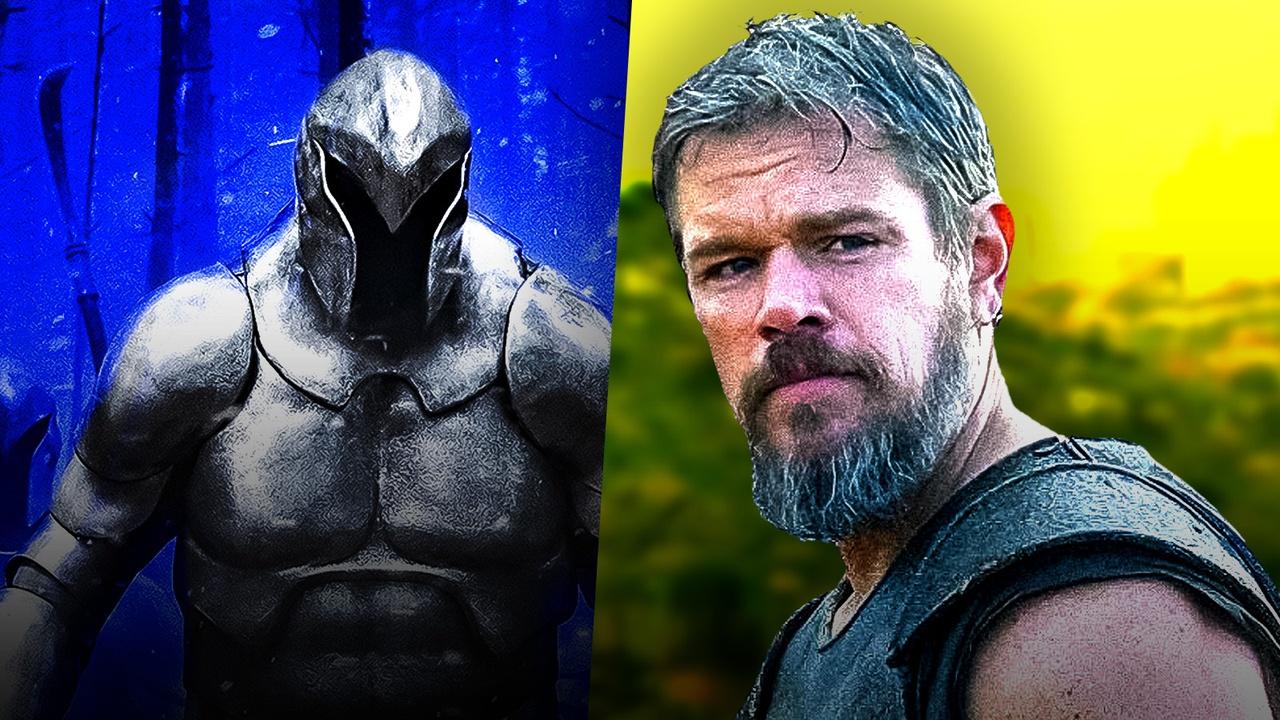
The Odyssey features a race of giants who lay waste of Odysseus' fleet, and they have major connections to Greek mythology and Poseidon. Shortly after encountering the Cyclops in the cave and before facing the sorceress Circe, Matt Damon's Odysseus encounters another of the eight creatures from Greek mythology that appear in The Odyssey: the giant Laestrygonians.
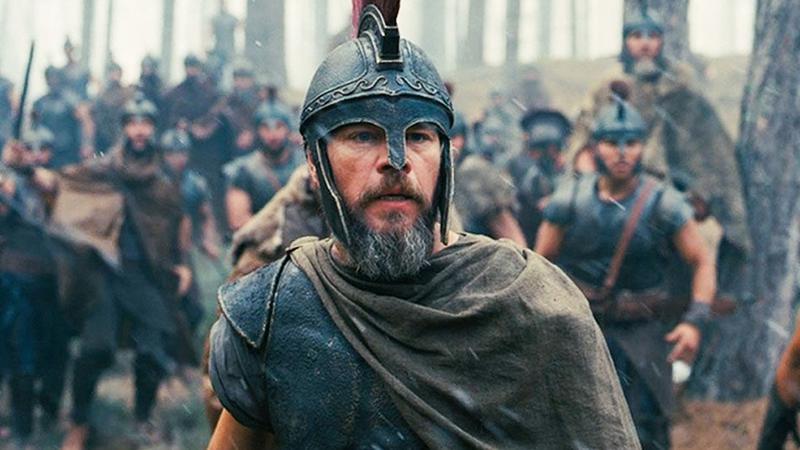
Having finally landed on a beach after a dangerous voyage, cursed by Poseidon, Odysseus and his men venture into the woods and find a lone, laughing child, who just so happens to be armored and the size of a fully grown man. Himesh Patel's Eurylochus ponders, "If that's the child, what about the parents?" as the overgrown boy lets out a scream, summoning his giant elders. These giants brutally attack the men in the woods and pursue them to their ships, two of which they wipe out, leaving Odysseus with just one boat for his voyage.
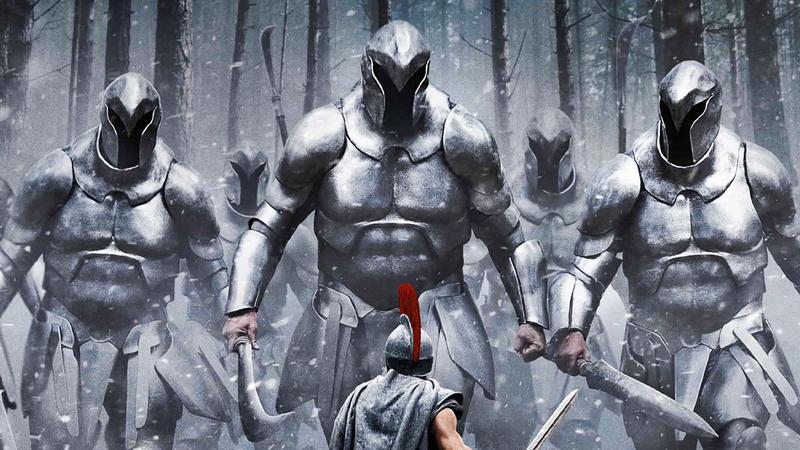
Those familiar with Greek mythology will know that these giants are called the Laestrygonians, a man-eating tribe descended from Laestrygon, a son of Poseidon, the Greek God of the Sea, which also connects them to the Cyclops.
While 2026's The Odyssey doesn't explain much about these giants, Homer reveals that Laestrygonians have a whole society ruled over by King Antiphates in the city of Telepylos. The child that Odysseus and his men first encounter is that of Antiphates and his equally giant wife, who are described as far larger in the poem.
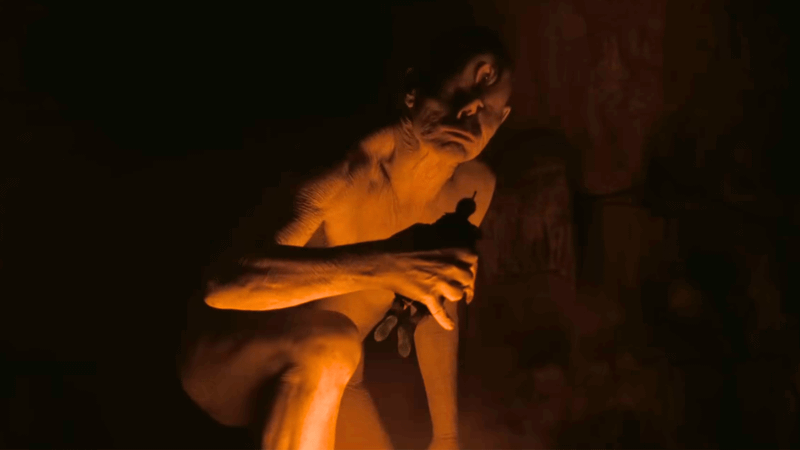
The Laestrygonians' connections to Poseidon may be crucial to why they attack Odysseus' men, as the King of Ithaca had just recently angered the God of the Sea by blinding his cyclops son, Polyphemus, to escape his cave.
The Odyssey clearly establishes that Poseidon is seeking revenge for his son's eye, cursing Odysseus with treacherous weather and winds for the rest of his voyage to Ithaca. It stands to reason that landing on the Laestrygonians' shore may have been another part of Poseidon's plan to punish Odysseus.
The encounter with the Laestrygonians is far more fleshed out in Homer's Odyssey, although it is reduced to a single sequence for the big screen.
How The Odyssey's Giant Encounter Plays Out In Homer's Original Poem
Christopher Nolan reimagined the Laestrygonians as armored super soldiers who tower above Odysseus and his fellow survivors of the Trojan War. However, Hoem's Odyssey described them as "huge as a mountain" with man-eating tendencies similar to the Cyclops to which they are related via Poseidon, meaning that they have been vastly shrunk and their gruesomeness has been reduced.
In Book 10 of Homer's Odyssey, the Greek fleet arrives at the harbor of Telepylos, the mythological city of the Laestrygonians, with 12 ships, although Odysseus sensed danger and moored his ship farther away. Notably, Telepylos had high cliffs overlooking the natural harbor, which would prove fatal for 11 of the ships.
Instead of taking a large landing party to explore, as he did in the recent movie, Odysseus sent through scouts who met a young girl, revealed to be the daughter of the Laestrygonian King Antiphates. She directed the scouts to the family's regal home where they were shocked to find the giantess queen, who summoned Antiphates, only for him to grab and brutally devour one of the scouts.
The two survivors fled back to the ships as Antiphates called upon his thousands of his forces to chase after them. The giants would hurl boulders from the cliffs to decimate the 11 trapped ships and speared bodies from the water for a feast, although Odysseus smart planning allowed his boat to escape.
It's clear that Nolan made major changes to the Laestrygonians for The Odyssey, shrinking them greatly and abandoning much of their brutality. The decision was perhaps made for logistical reasons, as well as to differ the giants further from man-eating Cyclops who Odysseus encountered just shortly before.