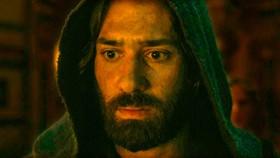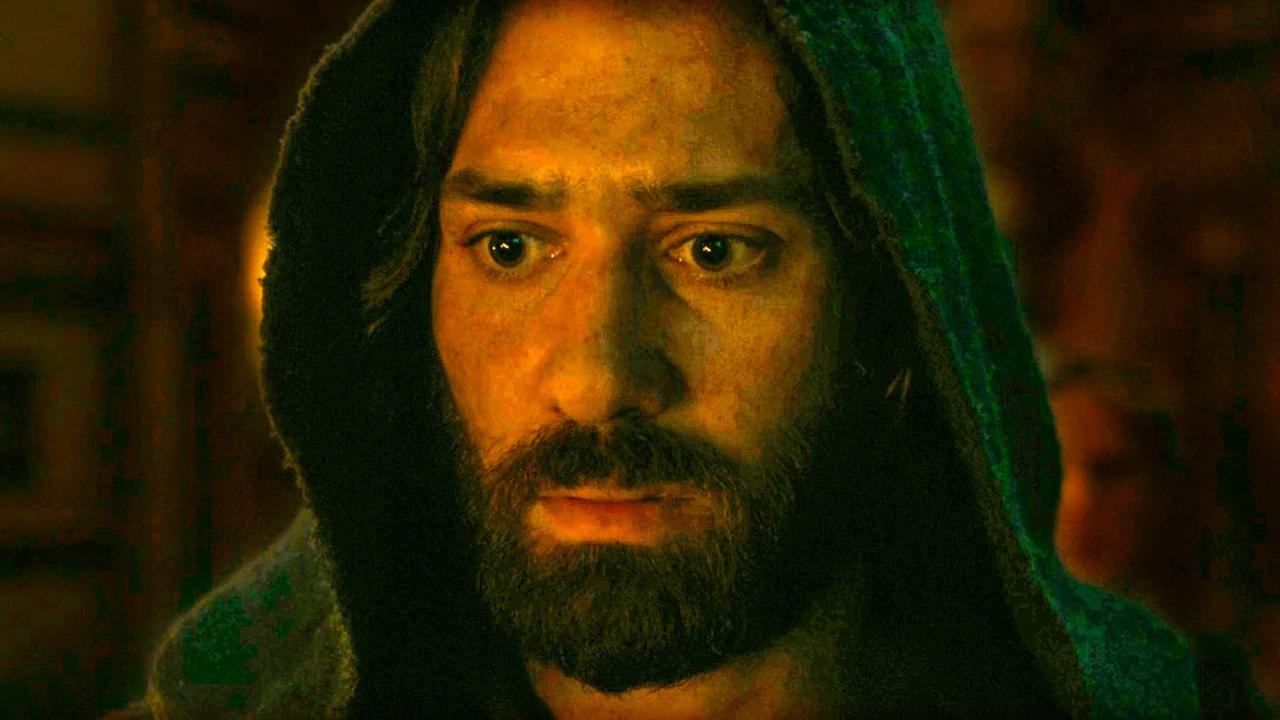
With The Lord of the Rings: The Rings of Power Season 3 now streaming, audiences are finally able to return to Middle-earth with four new episodes. The new season focuses on the rise of Charlie Vickers' Sauron as he aims to build The One Ring and an army of Nazgnagôl. That journey is filled with endless tragedy. One of those first heartbreaking moments takes place in Episode 2, within the confines of Númenor as the ancient city falls into civil unrest.
The second episode of Season 3 picks up with Maxim Baldry's Isildur immediately trying to assassinate Trystan Gravelle's Pharazôn, an act that showcases just how desperate the situation is in Númenor. Pharazôn survives the attack and lives on to continue his reign over the city, all while Queen Miriel (played by Cythnia Addai-Robinson) and Elendil (Lloyd Owen) are exiled in the shadows, planning their next moves for them and their Faithful.
Little does Pharazôn know, however, that his ranks have been infiltrated by a key member of The Faithful: Ema Horvath's Eärien. Eärien has been working behind the scenes to feed information to The Faithful, no matter how much it eats her. Sadly, that ruse is discovered by the end of Episode 2.
In order to avoid being used as a weapon against her family and the Faithful as a whole, Eärien decides to take her own life by jumping off a balcony—an act that not only ends the character's storyline, but also actor Ema Horvath's time on the show, who has been a staple original character since Season 1.
The Direct sat down with The Lord of the Rings: The Rings of Power star Ema Horvath to break down Eärien's tragic choice, how she felt before that fateful moment, and her final moment with Isildur.
Ema Horvath Breaks Down Eärien's Tragic Decision
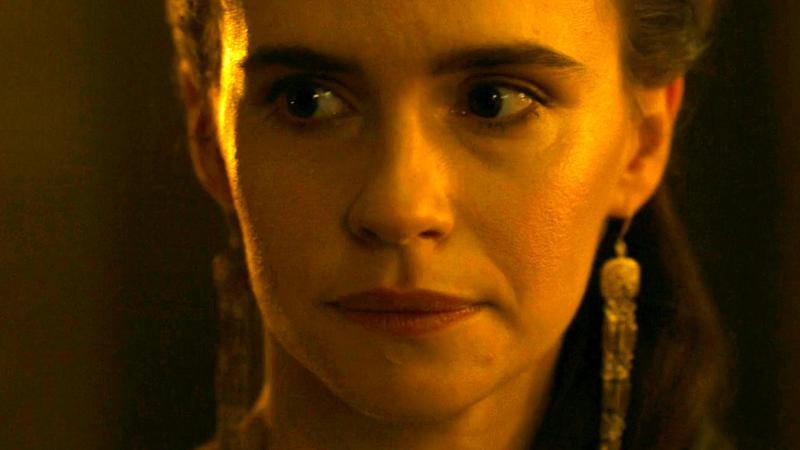
"You're Dealing With Someone Who Is Capable of Choosing That Option From the Very Beginning of the Episode."
- The Direct: "That fateful moment when Eärien makes that choice. You know she's caught, and then she just walks off the balcony. Can you walk me through what is going through her mind in those moments to make that choice? What is that step-by-step in her head of deciding that this is the only choice she has?"
Ema Horvath: I think some people may disagree with me, but that option has been on the table for her for a while. When you first see her getting her hair done, that's an option. You know, it's crossed her mind, I think, several times. If she'll ever needs to use it, or if she'll ever get to the point where that [where] that is the best option, I don't think she knows. But you're dealing with someone who is capable of choosing that option from the very beginning of the episode.
After trying to appeal to everyone in the room, Horvath explains that, at a certain point, Eärien is speaking only to her family.
Horvath: And in those final moments, I mean [in] that scene I spend time appealing to every man in that room in various ways to try and save it. And I think at that point, there's a moment where she's like, 'I'm not. I'm not. I'm no longer speaking to anyone in this room. I'm speaking to my family. I'm speaking to my brother.'
"Psychologically, [her actions] felt correct to me," Horvath noted.
Horvath: She has a quiet moment where she's communing with her family, and everyone else in the room is gone. And [director] Charlotte [Brändström] was very adamant about that, like walking towards the window, being very calm and collected, and everything I had read about that particular act tracked with that interpretation. So psychologically, that felt correct to me as well. Yeah, it's a surrender. She's already surrendered, but this is like even more of a surrender. If that makes sense.
- The Direct: "Before your fateful moment, you and Isildur share one final moment between the two of you, where you both kind of share a long glance at one another. Would you say there's anything specific being communicated in that moment? Obviously you don't know each other's fate at that point, but what do you feel is being communicated between the two of you? And also, why do you feel that moment was kind of the perfect last scene for those two characters?"
Ema Horvath:
For me, the way I prepared was that it's like, I might not see you again. That's what I'm saying to him. I'm not sure if I'll see you again. Every time we meet, I'm not sure if I'll see you again. But obviously, knowing what happens, this is more important. I like that scene a lot because we get to sort of spar about our, you know, philosophies, and he's still living in this very hopeful place. And I think I've seen and done too much to even put on the mask of hopefulness. So yeah, I think that's a really nice scene where you get their psychological difference really illustrated.
- The Direct: "Early on in the episode, when you are kind of secretly meeting with Isildur. He kind of puts a silver-lining spin on the death of one of your allies, and your response is kind of, "None of this is a gift." How does that sum up her mindset as she's juggling being this double agent behind the scenes, both during this episode and also before the episode even began?"
Ema Horvath: She blames herself for a lot. This season was really about shame for me in my prep and thinking about the character. I think when anyone else dies, she views it as another person she's responsible for having not saved. And I think her family has offered her forgiveness multiple times, but none of it means anything to her. So that's where that line is coming from.
- The Direct: "Another quote from this episode is, you say, "There's nothing to protect," and you know she does seem to go downhill a little bit, especially after losing their ally in that torture scene, and after she orders that execution. At that point, would you say that she's kind of lost all hope for the cause, and like it's just kind of a hopeless endeavor, or is there still a little bit there?"
Ema Horvath: I think it depends on the day, the hour, the minute, how she feels about it. She's definitely self-medicating. I think it's not something that gets discussed, but the fact that she's able to produce something for Heleth, the sheep herder, that might help his passage. I think she's familiar with a lot of concoctions, and so it—I think it depends on her lucidity. It depends on what has just happened. What may have gone well. What may have gone wrong. I think her mind is very volatile at this moment.
LATEST NEWS